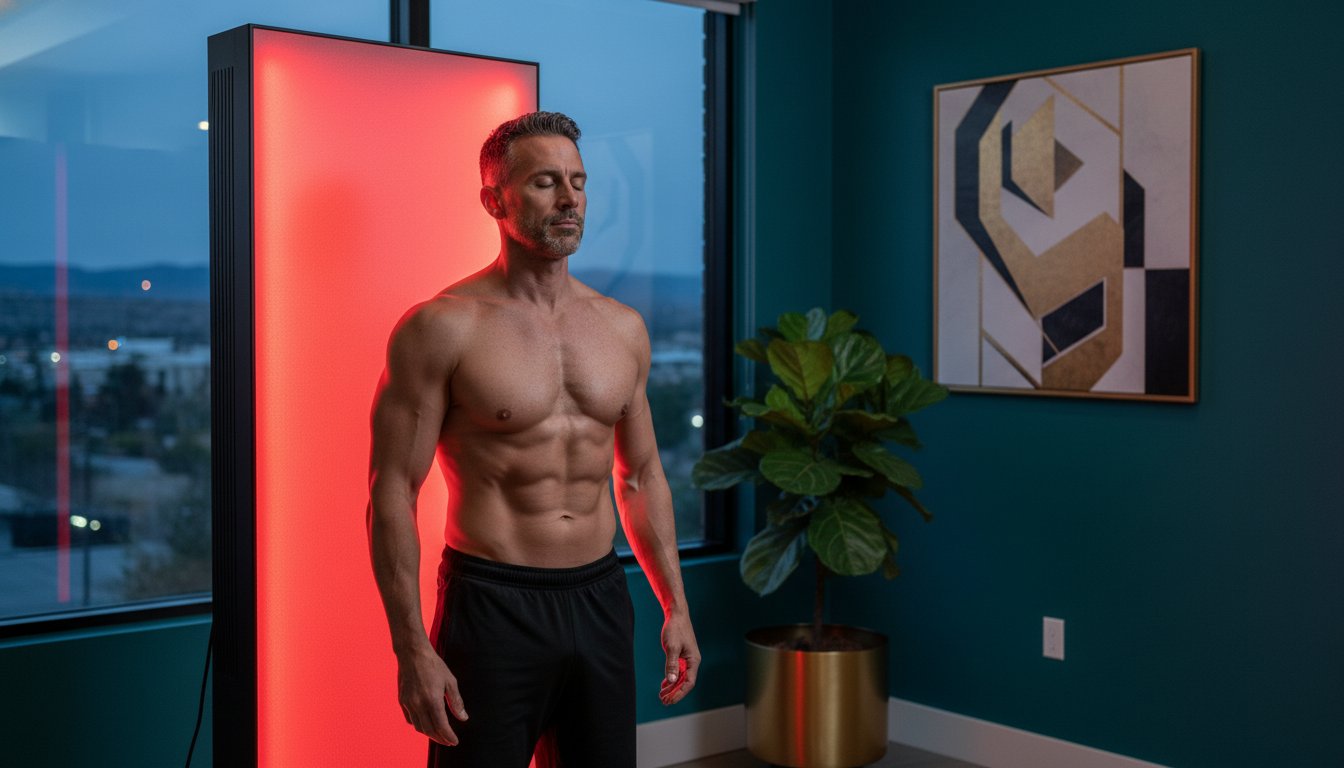
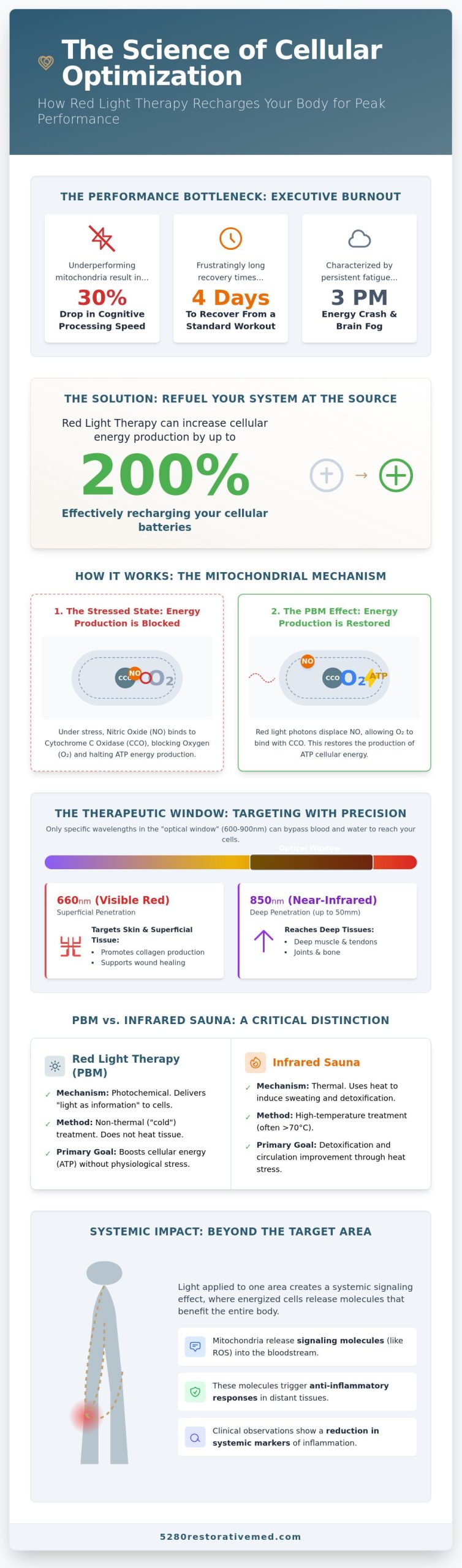
What if the primary obstacle between you and your next breakthrough isn’t a lack of discipline, but a deficit in cellular energy production? When your mitochondria underperform, the result is often a 30% drop in cognitive processing speed and the heavy, persistent fatigue that characterizes modern executive burnout. You’ve likely experienced that 3:00 PM fog or felt frustrated when your body takes four days to recover from a standard workout. By leveraging red light therapy, you can bypass these physiological bottlenecks and reclaim your competitive edge.
At 5280 Restorative Medicine, we believe your health should be a proactive journey toward optimization rather than a reactive fight against exhaustion. We focus on the restoration and optimization of your biological systems to ensure you’re always performing at your peak. This guide explores how specific wavelengths of light can increase cellular ATP levels by up to 200%, effectively refueling your system at the source. We’ll break down the clinical science of photobiomodulation and provide a clear, science-backed protocol to restore your mental clarity and physical vitality.
Key Takeaways
- Explore the biological mechanism of photobiomodulation and how precise wavelengths fuel mitochondrial health to restore vitality at a cellular level.
- Discover how to leverage red light therapy to sharpen cognitive clarity and significantly reduce recovery time after intense physical or mental exertion.
- Learn the critical difference between clinical-grade irradiance and standard wattage to ensure your protocol reaches the therapeutic “Goldilocks zone” for optimal results.
- Understand how to integrate light-based treatments into a comprehensive restorative medicine protocol to achieve measurable improvements in your long-term health.
The Science of Photobiomodulation: Beyond the Surface Glow
You might notice that your recovery time after a workout has doubled since your thirties. This slowdown isn’t just a sign of aging; it’s a reflection of your cellular efficiency. Red light therapy, or Photobiomodulation (PBM), uses specific light frequencies to jumpstart this internal engine. NASA researchers pioneered this field in 1993, initially using LED technology to stimulate plant growth and later discovering its profound impact on human tissue repair. At 5280 Restorative Medicine, we view PBM as a cornerstone of modern regenerative care, moving beyond aesthetic trends to deliver measurable biological results.
The Therapeutic Window of Light
Specific wavelengths dictate the depth and efficacy of your treatment. The “optical window” spans from 600nm to 900nm, a range where light photons bypass blood and water to reach your cells. Clinical literature consistently identifies two gold standards for optimization:
- 660nm (Visible Red): This wavelength targets the skin and superficial tissue, promoting collagen production and wound healing.
- 850nm (Near-Infrared): This invisible light penetrates up to 50 millimeters into the body, reaching deep muscle tissue, tendons, and bone.
Blue or green light serves different purposes, such as treating surface bacteria or regulating circadian rhythms. However, only the red and near-infrared spectrum can penetrate the “optical window” to interact directly with your mitochondria. This deep penetration is what allows red light therapy to support systemic restoration rather than just surface-level changes.
Photobiomodulation vs. Thermal Therapy
Many patients ask if this treatment is the same as an infrared sauna. It’s not. Infrared saunas utilize heat to induce sweating and detoxification, often reaching temperatures above 70 degrees Celsius. PBM is a non-thermal, “cold” treatment. It doesn’t work by heating your tissue; instead, it delivers “light as information” directly to your cells. This process triggers a photochemical response, similar to photosynthesis in plants.
By avoiding heat, we provide a high-density energy boost to your cells without the physiological stress of a high-temperature environment. Our Denver-based team uses this distinction to create targeted protocols for patients who need cellular restoration without the systemic inflammation that heat can sometimes trigger. This scientific approach ensures that your journey toward peak performance is both safe and data-driven.
Mitochondrial Optimization: How Red Light Fuels Cellular Energy
Your ability to lead, perform, and recover depends on the efficiency of your mitochondria. These organelles function as the engines of executive vitality; they convert nutrients into the energy that powers every cognitive and physical act. When these engines stall, you experience the sluggishness often mistaken for natural aging. Professionals in Denver’s fast-paced environment don’t have time for cellular fatigue. Red light therapy directly intervenes at this cellular level to restore peak output and ensure your biological hardware matches your ambitions.
The Cytochrome C Oxidase Mechanism
The core of this process involves Cytochrome C Oxidase (CCO), a key enzyme in the mitochondrial respiratory chain. Under stress or during the aging process, Nitric Oxide (NO) binds to CCO. This effectively clogs the engine and prevents oxygen from being processed. Photons from red and near-infrared light spectrums, specifically between 600nm and 950nm, strike the CCO enzyme to cause the unsticking of Nitric Oxide. This displacement allows oxygen to resume its role in the electron transport chain. Research by Dr. Tiina Karu suggests this photochemical reaction can increase Adenosine Triphosphate (ATP) production by up to 150%. This process provides the cellular fuel necessary for restorative health while reducing oxidative stress at the root level, preventing the premature cellular aging that hinders long-term performance. For those seeking additional mitochondrial support beyond light therapy, exploring methylene blue benefits for mitochondrial optimization and cognitive vitality can provide complementary pathways to cellular energy enhancement.
Systemic Effects of Localized Treatment
While the light may be applied to a specific area, its benefits aren’t confined to a single patch of skin. This phenomenon, known as systemic signaling, occurs when energized mitochondria release signaling molecules into the bloodstream. These molecules, including modulated Reactive Oxygen Species (ROS), act as messengers that trigger anti-inflammatory responses in distant tissues. Clinical observations show that localized red light therapy can influence systemic blood chemistry and lower markers of inflammation. This means a session focused on muscle recovery can simultaneously support your overall longevity and vitality. By fine-tuning ROS levels, the body moves from a state of chronic defense to one of active repair. This systemic reach ensures that optimization happens from the inside out, affecting everything from cognitive clarity to cardiovascular health.
Red Light Therapy for Peak Performance and Executive Recovery
You likely feel the toll of high-stakes decision-making and frequent travel on your sleep quality. Red light therapy helps reset your internal clock by stimulating natural melatonin production without the grogginess of pharmaceutical aids. A 2012 study in the Journal of Athletic Training demonstrated that 30 minutes of red light exposure nightly improved sleep quality and subsequent endurance performance. This treatment also supports your endocrine health. Research from 2013 showed that patients with autoimmune thyroiditis could reduce their levothyroxine dose by nearly 50% through consistent clinical light applications. At 5280 Restorative Medicine, we view this as a cornerstone of hormonal optimization and metabolic health.
Cognitive Enhancement and Brain Health
Mental clarity is your most valuable asset. Transcranial photobiomodulation (tPBM) delivers near-infrared photons directly to the cerebral cortex to boost cytochrome c oxidase activity. This is the enzyme responsible for ATP production in your neurons. By increasing cellular energy in the prefrontal cortex, you enhance executive functions like focus and working memory. Clinical trials have observed a 15% improvement in reaction time and memory retention following targeted sessions. It also acts as a neuro-protective shield, lowering the oxidative stress caused by chronic cortisol elevation during high-pressure weeks. We focus on these cellular shifts to keep your cognitive edge sharp. For executives seeking additional cognitive enhancement strategies, understanding methylene blue benefits for cognitive vitality can provide another powerful tool for mental performance optimization.
Physical Recovery and Inflammation Control
Recovery shouldn’t be a bottleneck in your training or your daily life. Using red light therapy as a pre-conditioning tool before exercise increases microcirculation and oxygen uptake in muscle tissue. A meta-analysis of 28 peer-reviewed trials confirmed that PBM significantly reduces delayed onset muscle soreness (DOMS) and lowers levels of creatine kinase, a key marker of muscle damage. For joint longevity, the light stimulates fibroblast activity to increase collagen synthesis by approximately 30%. This process repairs connective tissues and suppresses pro-inflammatory cytokines like IL-6. Our approach ensures your physical restoration matches your professional ambition, allowing for peak performance at any age.
- Accelerated Repair: Reduces recovery time between high-intensity training sessions.
- Neuro-protection: Shields the brain from the inflammatory effects of chronic stress.
- Circadian Alignment: Normalizes sleep-wake cycles for deeper, restorative rest.
- Hormonal Support: Optimizes thyroid function and cellular energy throughout the body.
Implementation Strategy: Clinical Grade vs. At-Home Devices
Selecting the right equipment determines whether you achieve cellular restoration or simply waste time. Irradiance is the metric that matters. It measures power density in milliwatts per square centimeter (mw/cm²) to determine how much energy actually reaches your mitochondria. Total wattage is a marketing distraction; it only tells you how much electricity the device pulls from the wall. A clinical-grade panel should deliver at least 100mw/cm² at a 6-inch distance to ensure photons penetrate the dermal layers effectively.
Technical Specifications to Demand
Distance radically alters the dose you receive. If a device provides 100mw/cm² at 6 inches, that intensity may drop by 50% if you move just 12 inches away. High-quality manufacturers provide third-party diagnostic reports to verify wavelength accuracy, typically targeting the 660nm and 850nm “therapeutic window.” Safety is equally vital. Your device must be flicker-free (0.0 Hz) and emit low EMF (under 3mG at 6 inches) to prevent neurological strain. These standards ensure your red light therapy session supports health without introducing environmental toxins.
The Protocol: Frequency and Duration
The Arndt-Schulz Law governs how your body responds to light. This principle, known as the biphasic dose response, shows that low doses stimulate healing while excessive doses can actually inhibit cellular function. It is a Goldilocks zone. For most patients, a 10 to 20 minute session provides the peak biological response. Pushing beyond 30 minutes often yields diminishing returns or temporary oxidative stress. Consistency is the primary driver of success. Research from 2022 suggests that 3 to 5 sessions per week outperform occasional high-dose treatments for chronic recovery. Direct light-to-skin contact is mandatory; clothing blocks the specific wavelengths required for cytochrome c oxidase activation.
Timing your sessions aligns with your circadian rhythm. Morning exposure mimics the rising sun, boosting cortisol and alertness for peak daily performance. Evening sessions should focus on muscle repair and systemic inflammation reduction. Always use ocular protection when facing the light directly to safeguard the retinas from high-intensity output. Our team at 5280 Restorative Medicine helps you integrate these tools into a broader lifestyle strategy. We focus on moving beyond baseline health toward a superior state of vitality.
Integrating Red Light Therapy into a Restorative Medicine Protocol
While red light therapy is a potent catalyst for cellular energy, it doesn’t exist in a vacuum. At 5280 Restorative Medicine, we view it as a precision tool within a broader restorative medicine protocol. It’s not a standalone cure for metabolic dysfunction. Instead, it’s a way to amplify the body’s natural healing capacity once the foundational pieces are in place. When we pair photobiomodulation with objective data, we move beyond the guesswork of “biohacking” and into the realm of clinical excellence.
Synergy with Functional Medicine
Photobiomodulation acts as a force multiplier for the nutrients identified in your clinical bloodwork. For example, if a patient presents with a 30% deficiency in intracellular magnesium, the mitochondrial response to red light therapy will be significantly muted. We use advanced metabolic testing to ensure your cellular environment is primed for success. This root-cause analysis ensures that light therapy supports your specific hormone optimization strategy; whether you’re addressing cortisol rhythms or optimizing testosterone levels through BHRT for peak performance, the light provides the ATP necessary for those systems to function at their peak. Understanding magnesium benefits for cellular energy production becomes crucial when optimizing your photobiomodulation response, as this essential mineral serves as a cofactor in over 600 enzymatic reactions that support mitochondrial function. For executives experiencing unexplained fatigue and inflammatory responses that don’t respond to conventional treatments, investigating mast cell activation syndrome as a hidden barrier to peak performance can reveal underlying immune dysregulation that may be limiting your response to therapeutic interventions. This comprehensive approach to functional health and wellness for root-cause optimization ensures that every intervention works synergistically to restore your competitive edge. Additionally, incorporating an NMN supplement for NAD+ restoration and cellular longevity can provide the essential cofactors needed to maximize the mitochondrial benefits of photobiomodulation therapy.
Your Personalized Road to Vitality
Transitioning from home-based biohacking to a clinically-supervised journey changes your results from anecdotal to measurable. The 5280 approach treats health as a data-driven investment. We don’t guess; we test. By integrating red light therapy with customized nutrition and pharmaceutical-grade supplements, we create a roadmap for long-term longevity. This partnership ensures you aren’t just chasing symptoms but are actively reaching a superior state of health. Our protocols utilize medical-grade irradiance levels to achieve 20% higher penetration depths than standard consumer panels, ensuring your investment yields visible, biological returns. When hormonal imbalances are identified through comprehensive testing, we often combine photobiomodulation with bioidentical hormone replacement therapy to address both cellular energy production and hormonal signaling pathways simultaneously. This approach exemplifies the principles of functional health and wellness that prioritize root-cause optimization over symptom management, ensuring sustainable improvements in your overall vitality and performance.
We invite high-performers to move past temporary fixes and embrace a partnership that prioritizes restoration and optimization. Your journey to peak performance starts with a plan tailored specifically to your biology.
Schedule a consultation to build your custom optimization protocol.
Elevate Your Biological Baseline Through Cellular Innovation
You’ve discovered how specific light wavelengths do more than just refresh your appearance. They reach the mitochondria to catalyze ATP production, which provides the essential fuel for executive clarity and 24-hour physical recovery cycles. While standard consumer devices offer a starting point, achieving peak performance requires the precise irradiance found in clinical-grade applications. True restoration isn’t about chasing trends; it’s about utilizing science to rewrite your energy potential from the inside out.
At 5280 Restorative Medicine, we replace guesswork with clinical certainty. Led by Dr. Marci Catallo-Madruga, our practice develops red light therapy protocols backed by advanced metabolic testing and 100% customized health plans. We design every strategy to fit the rigorous schedules of individuals who refuse to settle for a standard baseline of health. By focusing on your unique data, we ensure that your path to longevity is both measurable and sustainable. You’re ready to move beyond the absence of disease and toward a state of total optimization.
Apply for our Executive Health Program to optimize your cellular performance.
We’re here to guide you toward the vitality you’ve worked so hard to maintain.
Frequently Asked Questions
How long does it take to see results from red light therapy?
You will typically experience acute benefits like reduced muscle soreness or improved circulation within 24 to 48 hours of your first session. For systemic goals like skin rejuvenation or mitochondrial optimization, clinical results often emerge after 8 to 12 weeks of consistent use. A 2014 study published in Photomedicine and Laser Surgery demonstrated that patients saw visible skin texture improvements after 30 controlled sessions. Consistency is the primary driver of success in your restoration journey.
Is red light therapy safe for the eyes, or do I need goggles?
Red light therapy is generally safe for the eyes, but you should use protective goggles if your device is high-intensity or if you’re sensitive to bright light. While the 660nm and 850nm wavelengths don’t contain harmful UV rays, the sheer brightness can cause temporary eye strain or glare. Most clinical protocols suggest wearing blackout goggles during 10 to 20 minute sessions to ensure comfort while the light works on your cellular health. It’s a simple step to protect your vision.
Can you do red light therapy every day, or is there a limit?
You can safely use red light therapy every day, but more is not always better due to the biphasic dose response. Research suggests that 10 to 20 minutes per treatment area provides the peak biological stimulus for ATP production. If you exceed 30 minutes in a single session, the cellular benefits actually begin to diminish as the cells become overstimulated. We recommend a daily rhythm to maintain the steady momentum of your mitochondrial optimization and overall vitality.
Does red light therapy help with weight loss or metabolic rate?
Red light therapy supports weight loss by stimulating adipocytes to release lipids into the bloodstream for energy use. A 2011 clinical trial in Lasers in Surgery and Medicine found that participants achieved a 2.15 centimeter reduction in waist circumference over 4 weeks without other lifestyle changes. By optimizing your mitochondrial function, the therapy enhances your basal metabolic rate. This makes it easier for your body to convert stored fat into active energy during your daily activities.
What is the difference between red light and a regular infrared heat lamp?
Red light therapy uses specific wavelengths like 660nm and 850nm to trigger chemical reactions in the mitochondria, whereas heat lamps use far-infrared wavelengths to generate thermal energy. Heat lamps focus on increasing local circulation through warmth, but they don’t provide the targeted cellular signaling required for regenerative medicine. At 5280 Restorative Medicine, we utilize medical-grade LEDs that deliver high irradiance without the risk of skin burns associated with 1200nm heat lamps. It’s the difference between simple warmth and biological optimization.
Are there any contraindications or people who should avoid red light therapy?
You should avoid red light therapy if you’re currently taking photosensitizing medications like Tetracycline or Accutane, which increase your risk of skin irritation. It’s also contraindicated for individuals with active localized cancer or those who are pregnant, as clinical data on fetal safety remains limited. We always conduct a thorough review of your medical history to ensure that any restorative treatment aligns perfectly with your unique physiological profile. Safety is the foundation of our personalized care approach.
Can I wear clothes during a red light therapy session?
You should expose your skin directly to the light because clothing blocks the therapeutic wavelengths from reaching your cells. Even thin fabrics can reflect up to 80 percent of the light energy, significantly reducing the treatment’s efficacy. For maximum results during your session, ensure the target area is bare. This direct contact allows the photons to penetrate 2 to 5 millimeters into the tissue to stimulate cellular repair and enhance your performance from the inside out.
How do I know if my at-home red light device is actually working?
You can verify your at-home device’s efficacy by checking its irradiance rating, which should ideally be 100 mW/cm² at a 6 inch distance. While you won’t feel intense heat, a subtle warming of the skin and a reduction in localized inflammation within 3 to 5 sessions are strong indicators of biological activity. If the device’s manufacturer provides third-party spectral analysis from 2023 or later, you can trust the wavelengths are accurate. True restoration requires precise, medical-grade delivery of light energy.