
What if the aggressive “flush” protocols marketed on your social feed are actually sabotaging your metabolic health instead of restoring it? You’ve likely felt that frustrating heaviness after a meal or hit a 3:00 PM wall where your brain feels clouded by fog. It’s exhausting to feel “backed up” despite eating your greens and drinking your water. Many people turn to a DIY colon cleanse expecting a total system reset; however, they often find their digestive discomfort returns within 48 hours.
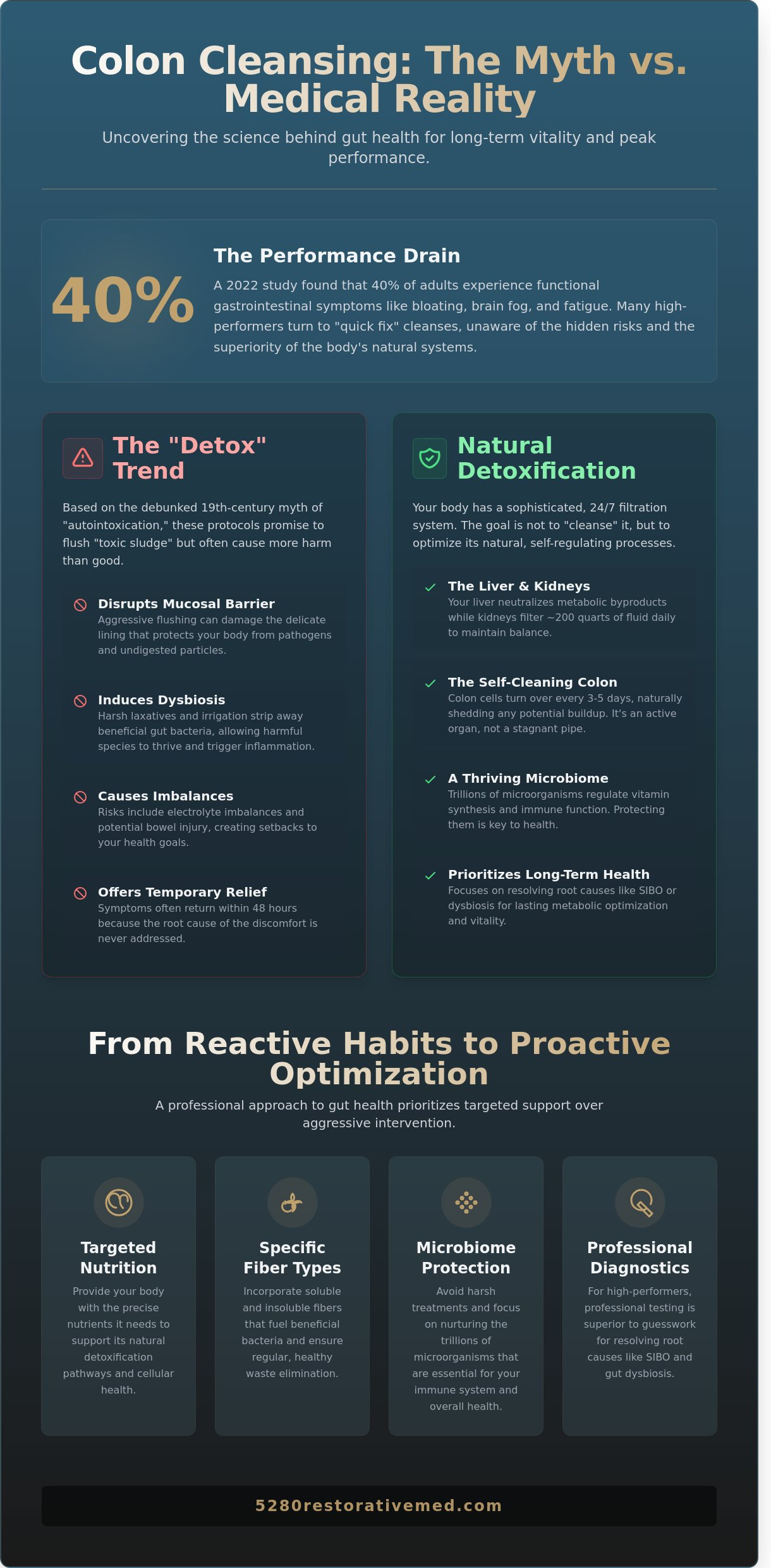
At 5280 Restorative Medicine, we believe health is a proactive journey rather than a reactive necessity. A 2022 study in the Journal of Clinical Medicine found that 40% of adults deal with functional gastrointestinal symptoms that stifle their daily performance. You’ll learn the clinical reality of gut health and how to support your body’s natural detoxification without the risks of unverified protocols. We’re exploring the science of the gut-brain axis to help you eliminate bloating and reclaim your vitality through precise, medical optimization.
Key Takeaways
- Understand why your body’s innate filtration system is more effective at detoxification than temporary “flush” protocols.
- Identify the hidden clinical risks of a standard colon cleanse and how to protect your gut’s delicate mucosal barrier.
- Discover how to transition from reactive habits to a strategy of gut optimization through targeted nutrition and specific fiber types.
- Learn why professional diagnostic testing is the superior choice for high-performers seeking to resolve root causes like SIBO or dysbiosis.
- Explore a personalized path to digestive restoration that prioritizes long-term metabolic health over generic wellness trends.
What is a Colon Cleanse? Understanding the “Detox” Trend
You’ve likely encountered the promise of a total body reset through a colon cleanse, a practice that involves flushing the large intestine with fluids, herbs, or enzymes. It’s vital to distinguish between a medical necessity and an elective trend. Doctors prescribe bowel prep to ensure clarity during a colonoscopy, but elective wellness “detoxes” often rely on the “toxic sludge” narrative. This idea suggests that waste adheres to your intestinal walls for years, poisoning your system from the inside. From a clinical perspective, this is a marketing myth rather than a biological reality. Colon cleansing is a process often used to remove perceived waste, though the body is naturally equipped for this task.
The Appeal for High-Performers
Executives and high-performers frequently seek out these resets to counteract the physiological toll of high-stress lifestyles. When you’re managing complex projects and back-to-back meetings, brain fog and chronic lethargy feel like obstacles to your success. The psychological lure of a “quick fix” is powerful, promising to wash away the effects of poor sleep and processed meals in a single weekend. However, that heavy, sluggish sensation is rarely about physical waste. It’s often a manifestation of functional health and wellness imbalances, such as hormonal shifts or gut dysbiosis, that require a more sophisticated, personalized approach than a simple elective colon cleanse. True restoration involves looking at the root cause of fatigue rather than seeking a temporary flush.
The Myth of Autointoxication
The roots of this trend lie in the debunked 19th-century theory of autointoxication. This ancient misconception suggested that the body was essentially a plumbing system prone to clogs. Modern science moved far beyond these ideas by the 1920s. Colon cleansing practitioners often warn about “impacted fecal matter,” yet surgeons and gastroenterologists don’t see these layers of old waste during procedures. Your colon is an active, self-cleaning organ, not a stagnant pipe. Its epithelial cells turn over every 72 to 120 hours, naturally shedding any potential buildup. True restoration comes from optimizing this biological process, not bypassing it with aggressive external treatments. Understanding that your body is a self-regulating system is the first step toward achieving lasting vitality and longevity.
By shifting the focus from “cleaning” to “optimizing,” you can better support your body’s natural detoxification pathways. This proactive journey doesn’t require harsh interventions. Instead, it relies on clinical authority and a deep understanding of cellular health to ensure your gut performs at its peak. When we treat health as a personalized journey, we move away from myths and toward measurable, restorative results.
The Biology of Natural Detoxification
You might feel sluggish or bloated and assume your body needs a manual “reset.” However, your physiology already possesses a sophisticated filtration network that operates 24 hours a day. The liver neutralizes metabolic byproducts while the kidneys process approximately 200 quarts of fluid daily to maintain chemical balance. The colon completes this cycle by managing water absorption and waste excretion without the need for external interference. This biological process is precise and self-regulating, provided the underlying systems are supported.
The mucosal barrier serves as your body’s primary line of defense. This thin, protective layer of cells prevents undigested food particles and pathogens from entering your systemic circulation. When this barrier is compromised, it can lead to heightened immune responses and chronic fatigue. Relying on an aggressive colon cleanse can often disrupt this delicate architecture rather than supporting it. Medical experts frequently highlight the risks of colon cleansing, such as electrolyte imbalances and potential bowel injury, which can set back your journey toward optimal health.
The Microbiome: Your Internal Ecosystem
Your gut is home to trillions of microorganisms that regulate vitamin synthesis and immune function. When you use harsh irrigation or stimulant laxatives, you risk inducing dysbiosis. This is a state where beneficial bacteria are stripped away, allowing opportunistic species to thrive. Such imbalances trigger systemic inflammation, which can hinder your cellular performance. At 5280 Restorative Medicine, we’ve observed that protecting the microbiome is essential for mast cell activation syndrome management. Maintaining a stable internal ecosystem is a non-negotiable requirement for patients dealing with complex immune sensitivities.
Motility and the Migrating Motor Complex (MMC)
Sluggish digestion usually stems from a mechanical failure rather than a buildup of “toxins.” The Migrating Motor Complex (MMC) acts as your gut’s “housekeeping wave.” This electrical activity occurs between meals, rhythmically clearing the small intestine of debris and bacteria. If your MMC is compromised, you’ll likely experience persistent bloating and gas. High cortisol levels from chronic stress can stall these waves, slowing your transit time significantly. Restoring this natural rhythm is more effective for longevity than any temporary flush. If you’re struggling with digestive fatigue, a personalized health assessment can help identify the root cause of your motility issues and restore your vitality.
Colon Cleanse Methods vs. Clinical Reality
You might feel sluggish and assume a colon cleanse is the fast track to a metabolic reset. While the promise of “detoxification” is tempting, clinical reality often paints a different picture. At 5280 Restorative Medicine, we focus on physiological optimization rather than aggressive purging. Many popular methods prioritize immediate, visible results over long-term cellular health. True vitality comes from supporting your body’s natural systems, not forcing them into a state of stress.
The Risks of Colon Hydrotherapy
Medical professionals rarely recommend elective colonic irrigation because the procedure bypasses the body’s natural filtration rhythm. The process involves flushing the large intestine with large volumes of water, which can lead to the dangers of colon cleansing. A 2011 study published in the Journal of Family Practice highlighted that side effects range from cramping to severe complications like bowel perforation. When you flush the system, you aren’t just removing waste; you’re often stripping away beneficial bacteria and disrupting your delicate electrolyte balance, specifically sodium, potassium, and magnesium. This disruption can trigger heart arrhythmias or kidney distress in vulnerable individuals.
Laxative Abuse and Dependency
Many “cleansing” teas marketed for weight loss rely on stimulant laxatives like senna or cascara. Chronic use of these substances can lead to “lazy bowel syndrome,” or melanosis coli, where the colon loses its natural muscle tone. It’s a common misconception that these teas aid in fat loss. A 2020 clinical review indicates that weight lost during a 48-hour colon cleanse is almost exclusively water and stool. This doesn’t represent true metabolic restoration. It’s a temporary shift that leaves patients feeling depleted rather than revitalized. Relying on these stimulants creates a cycle of dependency that undermines your gut’s innate ability to function.
| Cleanse Method | Clinical Risks | Actual Benefits |
|---|---|---|
| Colon Hydrotherapy | Perforation, infection, electrolyte depletion. | No proven benefits for healthy individuals. |
| Stimulant Laxative Teas | Bowel dependency, dehydration, nutrient malabsorption. | Temporary relief for acute constipation only. |
| High-Fiber Supplements | Bloating or gas if introduced without enough water. | Supports microbiome health and natural motility. |
| Herbal “Detox” Pills | Liver toxicity, herb-drug interactions, gut irritation. | Minimal; often lack standardized clinical dosing. |
At 5280 Restorative Medicine, we believe that health is a proactive journey. Instead of seeking a quick fix through harsh irritants, we guide our patients toward sustainable gut optimization. This involves understanding the underlying science of your unique biology to achieve measurable, lasting results in your energy and longevity.
The Functional Alternative: How to Truly Support Your Gut
True gut health is achieved through supporting the body’s innate elimination pathways rather than bypassing them. While a temporary colon cleanse might offer a fleeting sense of lightness, it often ignores the underlying physiological mechanisms that keep your system running smoothly. We focus on transitioning from a mindset of “cleansing” to one of “optimization,” where nutrition and lifestyle choices empower your body to perform its natural duties with precision. This proactive journey begins with understanding that your gut isn’t a pipe to be scrubbed, but a complex ecosystem that requires consistent, high-quality inputs.
Dietary fiber serves as the primary architect of this ecosystem. You need a strategic balance of both soluble and insoluble fiber to maintain true regularity. Soluble fiber, found in foods like psyllium and citrus, absorbs water to create a gel that slows glucose absorption and feeds beneficial bacteria. Insoluble fiber, sourced from leafy greens and whole grains, provides the necessary bulk to stimulate the muscular contractions of the intestines. However, fiber alone isn’t a panacea. Without proper cellular hydration, increased fiber can lead to discomfort. True motility requires water paired with essential electrolytes like sodium and potassium to ensure the electrical signals in your gut lining remain active and responsive.
Optimizing the Elimination Pathways
Effective detoxification relies heavily on liver health and consistent bile flow. The liver processes toxins, which are then carried by bile into the digestive tract for removal. When bile becomes stagnant, the entire elimination process slows down. To support this, we look toward innovative clinical tools. For example, red light therapy may support mitochondrial health and gut motility by providing the cellular energy needed for smooth muscle contraction. Furthermore, movement and stress management are non-negotiable. Gentle physical activity and deep breathing stimulate the vagus nerve, which acts as the primary communication line between your brain and your digestive system, signaling it’s time to “rest and digest.”
The Role of Targeted Supplementation
When lifestyle changes need additional support, targeted minerals and nutrients can bridge the gap. We often utilize different forms of magnesium to encourage natural regularity without the harshness of a traditional colon cleanse. Magnesium citrate acts as a gentle osmotic, drawing moisture into the bowel, while magnesium oxide provides a higher concentration of elemental magnesium for those with more significant stagnation. Rebuilding the gut also requires a two-step approach:
- Prebiotics: These specialized fibers act as fertilizer for your existing microbiome.
- Probiotics: These introduce beneficial strains to restore diversity after periods of poor diet or high stress.
- Digestive Enzymes: Using enzymes like lipase or protease can significantly reduce the feeling of “heaviness” after meals by ensuring nutrients are broken down before they reach the lower GI tract.
If you’re ready to move beyond temporary fixes and achieve lasting vitality, our team is here to guide your journey. Contact 5280 Restorative Medicine to begin your personalized optimization plan today.
A Professional Approach to Gut Health and Vitality
High-achieving individuals don’t settle for “average” in their professional lives, and their health standards should be no different. While a retail colon cleanse kit might offer a temporary sense of relief, it rarely addresses the underlying microbial imbalances that drain your cognitive energy. For the executive or athlete, a generic approach is a missed opportunity for true biological optimization. Instead of guessing with store-bought supplements, a clinical strategy focuses on data-driven results that identify exactly why your system feels sluggish. Working with a gut health doctor near me who specializes in root-cause diagnostics can be the difference between temporary symptom relief and lasting metabolic restoration.
At 5280 Restorative Medicine, we view gut health as the foundation of metabolic resilience. A Comprehensive Gut Health Assessment allows us to move past symptom management and target root causes like SIBO (Small Intestinal Bacterial Overgrowth) or chronic dysbiosis. This proactive journey treats your body as a high-performance machine that requires precision tuning rather than a reactive fix.
Advanced Diagnostic Testing
We utilize advanced tools like the GI-MAP stool test to provide a clear blueprint of your internal health. This isn’t a standard screening; it’s a deep dive into your unique microbiome. We look for metabolic roadblocks that lead to chronic fatigue and persistent bloating. While traditional doctors might tell you your labs are “normal,” we look for “optimal” functional ranges. A marker that sits at the edge of a standard reference range might still be the reason you experience a 2:00 PM energy crash. By identifying specific pathogens or enzyme deficiencies, we can remove the obstacles preventing you from reaching peak performance. Partnering with a functional gastroenterologist who interprets these results through a root-cause lens ensures that your findings translate into a targeted, personalized restoration strategy.
- Identify hidden infections that trigger systemic inflammation.
- Measure digestive capacity to ensure you’re actually absorbing your nutrients.
- Assess the health of the gut barrier to prevent “leaky gut” from affecting your focus.
Engineering Long-Term Metabolic Resilience
True restoration goes beyond a simple “reset” phase. It requires a lifestyle of continuous optimization where your gut health is integrated into a broader executive health strategy. Our protocols for functional medicine denver are designed to create sustainable energy that lasts throughout your demanding schedule. We recognize that the gut-brain axis is a two-way street; a healthy microbiome is essential for mental clarity and emotional stability.
Your gut health also plays a critical role in how your body processes hormones. This is why we prioritize digestive optimization before or alongside bhrt (bioidentical hormone replacement therapy). When your gut is functioning at its peak, your body can metabolize and utilize these hormones more effectively, leading to better sleep and improved body composition. Stop relying on a temporary colon cleanse and start a personalized path to longevity. Contact our Denver office to schedule a consultation and reclaim your metabolic vitality.
Beyond the Flush: Your Path to Lasting Gut Optimization
True vitality isn’t found in a temporary colon cleanse or a generic over-the-counter kit. Your gut requires a sophisticated balance of microbial health and cellular integrity to function at its peak. While the body possesses natural detoxification pathways, modern stressors often demand more than just passive maintenance. We’ve explored how shifting from reactive “detox” trends toward a functional medicine framework allows you to address the root causes of bloating, fatigue, and metabolic slowdown. This transition replaces guesswork with clinical precision.
At 5280 Restorative Medicine, we move beyond the baseline. Led by Dr. Marci Catallo-Madruga, an expert in functional medicine, our team utilizes advanced diagnostic testing to map your unique biological landscape. We don’t believe in one-size-fits-all solutions. Instead, we develop custom metabolic protocols specifically designed for high-performers who refuse to settle for average health. It’s time to stop chasing myths and start investing in measurable restoration. You deserve a partner who understands that your gut health is the foundation of your long-term longevity.
Reclaim your vitality with a Personalized Gut Health Assessment
Your journey toward peak performance begins with a single, informed step toward optimization.
Frequently Asked Questions
Is a colon cleanse safe for everyone?
A colon cleanse isn’t universally safe, particularly for the 15 percent of adults living with irritable bowel syndrome or chronic kidney disease. These procedures can disrupt vital electrolyte balances like sodium and potassium. We recommend a clinical screening at 5280 Restorative Medicine before starting any intensive gastrointestinal protocol. This proactive step ensures your path to vitality doesn’t inadvertently compromise your cellular health or long term wellness.
Can a colon cleanse help with weight loss?
You might see the scale drop by 2 to 5 pounds after a colon cleanse, but this is primarily water weight and fecal matter. It doesn’t reduce adipose tissue or optimize your metabolic rate. For lasting weight management, we focus on hormonal optimization and sustainable lifestyle shifts. Temporary shifts in weight shouldn’t be confused with true fat loss or the long term metabolic restoration we aim for.
How often should you do a colon cleanse?
Most individuals should limit intensive procedures to once or twice a year to avoid disrupting the delicate mucosal lining. Over-cleansing can lead to bowel dependency or nutrient malabsorption. At our Denver clinic, we tailor these recommendations to your unique biomarkers and cellular needs. We prioritize your long term gut health over aggressive, repetitive interventions that might strip away the beneficial bacteria necessary for your immune system.
What are the symptoms of toxins in the colon?
Signs of a sluggish colon include persistent bloating, fatigue, and skin irritations that affect 1 in 5 adults. Since 70 percent of your immune system is located in your gut, these symptoms often signal systemic inflammation. When waste lingers, it can lead to the reabsorption of metabolic byproducts. We look for these markers to help you restore peak performance and clear these physiological roadblocks to your vitality.
Is there a natural way to clean your colon at home?
Consuming 25 to 35 grams of dietary fiber daily is the most effective way to support your body’s natural elimination. Hydration is equally critical, as the colon requires 64 to 80 ounces of water to process waste efficiently. These daily habits create a foundation for longevity. You don’t always need invasive procedures when you optimize your body’s inherent systems through consistent, high quality nutrition and movement.
Can a colon cleanse improve brain fog?
Optimizing your gut health can significantly reduce brain fog because 95 percent of your body’s serotonin is produced in the digestive tract. The gut-brain axis connects your enteric nervous system directly to your cognitive function. When we address gastrointestinal stagnation, patients often report a 30 percent improvement in mental clarity. Achieving this level of cognitive performance is a cornerstone of our restorative approach at 5280 Restorative Medicine.
What is the difference between a colon cleanse and a detox?
A mechanical procedure focuses on the physical removal of waste from the large intestine, while a detox supports the liver’s Phase I and Phase II filtration pathways. Cleansing is about immediate physical removal. Detoxification is about metabolic biotransformation. Both play roles in your journey toward vitality, but they target different physiological systems. We help you distinguish between these methods to ensure you’re using the right tool.
Should I take probiotics after a colon cleanse?
Taking a high potency probiotic with 10 billion to 50 billion CFUs is vital for restoring your microbiome after a procedure. This step ensures that beneficial bacteria like Lactobacillus and Bifidobacterium repopulate the gut wall. Without this restoration, you risk leaving your system vulnerable to opportunistic pathogens. We focus on this rebalancing phase to help you achieve a superior state of gastrointestinal health and lasting wellness.