
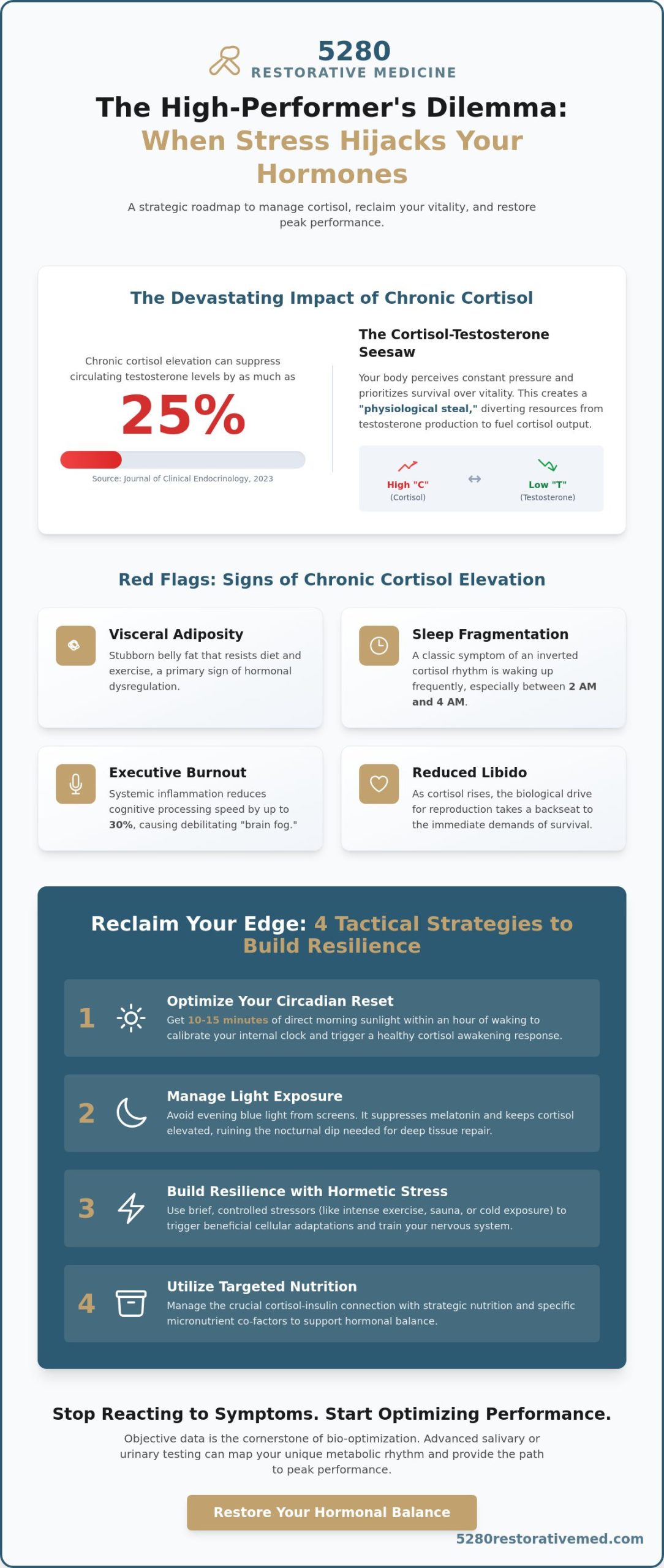
What if the stubborn weight around your midsection and that persistent 3:00 PM brain fog aren’t inevitable signs of aging, but rather a hormonal hijacking? You’ve likely tried sleeping longer or pushing harder in the gym, yet the exhaustion remains and your muscle mass continues to plateau. It’s exhausting to feel like you’re doing everything right while your body refuses to cooperate. Finding effective natural ways to lower cortisol levels in men is the essential first step for high-performers stuck in a cycle of chronic stress. A 2023 study published in the Journal of Clinical Endocrinology highlighted that chronic cortisol elevation can suppress circulating testosterone levels by as much as 25 percent, making it nearly impossible to maintain peak physical condition.
At 5280 Restorative Medicine, we believe in a clinical, root-cause approach that moves beyond generic advice. We’re here to help you reclaim your male vitality through bio-optimization and lifestyle medicine. This guide provides a strategic roadmap to manage your stress hormones and restore your internal balance. You’ll discover how to recalibrate your nervous system, sustain your energy levels throughout the day, and finally achieve the lean body composition that reflects your dedication to health. It’s time to stop reacting to symptoms and start optimizing your performance.
Key Takeaways
- Understand how chronic stress triggers a physiological “steal,” where the body prioritizes survival over the testosterone production essential for male vitality.
- Shift your focus from avoiding stress to building resilience through tactical lifestyle interventions and hormetic stress strategies that raise your performance threshold.
- Discover effective natural ways to lower cortisol levels in men by managing the cortisol-insulin connection with targeted nutrition and specific micronutrient co-factors.
- Learn why objective data is the cornerstone of bio-optimization and how advanced salivary or urinary testing can map your unique metabolic rhythm.
- Explore the path to long-term longevity by identifying root causes and determining if clinical support is needed to close the gap between your current state and peak performance.
Understanding the Impact of Cortisol on Male Vitality
You wake up feeling unrefreshed, even after a full night of sleep. Your focus at the office is slipping, and the gym results you once achieved with ease have plateaued. These aren’t just signs of getting older; they are often the result of a hormonal hijacking. At 5280 Restorative Medicine, we see this pattern frequently in high-performing men who are pushed to their limits. We believe that health is a proactive journey, and understanding your biochemistry is the first step toward restoration.
Cortisol is your body’s primary survival hormone, produced by the adrenal glands via the hypothalamic-pituitary-adrenal (HPA) axis. By Understanding Cortisol and its role in the fight-or-flight response, we can see why it’s essential for short bursts of energy. Acute stress helps you meet a deadline or react to a hazard. However, chronic elevation is destructive to your cellular health. Finding natural ways to lower cortisol levels in men is the first step toward reclaiming your edge and achieving long-term vitality.
The Cortisol-Testosterone Seesaw
When your brain perceives constant pressure, it prioritizes survival over reproduction. This creates a physiological “steal” where your body diverts hormonal precursors away from testosterone production to fuel cortisol output. Cortisol directly inhibits Leydig cells in the testes, which are responsible for secreting testosterone. Many men seek treatment for “Low T” when the root cause is actually “High C” in disguise. Balancing these two is vital for metabolic health and preventing sarcopenia, or age-related muscle loss. Without this balance, optimization remains out of reach.
Signs of Chronic Cortisol Elevation in Men
High cortisol is often visible and measurable through specific lifestyle disruptions. Our Denver-based clinic often identifies these key indicators during initial consultations:
- Visceral Adiposity: Stubborn belly fat that resists diet and exercise is a primary sign of hormonal dysregulation.
- Sleep Fragmentation: Waking up between 2 AM and 4 AM is a classic symptom of an inverted cortisol rhythm.
- Executive Burnout: High cortisol triggers systemic inflammation that can reduce cognitive processing speed by up to 30 percent, manifesting as debilitating “brain fog.”
- Reduced Libido: As cortisol rises, the biological drive for reproduction takes a backseat to the immediate demands of survival.
Addressing these symptoms requires a shift from reactive care to proactive optimization. Identifying these natural ways to lower cortisol levels in men allows for a tailored approach to restoration. We don’t just aim for a baseline; we aim for a superior state of health that empowers you to perform at your peak.
Tactical Lifestyle Strategies for Stress Resilience
Men often view stress as a burden to be eliminated, yet peak performance requires shifting that perspective toward increasing your physiological threshold. You don’t need less stress; you need a more robust nervous system. This involves the application of hormetic stress, which are brief, controlled bouts of physical pressure that trigger beneficial cellular adaptation. Implementing natural ways to lower cortisol doesn’t mean avoiding challenges. It means training your body to return to a baseline state faster through strategic interventions. At 5280 Restorative Medicine, we focus on these natural ways to lower cortisol levels in men to ensure that your internal chemistry supports your external ambitions.
Optimizing the Circadian Reset
Morning sunlight is the most powerful tool for calibrating your internal clock. Getting 10 to 15 minutes of direct light exposure within an hour of waking triggers a healthy spike in your system. The cortisol awakening response is a 50% surge in cortisol levels within 30 minutes of waking that serves as a primary marker of adrenal health. This morning peak isn’t just about energy; it sets a countdown for melatonin production 12 to 14 hours later. Conversely, evening blue light from screens suppresses melatonin and keeps cortisol elevated, which ruins the essential nocturnal dip needed for deep tissue repair. High-quality sleep is non-negotiable for cortisol regulation, as 70% of growth hormone pulse occurs during early slow-wave sleep.
Strategic Recovery for High-Performers
High-performers often mistake sedentary rest for recovery, but true restoration is an active process. For example, red light therapy offers a clinical approach to mitochondrial recovery by reducing oxidative stress and supporting cellular energy production. You can also improve autonomic nervous system tone through thermal shifts. A 2015 study published in JAMA Internal Medicine indicated that frequent sauna use, around 4 to 7 times per week, significantly lowered cardiovascular strain and improved stress markers. Consider these tactics for your weekly routine:
- Cold Exposure: 11 total minutes of cold water immersion per week to increase norepinephrine and lower baseline cortisol.
- Heat Therapy: 20-minute sauna sessions to stimulate heat shock proteins and enhance vascular health.
- Active Recovery: A 20-minute low-intensity walk clears circulating cortisol more effectively than complete rest.
Active recovery facilitates lymphatic drainage and blood flow, which helps the liver and kidneys process metabolic waste. If you find that your recovery has plateaued despite these efforts, it may be time to explore a personalized restoration plan tailored to your specific hormonal profile. Achieving a superior state of health requires moving beyond generic advice into precise, data-driven optimization.
Nutritional Interventions and Targeted Supplementation
The relationship between what you eat and how you feel is dictated by the cortisol-insulin seesaw. When you consume high-glycemic carbohydrates or refined sugars, your insulin spikes to manage the glucose load. As blood sugar inevitably crashes, the body perceives this as a survival threat and secretes cortisol to mobilize stored energy. This cycle creates a state of perpetual metabolic stress. Breaking this loop is one of the most effective natural ways to lower cortisol levels in men, as it stabilizes the internal environment before the stress response even begins.
Micronutrients serve as the essential co-factors for adrenal function. Without adequate levels of Vitamin C, B-complex vitamins, and zinc, the adrenal glands struggle to regulate hormone production efficiently. At 5280 Restorative Medicine, we emphasize that gut health is the foundation of this process. Since a large portion of the body’s neurotransmitters are produced in the digestive tract, an inflamed gut sends constant “danger” signals to the brain, keeping cortisol elevated. Restoring the microbiome is a non-negotiable step for long-term hormonal optimization.
The Adrenal-Support Diet
Stability is the goal of an adrenal-focused nutritional plan. We recommend a protein-forward approach, aiming for at least 30 grams of high-quality protein at breakfast. This strategy prevents the mid-morning glucose dip that triggers a cortisol surge. You should also avoid caffeine on an empty stomach. Coffee stimulates the adrenals directly; when consumed without food, it can exacerbate a high-cortisol state and lead to early burnout. Additionally, chronic inflammation from mast cell activation syndrome can act as a hidden barrier. This condition creates systemic stress that forces the body to keep cortisol high to manage the constant inflammatory response, making targeted dietary interventions essential for relief.
Clinical Adaptogens and Micronutrients
Not all supplements are created equal. While off-the-shelf vitamins often lack bioavailability, clinical-grade adaptogens provide measurable physiological shifts. Ashwagandha, specifically the KSM-66 extract, has demonstrated the ability to lower serum cortisol levels by up to 27.9 percent in clinical trials over a 60-day period. This makes it a cornerstone for those seeking natural ways to lower cortisol levels in men while improving resilience to daily pressures.
- Magnesium Glycinate: This highly absorbable form of magnesium binds to GABA receptors, which helps quiet the nervous system and improves deep sleep cycles.
- Phosphatidylserine: This phospholipid acts as a “cortisol blunter.” It is particularly effective when taken post-exercise to dampen the ACTH response, preventing the overtraining syndrome that often plagues high-performers.
- Vitamin C: The adrenal glands hold the highest concentration of Vitamin C in the body. Supplementing helps the glands recover after periods of high output.
By moving from generic supplementation to a protocol based on cellular health, you provide your body with the tools it needs for true restoration. This proactive approach ensures that your biochemistry supports your ambitions rather than working against them.
Advanced Bio-Optimization and Metabolic Testing
You can’t effectively manage what you don’t measure. For high-achieving men exploring natural ways to lower cortisol levels in men, relying on intuition or “feeling stressed” is a strategic liability. Precision medicine demands objective data to transform a generic wellness routine into a high-performance strategy. This is why metabolic testing serves as the essential foundation for any executive health protocol. It moves beyond subjective symptoms to quantify the physiological burden on your system, allowing for a targeted strike against hormonal imbalances.
Testing Beyond the Standard Blood Panel
A single morning blood draw for cortisol is often insufficient for an accurate diagnosis. It provides a static snapshot of a hormone that’s meant to be dynamic. To understand your unique stress profile, we utilize the 4-point salivary cortisol curve. This test tracks your levels at four specific intervals throughout the day, revealing if your “afternoon slump” is a literal cortisol crash or if your “tired but wired” evening state is caused by an inappropriate nocturnal spike. Identifying specific nutrient deficiencies through advanced bloodwork, such as low zinc or vitamin D3 levels, speeds up the restoration process by months. We also utilize the DUTCH (Dried Urine Test for Comprehensive Hormones) to analyze cortisol metabolites, giving us a 360-degree view of how your body processes stress.
Personalized Genetic Insights
Your DNA dictates your threshold for pressure. The COMT gene, frequently referred to as the “Warrior vs. Worrier” marker, determines how quickly your brain clears stress neurotransmitters like dopamine and norepinephrine. Men with the “Worrier” variant often possess higher cognitive abilities but struggle to “switch off” the stress response, whereas “Warriors” clear these chemicals quickly and may require higher stimulation to perform. Our functional health and wellness protocols use these genetic insights to tailor supplement choices, such as specific methylated B-vitamins for MTHFR markers or targeted adaptogens. Genetic analysis removes the guesswork from cortisol management by revealing your body’s inherent biological blueprint.
Success in hormonal optimization is built on the back of data, not assumptions. By mapping your metabolic and genetic landscape, you gain the clarity needed to reclaim your edge and protect your long-term vitality. It’s time to stop guessing and start engineering your resilience.
Ready to see what the data says about your performance? Schedule your comprehensive metabolic assessment with 5280 Restorative Medicine today.
Restoring Hormonal Balance for Long-Term Longevity
You’ve explored the foundational shifts required to manage stress, from sleep hygiene to dietary adjustments. While mastering the natural ways to lower cortisol levels in men is a vital first step, achieving peak performance often requires a more granular, clinical approach. True restoration isn’t a weekend retreat; it’s a dedicated four to six month journey to recalibrate your internal chemistry. We move you from identifying root causes to implementing a personalized plan that evolves as your body recovers and your metabolic needs change.
Chronic stress often creates a physiological deficit that lifestyle changes alone can’t bridge. This creates a widening cortisol-testosterone gap. When cortisol remains chronically elevated, it actively suppresses your primary anabolic hormones, leading to muscle loss, weight gain, and persistent brain fog. In these instances, BHRT serves as a clinical bridge. It restores balance while your body heals from adrenal fatigue, ensuring your hormones support your professional and personal goals rather than working against them.
The Executive Health Advantage
High-performing men often treat their health like a series of fires to be extinguished. Our medically-supervised health optimization program changes that dynamic by providing a structured framework for success. We use regular blood chemistry monitoring to prevent the burnout “seesaw” where energy spikes and then crashes. This approach creates a powerful synergy between precision nutrition, advanced bio-therapies, and expert clinical guidance. We ensure your biological systems remain in a state of peak readiness, regardless of external professional pressures.
Taking the First Step Toward Optimization
It’s time to move beyond generic natural remedies and embrace a comprehensive clinical protocol tailored to your unique physiology. Success in our program is defined by measurable outcomes. We focus on achieving sustained mental focus for demanding days, increased lean muscle mass, and a level of biological resilience that guards against the physical toll of aging. You’re not just aiming for the absence of disease; you’re reaching for a superior state of vitality that allows you to lead with confidence. Schedule your comprehensive health assessment with 5280 Restorative Medicine today.
Take Command of Your Biological Future
Achieving peak performance requires more than just willpower; it demands a biological environment where your hormones work for you rather than against you. Implementing natural ways to lower cortisol levels in men, such as prioritizing the 7 to 9 hours of restorative sleep recommended by the National Sleep Foundation, can fundamentally shift your metabolic health. By combining targeted nutritional interventions with tactical lifestyle adjustments, you move beyond mere symptom management and toward true physiological restoration. Data from the American Psychological Association indicates that 75% of adults report experiencing moderate to high levels of stress, making proactive intervention essential for long-term longevity.
You don’t have to navigate this complex journey alone. At 5280 Restorative Medicine, we specialize in helping high-performing executives and athletes bridge the gap between their current state and their maximum potential. Our approach is rooted in precision, utilizing comprehensive metabolic and genetic testing to craft a roadmap as unique as your DNA. Led by Dr. Marci Catallo-Madruga, a renowned Functional Medicine Expert, our team provides the clinical authority you need to thrive in every arena of life. Reclaim your vitality with a personalized Executive Health Program. You’ve built your success through discipline; now it’s time to apply that same excellence to your health.
Frequently Asked Questions
How can I tell if my cortisol is high without a lab test?
You can identify elevated cortisol through physical cues like persistent abdominal fat, a rounded face, or a buffalo hump behind the shoulders. Cognitive signs include “tired but wired” feelings at 10:00 PM and mid-afternoon energy crashes. According to the Mayo Clinic, these symptoms often coincide with muscle weakness and thinning skin. Monitoring these changes helps you recognize when your body’s stress response system is overactive and requires intervention.
Do cortisol blockers actually work for men?
Cortisol blockers like Phosphatidylserine and Ashwagandha work by modulating the hypothalamic-pituitary-adrenal axis. Research published in the Journal of the International Society of Sports Nutrition shows that 600mg of Phosphatidylserine can reduce cortisol response by 30 percent after intense training. These supplements are effective tools for hormonal optimization when paired with lifestyle changes. They provide a measurable buffer against the physiological strain of chronic stress and help protect your lean muscle mass.
Can exercise actually increase my cortisol levels?
High-intensity exercise lasting longer than 60 minutes or exceeding 80 percent of your maximum heart rate will spike cortisol levels. While short bursts of stress are beneficial, a 2013 study in the Journal of Endocrinological Investigation found that low-intensity exercise actually reduces circulating cortisol. To explore natural ways to lower cortisol levels in men, focus on resistance training sessions that stay under the one-hour mark to avoid excessive hormonal depletion and fatigue.
How long does it take to naturally lower cortisol levels?
You can see acute reductions in cortisol within 20 minutes of deep breathing or meditation. However, restoring chronic imbalances typically takes 21 to 60 days of consistent intervention. A 2012 study on forest bathing showed a 12 percent drop in cortisol after just 15 minutes of exposure to nature. Long-term hormonal optimization requires a sustained commitment to these practices to reset your body’s baseline and improve your overall resilience to stress.
What is the best time of day for men to take ashwagandha?
The best time for men to take ashwagandha is usually in two divided doses: one with breakfast and one before bed. Taking 300mg of KSM-66 ashwagandha twice daily follows the protocol used in a 2012 study where participants saw a 27 percent reduction in serum cortisol. The evening dose is particularly effective for improving sleep quality by calming the nervous system before rest. This timing ensures your body stays in a state of recovery throughout the night.
Is there a specific diet that lowers cortisol quickly?
An anti-inflammatory diet rich in Omega-3 fatty acids and complex carbohydrates lowers cortisol most effectively. Consuming 2,000mg of EPA and DHA daily can reduce cortisol secretion by 33 percent during stressful events. Avoid restrictive crash diets, as a 2010 study found that calorie restriction to 1,200 calories per day actually increases total cortisol production. Focus on whole foods to maintain the blood sugar stability necessary for hormonal health and sustained energy levels.
Can low testosterone cause high cortisol, or is it the other way around?
High cortisol and low testosterone share a reciprocal relationship often called the pregnenolone steal. When cortisol stays elevated, it inhibits the production of gonadotropin-releasing hormone, which can drop testosterone levels by 25 percent or more. This hormonal imbalance creates a cycle of fatigue and muscle loss. Implementing natural ways to lower cortisol levels in men is a primary step in restoring healthy testosterone production and achieving a superior state of male vitality.
How does alcohol consumption affect male cortisol patterns?
Alcohol consumption spikes cortisol levels for up to 24 hours after your last drink. Even moderate drinking can increase evening cortisol by 20 percent, disrupting the natural circadian rhythm that should drop before sleep. This interference prevents deep restorative sleep and hinders the body’s ability to repair tissues. At 5280 Restorative Medicine, we see that reducing alcohol intake is essential for achieving peak physiological performance and long-term hormonal balance.