
Your bathroom scale isn’t a reflection of your willpower, and it’s certainly not a measure of your discipline. Many people find themselves trapped in a cycle of frustration, wondering, “why am i gaining weight despite eating healthy” while their daily efforts go unrewarded. With the U.S. adult obesity rate reaching 40.3 percent in recent years, it’s clear that the traditional “calories in versus calories out” model fails to account for the complex biological reality of the human body.
We understand how isolating it feels when your commitment to wellness doesn’t translate to physical results. You aren’t broken, and your body isn’t failing you on purpose. Instead, you’re likely facing specific metabolic, hormonal, or physiological barriers that act as a silent brake on your progress. This guide will help you identify the hidden drivers of weight loss resistance, from insulin signaling to adrenal function, providing a clear roadmap to optimize your internal environment. You’ll discover how advanced diagnostics can move you beyond guesswork and toward a state of peak physical function where your health finally reflects your hard work.
Key Takeaways
- Understand that weight loss resistance is a physiological state where your body’s internal systems actively stall fat loss, regardless of your willpower.
- Uncover the science behind why am i gaining weight despite eating healthy, focusing on how cellular inflammation and insulin signaling can override a clean diet.
- Learn why intense workouts may actually hinder your results if chronic stress is keeping your cortisol levels high and triggering visceral fat storage.
- Explore the diagnostic tests that go beyond standard blood work to pinpoint thyroid imbalances and metabolic dysfunction.
- Gain a roadmap for moving from restrictive dieting to a personalized protocol that optimizes your metabolism for long-term health and performance.
The Healthy Eater’s Paradox: Defining Weight Loss Resistance
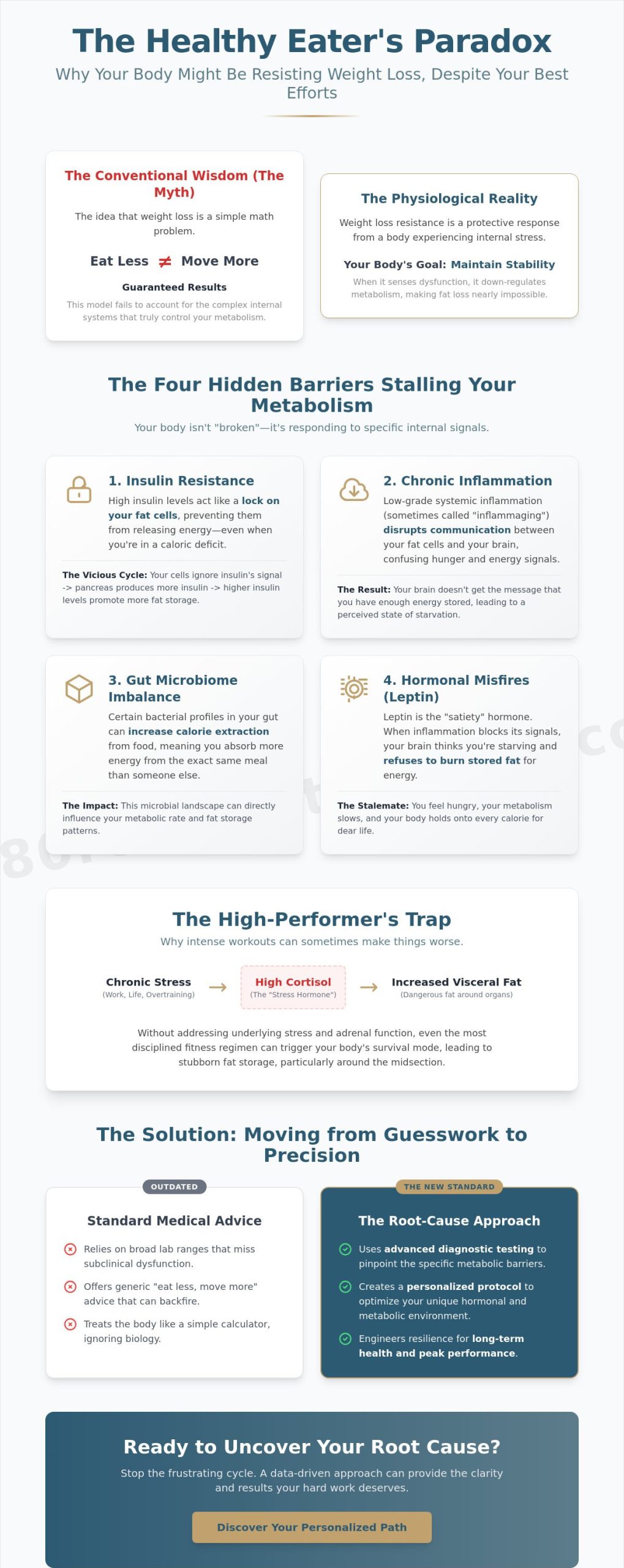
You follow the plan. You track the macros. You maintain the discipline that has fueled your success in every other area of life. Yet, the scale remains stubbornly fixed or, worse, begins to climb. This is the healthy eater’s paradox. It’s a state where the question “why am i gaining weight despite eating healthy” becomes a daily source of anxiety. For high-performers, this lack of ROI on your effort feels like a betrayal. However, weight loss resistance isn’t a failure of will; it’s a physiological state where your body’s homeostatic mechanisms actively prevent fat loss to maintain a perceived sense of safety.
To solve this, we must first distinguish what is actually happening beneath the surface. True weight gain is the accumulation of adipose tissue, but it’s often confused with transient fluid retention or the positive addition of lean muscle mass. While muscle is denser than fat, it’s rarely the sole cause of significant, unexpected weight gain. Instead, the culprit is often a skewed metabolic set point. This is the weight your body is biologically programmed to defend. Your Basal metabolic rate, the energy your body requires to function at rest, can actually downregulate if it senses internal dysfunction, making it nearly impossible to lose weight through traditional means.
When “Doing Everything Right” Isn’t Enough
When your metabolism is compromised, a standard caloric deficit can backfire. Instead of burning stored fat, your body may respond by further slowing your heart rate, lowering your temperature, and increasing hunger signals to preserve energy. This creates a significant psychological toll on high-achievers who are used to seeing direct results from their hard work. You start to feel like your body is “broken,” but it’s actually just over-protecting itself. Weight loss resistance is a protective biological response to internal stressors.
The Limitations of Standard Medical Advice
The traditional advice to “eat less and move more” is an incomplete framework for those pursuing functional health and wellness. It treats your body like a simple calculator rather than a complex biological laboratory. Many individuals are told their blood work is “normal” because their markers fall within broad laboratory ranges. However, these ranges are based on a general population that is often far from healthy. Subclinical markers of dysfunction, such as rising fasting insulin or low-normal thyroid activity, are frequently missed. To stop asking “why am i gaining weight despite eating healthy” and start seeing results, we must move beyond standard care toward a root-cause approach that optimizes your unique biology.
Biological Barriers: Why Your Metabolism May Be Stalling
The assumption that a clean diet automatically equals weight loss is a common misconception. If your cells aren’t listening to the signals your food is sending, even the most nutrient-dense meals can be stored as fat. This is often the core answer to the question, “why am i gaining weight despite eating healthy.” Insulin resistance is a primary culprit here. When your body becomes less sensitive to insulin, your pancreas pumps out more of it to manage blood sugar. High insulin levels act like a biological lock on your fat cells. This prevents fat oxidation even if you’re eating “healthy” complex carbohydrates like quinoa or sweet potatoes.
Chronic inflammation, often called inflammaging, further complicates this process. Low-grade systemic inflammation, which can be measured through markers like high-sensitivity C-reactive protein (hs-CRP), disrupts the communication between your fat cells and your brain. This specific interference explains why am i gaining weight despite eating healthy even when caloric intake seems appropriate. Furthermore, your gut microbiome plays a significant role in systemic metabolism. Certain bacterial imbalances can lead to increased calorie extraction from the food you eat. This means two people could eat the identical “healthy” meal, but one individual absorbs significantly more energy than the other due to their microbial landscape.
Hormonal Signaling and Fat Storage
Leptin resistance creates a metabolic stalemate where your body refuses to release fat because it fears a deficit. Leptin is the hormone that tells your brain you have enough energy stored. When inflammation blocks this signal, your brain enters a perceived state of starvation. This hormonal misfiring is often exacerbated by age-related changes. For many individuals, BHRT serves as a vital tool to recalibrate these signals. It’s also essential to understand how stress impacts weight, as chronic cortisol elevation promotes visceral fat storage and disrupts the delicate balance of sex hormones. Estrogen dominance is another frequent barrier. When estrogen levels are high relative to progesterone, it can lead to stubborn adipose tissue accumulation in the midsection, regardless of your dietary discipline.
The Mitochondrial Connection
Your mitochondria are the engines of your cells. If these engines are sluggish, your overall metabolic rate drops. Mitochondrial dysfunction means your body can’t efficiently convert nutrients into ATP, the energy currency of life. Environmental toxins often act as metabolic clogs, impairing this delicate cellular machinery. Clinical interventions like red light therapy can help by stimulating mitochondrial activity and enhancing energy production at the source. If you feel you’ve hit an invisible wall, a professional Metabolic Testing session can help identify these cellular bottlenecks and provide the data needed to move forward.
The High-Performer’s Trap: Stress, Sleep, and the HPA Axis
For the high-achiever, the natural response to a plateau is to work harder. You might add another day of HIIT or cut another hundred calories. However, if you’re constantly asking “why am i gaining weight despite eating healthy,” the answer often lies in your stress response system rather than your kitchen. The Hypothalamic-Pituitary-Adrenal (HPA) axis is your body’s command center for stress. When this system is chronically activated by professional pressure or personal anxiety, it overrides your dietary discipline by flooding your system with cortisol, a hormone that prioritizes survival over fat loss.
Cortisol: The Survival Hormone
Cortisol is designed to keep you alive during a crisis, but it’s a metabolic disaster when elevated long-term. Through a process called gluconeogenesis, cortisol signals your liver to produce glucose from non-carbohydrate sources, such as your own muscle tissue. This means you can experience blood sugar spikes and subsequent insulin surges without eating a single gram of sugar. This cycle is a primary driver of visceral adiposity, the deep belly fat that surrounds your organs. For a stressed executive, adding high-intensity exercise can actually backfire. If your HPA axis is already strained, a grueling workout is just another perceived threat, leading to further fat storage. Shifting toward active recovery and parasympathetic activation is often the missing link in metabolic resilience.
Circadian Disruption and Metabolic Health
Your metabolism isn’t a 24-hour constant; it’s a rhythmic process governed by your circadian clock. Late-night work sessions and exposure to blue light from screens suppress melatonin and disrupt the release of growth hormone, which is essential for fat metabolism and tissue repair. According to a 2026 global sleep survey, stress and anxiety are the leading causes of poor sleep for 39 percent of people. This sleep deprivation is metabolically expensive. Research shows that just one night of fragmented sleep can cause your body to mimic pre-diabetic insulin levels the following day. This explains why am i gaining weight despite eating healthy despite a perfect meal plan. Beyond sleep duration, “hidden” stressors like undiagnosed sleep apnea or subclinical food sensitivities can keep your body in a state of low-grade alarm. Optimizing your sleep-wake cycle and identifying these silent triggers are critical steps in restoring your metabolic baseline.
Identifying the Root Cause: Advanced Diagnostic Testing
Standard medical diagnostics often fail to capture the nuance of a high-performer’s physiology. If you’ve been told your blood work is normal but you’re still asking “why am i gaining weight despite eating healthy,” it’s because conventional testing usually looks for disease, not optimal function. A standard glucose test only shows a snapshot of your blood sugar at one moment. To find the real answer, we must look at fasting insulin and HbA1c. High fasting insulin reveals that your body is working overtime to manage blood sugar, a state that effectively locks your fat cells and prevents weight loss long before your glucose levels ever become “abnormal.”
Your thyroid is the master regulator of your metabolism, yet most providers only check Thyroid Stimulating Hormone (TSH). This is just the signal from your brain; it doesn’t tell us how much active hormone is actually reaching your cells. A comprehensive panel must include Free T3, Free T4, and Reverse T3. High levels of Reverse T3 act like a brake on your metabolic engine, often rising in response to chronic stress or inflammation. Additionally, advanced markers like High-Sensitivity C-Reactive Protein (hs-CRP) and Oxidized LDL (oxLDL) provide a window into systemic inflammation and oxidative stress, both of which can stall fat oxidation and lead to unexplained weight gain.
The Power of Personalized Data
We believe that high-end health care should be as unique as your thumbprint. Genetic Analysis allows us to move beyond “healthy” guessing by identifying specific Single Nucleotide Polymorphisms (SNPs) like MTHFR or FTO. These markers influence everything from how you process fats to how your body handles B vitamins and detoxification. When combined with Organic Acid Testing (OAT), which identifies metabolic blocks in your cellular energy pathways, we can create a precision roadmap for your recovery. This data-driven approach is why functional medicine for high-performers focuses on engineering resilience rather than just managing symptoms.
Functional vs. Conventional Lab Ranges
The “normal” range on a lab report is based on a statistical average of the general population, which includes many individuals who are far from healthy. We focus on “optimal” ranges designed to help you exceed your baseline performance. Subclinical hypothyroidism is a perfect example; your TSH might be 4.0, which is “normal” by standard lab metrics, but for a high-performer, it’s often a sign of a sluggish metabolism that needs support. By tracking these trends over time rather than looking at a single data point, we can identify shifts in your biology before they manifest as stubborn weight gain. If you’re ready to stop the guesswork, a professional Functional Medicine Consultation can provide the clarity you need to restore your health.
Engineering Resilience: A Bespoke Path Forward
The transition from a state of frustration to one of empowerment begins with a shift in perspective. If you’ve spent months or years wondering why am i gaining weight despite eating healthy, the path forward requires moving beyond standard solutions. We don’t just look for the absence of disease; we aim for the presence of vitality. This journey involves a transition from the restrictive mindset of “dieting” to the proactive science of metabolic optimization. By addressing the unique biological barriers identified through advanced testing, we can recalibrate your system to function at its peak, turning your body back into an efficient engine for energy and fat oxidation.
Our Executive Health Program is designed for those who demand the same level of precision in their biology as they do in their professional lives. It integrates the diagnostic data from your Genetic Analysis and Metabolic Testing into a cohesive, actionable strategy. This isn’t a standardized protocol. It’s a structured engineering project for your health. We focus on restoring the communication between your hormones and your cells, ensuring that your discipline finally yields the physical results you’ve earned. Stop guessing about your health and start measuring the markers that actually matter.
The Multi-Modal Approach to Optimization
Achieving a superior state of physical function requires a multi-modal strategy. We combine Nutritional Counseling tailored to your genetic SNPs with targeted Supplement Protocols that address specific cellular deficiencies. For many high-performers, the use of continuous glucose monitoring (CGM) provides essential real-time feedback. This allows us to see exactly how your body responds to specific foods, stress, and sleep patterns. A boutique clinical partnership is superior to DIY health because it provides expert oversight. We interpret the complex interplay between your Gut Health Assessment and your Hormone Optimization, adjusting your plan as your physiology evolves. This level of bespoke care ensures that every intervention is purposeful and effective.
Your Personalized Health Journey
Your journey toward metabolic resilience begins with a comprehensive Functional Medicine Consultation. During this initial phase, we listen to your history and review your concerns to build a baseline of your current health status. We don’t rely on “normal” lab ranges that ignore subclinical dysfunction. Instead, we look for optimal markers that signal true wellness. Ongoing clinical support is a cornerstone of our approach, allowing for consistent protocol adjustments based on your progress and new diagnostic data. It’s time to stop the cycle of unexplained weight gain and reclaim your vitality through the science of restorative medicine. By partnering with an expert guide, you can move past the confusion and step into a future of peak physical and mental performance.
Recalibrate Your Metabolism for Peak Performance
Weight loss resistance is a complex biological puzzle, not a character flaw. We’ve explored how disrupted insulin signaling, chronic inflammation, and HPA axis dysfunction can act as metabolic brakes. These barriers often persist even when your dietary discipline is impeccable. If you’ve been searching for answers as to why am i gaining weight despite eating healthy, the solution lies in moving beyond caloric restriction and toward root-cause optimization. By identifying the specific physiological roadblocks standing in your way, you can stop the cycle of frustration and start seeing the results your hard work deserves.
Led by Dr. Marci Catallo-Madruga, an expert in functional medicine, our practice specializes in helping high-performers reclaim their physical edge. We utilize comprehensive metabolic and genetic testing protocols to build a data-driven profile of your unique biology. You don’t have to settle for “normal” results when peak physical function is within reach. We invite you to Apply for an Executive Health Program Consultation and begin your journey toward restorative health. Your body has an incredible capacity for renewal; it just needs the right roadmap to get there.
Frequently Asked Questions
Can you gain weight while eating at a calorie deficit?
Yes, weight gain or plateaus can occur in a deficit if your body has undergone significant metabolic adaptation. When your metabolic rate drops to match a low intake, your body enters a protective state that prioritizes energy conservation over fat burning. This often happens when chronic stress or hormonal imbalances signal that the environment is unsafe for energy expenditure.
What hormones cause weight gain even when eating healthy?
Several key hormones can override your dietary choices, specifically insulin, cortisol, and leptin. If you are struggling with why am i gaining weight despite eating healthy, these chemical messengers might be stuck in a storage loop. High insulin levels lock fat cells, while leptin resistance prevents your brain from recognizing your energy stores, leading to a slowed metabolic pace.
Is it possible that my “healthy” diet is actually causing inflammation?
Yes, even “clean” foods can trigger inflammation if you have undiagnosed food sensitivities. For some individuals, healthy options like spinach, almonds, or tomatoes can cause an immune response that leads to systemic swelling and water retention. Identifying these unique triggers through functional testing is essential for reducing the inflammatory load that stalls weight loss.
How does stress lead to weight gain if I am not overeating?
Stress triggers weight gain through the HPA axis by signaling the liver to release stored glucose into the bloodstream. This process, known as gluconeogenesis, raises your blood sugar and insulin levels without you eating a single calorie. This metabolic shift prioritizes the storage of visceral fat around your midsection as a survival mechanism against perceived professional or personal threats.
What specific metabolic tests should I ask my doctor for?
You should request a comprehensive panel that goes beyond standard screenings to find the root cause of resistance. Ask for fasting insulin, HbA1c, and a full thyroid panel including Free T3, Free T4, and Reverse T3. It’s also helpful to measure high-sensitivity C-reactive protein (hs-CRP) and salivary cortisol to assess your inflammatory status and stress response accurately.
Could a gut health issue be the reason I cannot lose weight?
Gut health is a foundational pillar of weight management because an imbalanced microbiome can increase calorie extraction from the food you eat. Conditions like dysbiosis or small intestinal bacterial overgrowth (SIBO) trigger systemic inflammation that disrupts leptin signaling. Restoring your microbial balance can often resolve the underlying inflammation that makes fat loss feel impossible.
How long does it take to see results after fixing a metabolic issue?
Most individuals begin to see measurable shifts in their body composition within 12 to 24 weeks of starting a targeted protocol. Hormonal and metabolic recalibration is a cellular process that requires consistency. While some notice energy improvements immediately, the physical transformation follows as your internal environment stabilizes and returns to an optimal state of function.
What is the role of genetics in weight loss resistance?
Genetics play a significant role by determining your unique metabolic blueprint and how you respond to different environments. Specific markers, such as the FTO or MTHFR genes, influence how your body metabolizes different macronutrients and processes cellular toxins. Understanding these genetic predispositions allows us to move away from generic advice and toward a bespoke strategy that works with your biology.