
What if the “senior moments” you are told to accept are actually early warning signs of a biological system out of alignment rather than an inevitable decline? You have spent decades honing your professional edge, so feeling your mental processing speed dip or your executive focus falter is more than just frustrating; it feels like a threat to your identity. Improving cognitive function after 50 is often dismissed by traditional medicine as a matter of “aging gracefully,” but for a high-performer, that generic advice simply isn’t enough.
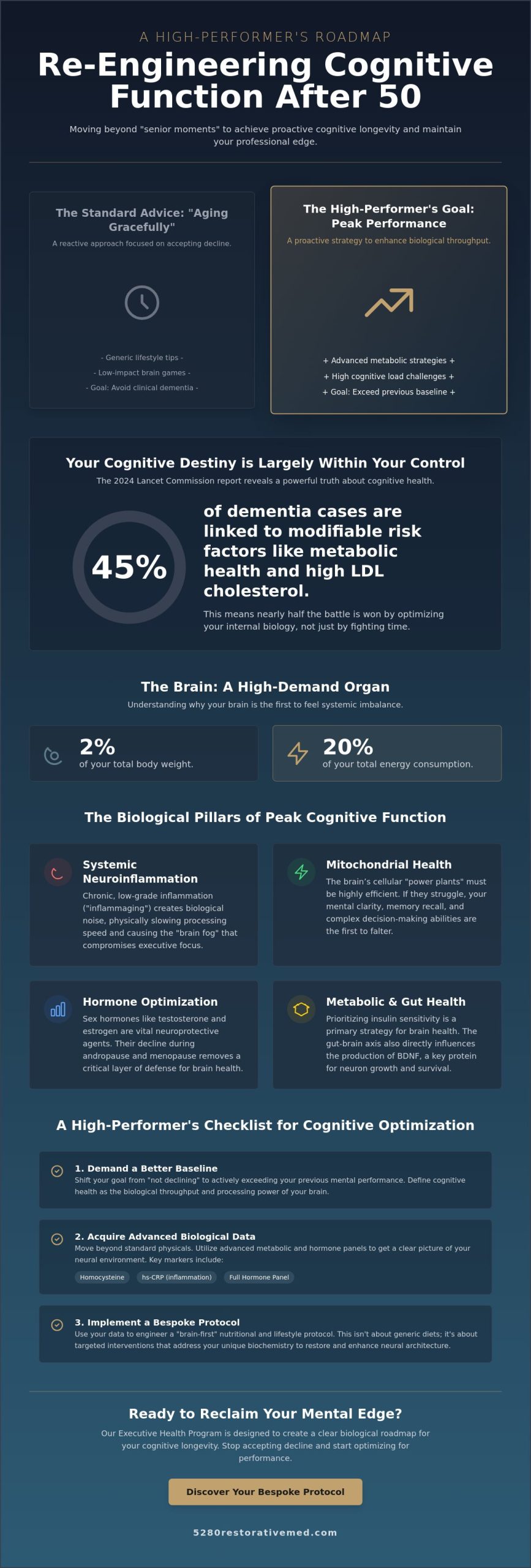
We understand that you don’t just want to avoid illness; you want to exceed your previous baseline. Research from the 2024 Lancet Commission confirms that up to 45% of dementia cases are linked to modifiable risk factors like high LDL cholesterol and metabolic health. This article will show you how to move beyond basic lifestyle tips to utilize advanced metabolic and hormonal strategies that restore mental clarity. You will discover a clear biological roadmap that shifts the focus from reactive care to proactive cognitive longevity, ensuring you continue to perform at your peak for decades.
Key Takeaways
- Learn why standard “age-appropriate” advice fails high-performers and how to redefine cognitive health as the biological throughput of your brain’s processing power.
- Understand the critical link between systemic neuroinflammation and mitochondrial health to ensure your brain’s “power plants” have the energy required for executive focus.
- Discover a brain-first nutritional protocol that prioritizes insulin sensitivity as a primary strategy for improving cognitive function after 50.
- Identify the specific advanced metabolic and hormone panels, such as homocysteine and hs-CRP, necessary to create a clear biological roadmap for mental longevity.
- Explore how bespoke functional medicine protocols move beyond reactive care to help you reclaim and exceed your mental baseline.
The Cognitive Edge After 50: Why Standard Advice Fails High-Performers
In the current medical landscape of 2026, we’ve moved past viewing the brain as a static organ. Instead, we define cognitive function as the biological throughput of your brain’s processing power. For the high-performer, this isn’t about whether you can remember where you parked your car; it’s about the speed and accuracy of your neural circuitry during high-stakes negotiations. Standard medical advice often targets “normal aging,” which simply means you aren’t showing clinical signs of dementia. However, for an executive, “normal” is a failing grade. You require optimal performance, which demands a sophisticated understanding of how your metabolic and hormonal health dictates your mental output.
Many leaders find that their “senior moments” are actually red flags for underlying physiological imbalances. When you experience a sudden lapse in executive focus, it’s rarely just “getting older.” It is often the result of systemic “inflammaging” or a shift in hormonal signaling that compromises the Executive Brain. This specific region requires immense metabolic resources to manage complex decision-making and emotional regulation. If your internal “power plants” are struggling, your mental clarity is the first thing to go. Our Executive Health Program is designed to address these specific biological demands, moving beyond reactive care to ensure your biology supports your professional ambitions.
The Myth of Inevitable Decline
Recent research highlights that neuroplasticity remains a powerful force well into your fifties and sixties. While many people worry about age-related memory impairment, the 2024 Lancet Commission report reveals that 45% of dementia cases are linked to 14 modifiable risk factors. This means nearly half of your cognitive destiny is within your control. Improving cognitive function after 50 isn’t about fighting an uphill battle against time; it’s about optimizing the environment in which your neurons operate. When we address factors like high LDL cholesterol and untreated metabolic dysfunction, we don’t just slow decline; we can actually enhance neural architecture.
Why Crosswords Aren’t Enough
Generic advice often suggests “staying mentally active” through puzzles or games, but these low-impact activities rarely provide the “cognitive load” necessary to maintain high-level neural density. To keep your edge, your brain requires complex problem-solving and the acquisition of new, difficult skills that challenge its processing speed. However, even the most rigorous mental exercise will fail if the underlying systemic health is poor. Neural density relies on a steady supply of nutrients and a lack of systemic inflammation. Improving cognitive function after 50 requires a dual approach: maintaining a high cognitive demand while simultaneously engineering the biological foundation that allows your brain to meet that demand.
The Biological Pillars of Memory: Hormones, Mitochondria, and Inflammation
The brain is the most metabolically demanding organ in your body. While it represents only 2% of your total weight, it consumes roughly 20% of your body’s energy. When we discuss improving cognitive function after 50, we aren’t just looking at mental exercises; we’re analyzing the efficiency of your cellular power plants. Systemic inflammation, often called “inflammaging,” creates persistent biological noise that physically slows down your processing speed. This cellular friction is frequently the root cause of the “brain fog” that many high-performers experience. Beyond inflammation, the gut-brain axis plays a critical role. Your microbiome health directly influences the production of brain-derived neurotrophic factor (BDNF), a protein essential for the survival and growth of neurons. Understanding the steps you can take to reduce your risk of cognitive decline starts with addressing these biological foundations.
Hormone Optimization and Brain Clarity
As you enter your fifties, the decline of sex hormones during menopause or andropause does more than affect mood; it removes vital neuroprotective layers. Estrogen, progesterone, and testosterone act as biological “fertilizers” for neural connections. When these levels drop, neurotransmitter production often falters, leading to decreased mental stamina and executive focus. Utilizing BHRT can be a transformative tool for maintaining the cognitive stamina required for high-stakes leadership. Conversely, chronic stress keeps cortisol levels elevated, which can physically shrink the hippocampus, the brain’s primary memory center, over time. Balancing these hormones is a prerequisite for any high-level performance strategy.
Mitochondrial Health: Fueling the Executive Brain
Your brain’s processing speed is tethered to the health of your mitochondria. These organelles require high levels of NAD+ for DNA repair and energy production. As we age, NAD+ levels naturally decline, leading to “leaky” energy production and increased oxidative stress. This biological inefficiency often manifests as word-finding difficulties or short-term memory lapses. Through specialized Metabolic Testing, we can identify exactly where your cellular energy production is failing. Identifying these metabolic gaps allows for a bespoke protocol that restores your mental edge and ensures your brain has the fuel it needs to perform. If you’re noticing a dip in your mental processing speed, a personalized Functional Medicine Consultation can help uncover the specific metabolic drivers behind these changes.
Beyond the Mediterranean Diet: Engineering a Brain-First Nutritional Protocol
While the Mediterranean diet is frequently cited as a gold standard for heart health, improving cognitive function after 50 requires a more targeted, “brain-first” approach. Generic recommendations for whole grains and fruits often overlook individual metabolic responses. For a high-performer, blood sugar stability is the primary predictor of cognitive longevity. Even minor fluctuations in glucose can trigger neuroinflammation, leading to immediate lapses in executive focus. A functional protocol prioritizes insulin sensitivity and incorporates high-density phospholipids to maintain the fluidity of neuronal membranes. This ensures that signals travel across synapses with maximum efficiency, preventing the sluggish processing often associated with aging.
To achieve this level of precision, you must identify and eliminate “brain-drain” foods that trigger immediate cellular stress. Ultra-processed sugars and industrial seed oils are major culprits, as they disrupt the blood-brain barrier and promote oxidative damage. Instead, focus on high-quality fats like DHA and EPA, which serve as the structural building blocks of your brain. For those seeking a comprehensive baseline, the National Institute on Aging guide to cognitive health provides a foundational look at how diet and lifestyle interact with brain aging. However, for the executive-level mind, we must go deeper into the metabolic machinery that powers your thoughts.
Insulin Resistance of the Brain
Researchers now frequently refer to Alzheimer’s as “Type 3 Diabetes” because of the profound impact that insulin resistance has on neural tissue. When your brain cells become resistant to insulin, they lose the ability to effectively convert glucose into energy, essentially starving in a land of plenty. This metabolic failure is often driven by high-carb lifestyles that prioritize quick energy over long-term stability. Achieving metabolic flexibility, the ability to switch seamlessly between burning glucose and ketones, is essential for maintaining mental stamina throughout the day. Insulin resistance in the brain acts as a metabolic barrier that starves neurons of necessary fuel, serving as a primary driver of modern brain fog.
Targeted Supplementation for Neuro-Optimization
Improving cognitive function after 50 often involves moving beyond basic multivitamins to high-impact compounds that support mitochondrial efficiency. NAD+ precursors and Methylene Blue are at the forefront of neuro-optimization, helping to repair cellular DNA and enhance electron transport within the brain’s “power plants.” Nootropics can also play a role by supporting acetylcholine and dopamine pathways, which are critical for memory and motivation. It is vital to remember that these supplements only work when the metabolic foundation is solid. Without addressing blood sugar and inflammation first, even the most advanced nueroprotective compounds will fail to deliver measurable results. Our Nutritional Counseling services help bridge this gap by creating a bespoke plan tailored to your unique biology.
A High-Performer’s Checklist for Improving Cognitive Function After 50
Improving cognitive function after 50 requires moving from vague intentions to measurable data. For the high-performer, “good enough” isn’t a standard; you need a strategy that ensures your biological throughput matches your professional ambitions. This isn’t achieved through generic advice but through a systematic checklist that addresses the root causes of neural fatigue. By treating your brain health as a precision engineering project, you can identify the specific metabolic and hormonal levers that need adjustment to reclaim your mental edge.
- Step 1: Request Advanced Metabolic Testing. Standard labs often miss the early signs of decline. You need to track markers like fasting insulin, HbA1c, Homocysteine, and hs-CRP to gauge your level of neuroinflammation and metabolic stability.
- Step 2: Conduct a Comprehensive Hormone Panel. Move beyond a basic TSH test. A full assessment of thyroid, adrenal, and sex hormones is essential to ensure your neurotransmitter pathways have the support they need.
- Step 3: Analyze Genetic Markers. Identifying your APOE4 and MTHFR status allows you to personalize your prevention strategy based on how your body handles fats and detoxification.
- Step 4: Optimize Sleep Architecture. Focus on maximizing your Deep and REM sleep cycles. This is the only time your brain can effectively perform glymphatic drainage to clear out metabolic waste.
- Step 5: Implement HIIT. High-Intensity Interval Training is a powerful tool for triggering the release of brain-derived neurotrophic factor (BDNF), which supports the growth and survival of new neurons.
Advanced Diagnostics You Actually Need
Most traditional medical practices use “normal” lab ranges based on an average, often unhealthy, population. For peak performance, you must aim for “optimal” ranges. For instance, a “normal” blood sugar reading might still be high enough to cause subtle, long-term damage to your neural circuitry. Utilizing Genetic Analysis provides a deeper look into your unique vulnerabilities, allowing us to build a bespoke protocol that targets your specific biological needs rather than relying on a one-size-fits-all approach.
The Glymphatic System: Cleaning Your Brain While You Sleep
Your brain has a specialized waste-clearance system known as the glymphatic system. It acts like a nightly cleaning crew, washing away amyloid plaque and other metabolic debris that accumulate during your waking hours. However, this system only fully activates during deep, non-REM sleep. If your sleep is fragmented or too short, this “brain washing” process remains incomplete, leading to the morning brain fog and sluggish processing speed many executives experience. Improving sleep hygiene and addressing issues like sleep apnea are critical steps for maintaining long-term neural clarity. To begin your own data-driven journey toward peak mental clarity, schedule a Functional Medicine Consultation today.
Bespoke Brain Health: The 5280 Restorative Medicine Approach
At 5280 Restorative Medicine, we believe that improving cognitive function after 50 is not about managing a slow decline but about engineering metabolic resilience. Our Executive Health Program is specifically designed for the high-performer who refuses to accept “age-appropriate” mental fatigue. Traditional healthcare often adopts a reactive stance, only intervening when clinical impairment is already present. In contrast, our approach is proactive and highly personalized. We treat your brain health as a dynamic system that requires precise tuning to maintain executive-level focus and processing speed. Under the expert guidance of Dr. Marci Catallo-Madruga, we move beyond the coldness of institutional medicine to provide a warm, sophisticated health partnership that prioritizes your unique biological needs.
A data-driven plan is the only sustainable way to ensure long-term mental clarity. We don’t rely on generic wellness advice; we utilize advanced diagnostics to uncover the specific physiological barriers holding you back. By identifying these “metabolic leaks” early, we can implement targeted interventions that restore your mental edge. This bespoke strategy ensures that your biology supports your professional ambitions rather than acting as a bottleneck to your success.
From Root Cause to Peak Performance
The journey to superior mental output begins by identifying the root causes of cognitive friction. By integrating Functional Medicine with advanced bio-optimization, we help you transition from simply “getting by” to achieving a state of peak performance. For example, a recent case involved a high-level executive struggling with persistent brain fog and a loss of executive focus. Through a comprehensive Gut Health Assessment, we identified significant dysbiosis that was driving systemic neuroinflammation. By repairing the gut-brain axis and optimizing their microbiome, we restored their mental clarity and processing speed, allowing them to return to high-stakes decision-making with confidence. Improving cognitive function after 50 is entirely achievable when you address these underlying biological pillars.
Engineering Your Future Mental Clarity
Sustaining high-level performance for decades requires more than a one-time fix; it requires a long-term health partnership. We provide a steady, educational rhythm that moves you logically from identifying a concern to implementing a tailored solution. Our boutique clinical practice is dedicated to helping you exceed your previous baseline, ensuring you remain at the forefront of your field. Whether you choose a virtual consultation or an in-person visit at our specialized facility, you’ll receive a non-standardized care protocol designed for your specific life stage and goals. Don’t leave your cognitive longevity to chance. Schedule your Comprehensive Health Consultation today and take control of your mental future.
Reclaiming Your Cognitive Edge for the Decades Ahead
You have spent your career mastering complex systems, and your biology should be no different. Improving cognitive function after 50 is not a matter of fighting an inevitable decline; it’s a matter of optimizing the cellular and hormonal environment that powers your thoughts. By addressing the root causes of neuroinflammation and utilizing precise metabolic and genetic testing, you can move beyond the limitations of standard medical advice. This data-driven approach ensures that your mental clarity and executive focus remain your most reliable assets.
Under the expert guidance of Dr. Marci Catallo-Madruga, we provide personalized protocols that prioritize peak performance over the mere absence of illness. You don’t have to accept a diminished baseline as a part of aging. We invite you to apply for our Executive Health Program to reclaim your mental edge. Your best work is still ahead of you. With the right biological roadmap, you can continue to lead with confidence and precision for decades to come.
Frequently Asked Questions
Is brain fog after 50 a sign of early dementia?
Brain fog is frequently a symptom of underlying physiological imbalances rather than a definitive sign of early dementia. While it can be alarming, these lapses are often reversible when we address root causes like systemic neuroinflammation or insulin resistance. High-performers often experience this as a subtle dip in processing speed, which serves as a critical signal to optimize their biological foundation before clinical decline occurs.
Can hormone replacement therapy (BHRT) really help with memory loss?
BHRT can significantly support mental clarity by restoring the neuroprotective benefits of estrogen, progesterone, and testosterone. These hormones act as essential signaling molecules that support neurotransmitter production and neuronal survival. When levels drop during menopause or andropause, cognitive stamina often falters. Restoring these levels helps maintain the neural architecture required for high-level executive function and consistent memory retention.
What are the best supplements for brain health in your 50s?
The most effective supplements are those that target your specific metabolic gaps identified through testing. Foundational support often includes high-dose DHA and EPA for cell membrane fluidity, along with NAD+ precursors to fuel mitochondrial energy. Nootropics can also support acetylcholine and dopamine pathways for better focus. However, these tools are most effective when integrated into a personalized protocol based on your unique biological data.
How does stress affect cognitive function as we age?
Chronic stress triggers a persistent release of cortisol, which can physically shrink the hippocampus, the brain’s primary center for memory and learning. Over time, this high-stress state compromises the “Executive Brain,” making high-stakes decision-making more difficult. Managing stress is not just a lifestyle choice; it’s about protecting the physical structure of your brain from the corrosive effects of long-term hormonal dysregulation.
What specific blood tests should I ask for to check my brain health?
To get a clear picture of your neural health, you should request tests for fasting insulin, HbA1c, homocysteine, and high-sensitivity C-reactive protein (hs-CRP). These markers reveal the levels of metabolic stability and neuroinflammation in your system. Improving cognitive function after 50 requires tracking these specific biomarkers to ensure they fall within “optimal” rather than just “normal” ranges for peak performance.
How long does it take to see improvements in cognitive function after making lifestyle changes?
Many individuals begin to notice improvements in mental clarity and energy within three to six months of implementing a targeted functional protocol. While some changes, like blood sugar stabilization, can provide immediate relief from brain fog, structural improvements in neural density and mitochondrial efficiency take longer. Consistency with a data-driven plan is essential for achieving and sustaining superior mental output over the long term.
Can diet alone reverse age-related cognitive decline?
While a brain-first nutritional protocol is foundational, diet alone is often insufficient to reverse established decline in high-performers. Improving cognitive function after 50 usually requires a multi-faceted approach that includes hormone optimization, sleep architecture refinement, and targeted metabolic interventions. Diet provides the raw materials, but your hormonal and mitochondrial health determines how effectively your brain can utilize those resources for peak performance.
What is the role of the gut microbiome in mental clarity?
The gut microbiome acts as a critical regulator of the gut-brain axis, influencing the production of brain-derived neurotrophic factor (BDNF). A healthy microbiome reduces systemic inflammation and supports the integrity of the blood-brain barrier. When gut health is compromised, it can trigger a cascade of neuroinflammation that manifests as brain fog and decreased processing speed, making a gut health assessment vital for cognitive longevity.