
What if the persistent brain fog and midday fatigue you feel aren’t inevitable signs of a demanding career, but a signal that your body’s most critical internal barrier has been breached? Many high-performers find themselves trapped in a cycle of chronic bloating and systemic inflammation, only to be told their standard lab results are perfectly normal. It’s frustrating to live in a low-energy reality when you’re striving for peak physical and mental states. Recognizing the subtle signs of leaky gut in adults is the first step toward moving beyond these baseline limitations and reclaiming your vitality.
In this article, we’ll bridge the gap between complex clinical science and your daily well-being by defining the mechanics of increased intestinal permeability. You’ll find a comprehensive checklist of symptoms to discuss with your healthcare partner and learn how advanced metabolic testing can provide the clarity your standard checkup missed. We’re here to help you move from simply managing symptoms to achieving a superior state of function through a personalized, proactive journey back to health. This is your guide to restoring the gut barrier and returning to the performance levels you deserve.
Key Takeaways
- Understand the clinical role of “tight junctions” in maintaining your intestinal barrier and protecting your systemic health.
- Recognize the diverse signs of leaky gut in adults, identifying how digestive distress and cognitive “brain fog” impact your professional output.
- Uncover the physiological link between chronic stress, high-performance lifestyles, and the breakdown of your mucosal lining.
- Identify specialized metabolic tests, such as Zonulin and Occludin panels, that offer the clinical clarity standard blood work often misses.
- Discover the “4R” clinical framework used to resurface your gut barrier and restore your body to a state of peak vitality.
What is Leaky Gut? Understanding Increased Intestinal Permeability
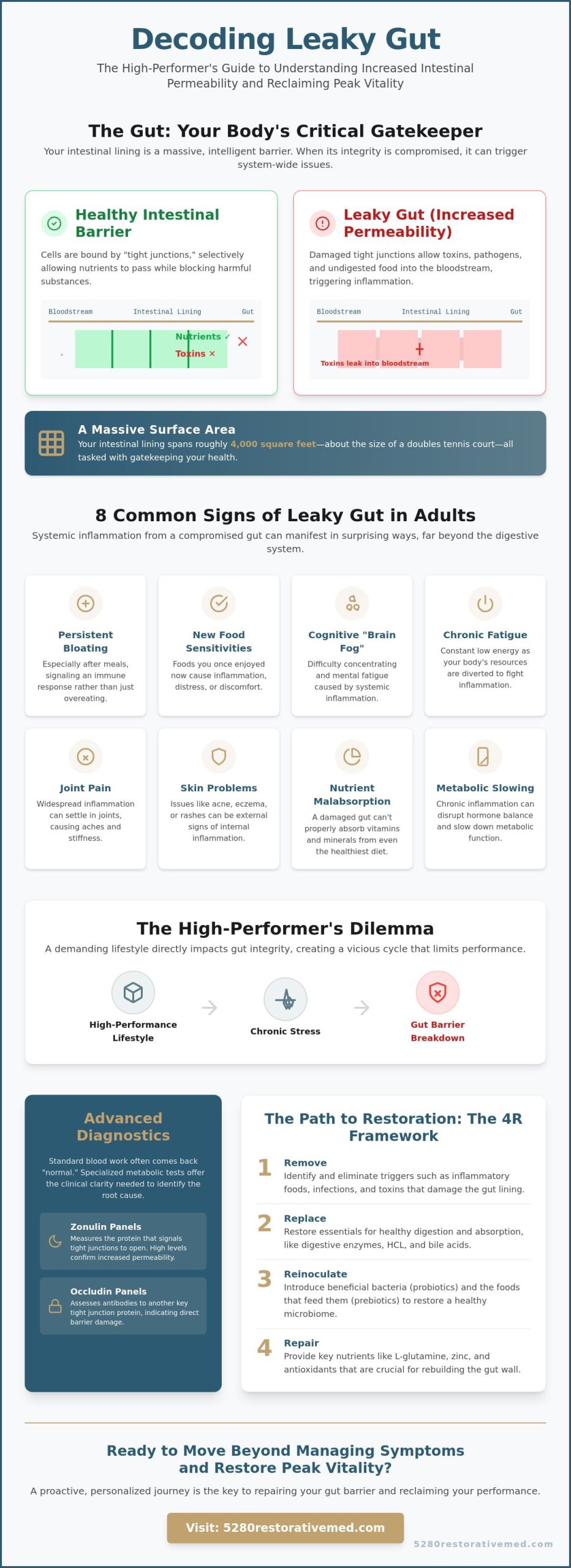
While often dismissed as a trendy wellness buzzword, “leaky gut” is a layman’s term for a very real clinical mechanism. In the medical literature, we refer to this as Understanding Increased Intestinal Permeability. It’s not just a collection of vague symptoms; it’s a structural breakdown of the intestinal epithelium. This barrier is a single-cell layer that spans roughly 4,000 square feet. That’s about the size of a doubles tennis court, all folded within your abdomen to manage the complex exchange of nutrients and waste.
This massive surface area acts as your body’s primary gatekeeper. Its job is to let vital nutrients in while keeping pathogens, toxins, and undigested food particles out of your systemic circulation. When this gatekeeping function fails, it triggers a systemic immune response that can manifest as the various signs of leaky gut in adults. This isn’t merely a localized digestive issue. It’s a physiological breach that forces your immune system into a state of constant high alert, taxing your energy and cognitive focus.
The Mechanism of the Intestinal Barrier
The integrity of your gut lining depends on “tight junctions.” These are specialized proteins that act like the mortar between the bricks of your intestinal cells. A specific protein called zonulin serves as the modulator that signals these junctions to open or close. Under optimal conditions, these openings are tightly controlled to allow for water and nutrient absorption.
When the barrier becomes compromised, substances that should stay within the digestive tract leak into the bloodstream. This includes undigested food proteins and lipopolysaccharides (LPS), which are endotoxins found on the cell walls of certain bacteria. Once these molecules enter your circulation, your immune system identifies them as invaders. This constant battle leads to systemic inflammation, which is often the hidden cause behind the “brain fog” and fatigue that high-performers struggle to overcome.
The Distinction Between Normal and Pathological Permeability
It’s a common misconception that the gut should be a completely sealed tube. Some level of permeability is essential for life. It’s how we absorb the building blocks of health. However, there’s a specific threshold where this permeability becomes pathological. When the “leaks” become chronic, the body enters a state of persistent immune activation. This is where we see the most debilitating signs of leaky gut in adults, including joint pain and metabolic slowing.
Recognizing these signs requires looking past the gut itself and viewing the body as an integrated system. Adopting a framework of functional health and wellness allows us to move beyond superficial fixes. We focus on root-cause optimization, repairing the barrier to restore your baseline and eventually exceed it. By understanding the clinical reality of your gut lining, you can take control of your health and begin a proactive journey toward renewal and peak performance.
8 Common Signs of Leaky Gut in Adults
Many individuals associate gut health strictly with abdominal discomfort. However, the 8 Common Signs of Leaky Gut often extend far beyond the digestive tract. When the intestinal barrier fails, the resulting systemic inflammation impacts your skin, joints, and even your cognitive clarity. Recognizing the diverse signs of leaky gut in adults is essential for anyone experiencing a decline in performance that standard medical tests fail to explain. Rest is not enough when the root cause is biological.
Digestive and Metabolic Indicators
Persistent bloating immediately after a meal is one of the most significant red flags. It’s not just a sign of overeating; it’s often an immune response to food particles that have crossed the breached barrier. This porousness frequently leads to sudden food sensitivities. You might find that foods you’ve enjoyed for years now cause immediate distress or inflammation. Even if you maintain a high-quality, nutrient-dense diet, a compromised gut prevents proper micronutrient absorption. This leaves you effectively malnourished at a cellular level, regardless of how “clean” you eat. For those seeking clinical clarity on these metabolic shifts, a comprehensive Gut Health Assessment can identify the specific markers of dysfunction.
The Gut-Brain Axis and Cognitive Performance
Executive decision-making requires a clear mind, yet intestinal inflammation can directly impact your neurology. This connection, known as the gut-brain axis, explains why “afternoon slumps” and memory lapses aren’t just about sleep quality. When inflammatory cytokines from the gut enter the bloodstream, they can cross the blood-brain barrier. This causes the heavy, persistent brain fog that slows your professional output. This systemic tax also influences neurotransmitter production, often manifesting as unexplained anxiety, mood dysregulation, or a general sense of irritability that feels out of character.
Beyond the gut and brain, the body signals distress through several other systems:
- Skin Manifestations: Adult acne, rosacea, and persistent rashes often stem from internal inflammation rather than topical issues.
- Systemic Inflammation: Unexplained joint pain and muscle soreness are common reactions to toxins circulating through a breached gut barrier.
- Nutritional Deficiencies: Low levels of B12, magnesium, or iron despite supplementation can indicate that your “gatekeeper” is no longer functioning.
These symptoms are the body’s way of signaling that it’s operating under a hidden metabolic tax. When you address the root cause, you don’t just resolve the discomfort; you unlock a new level of physical and mental performance. It’s a proactive journey toward exceeding your baseline.
The Root Causes: Why High-Performers Develop Leaky Gut
High-performers often operate with a degree of physical grit that allows them to push through discomfort. However, the same drive that fuels professional success can unintentionally catalyze the signs of leaky gut in adults. It isn’t a single event that breaches the intestinal barrier; it’s typically a cumulative effect of physiological stressors and environmental triggers. When the body is forced to prioritize immediate output over cellular repair, the structural integrity of the gut is often the first system to suffer. Identifying the lifestyle patterns that lead to the signs of leaky gut in adults is a critical part of a professional consultation.
Stress and the Autonomic Nervous System
Chronic stress is perhaps the most insidious driver of intestinal permeability. When you’re constantly in a “fight or flight” state, your autonomic nervous system diverts blood flow away from the digestive tract to prioritize the heart and skeletal muscles. This lack of perfusion prevents the mucosal lining from receiving the oxygen and nutrients it needs to regenerate. This is where functional medicine becomes indispensable. It allows us to engineer metabolic resilience by addressing the neurological and hormonal imbalances that keep the gut in a state of perpetual breakdown.
Environmental and Lifestyle Triggers
Beyond internal stress, external “micro-insults” play a significant role. UCLA Health highlights that a poor diet, heavy in processed sugars and inflammatory seed oils, is a primary suspected cause of leaky gut syndrome. These substances, along with the frequent use of NSAIDs for joint pain, act as chemical irritants to the delicate single-cell lining of the gut. For high-performers, even over-training without sufficient recovery can increase permeability as the body struggles to manage systemic oxidative stress.
In many cases, an underlying microbiome imbalance, or dysbiosis, weakens the barrier from the inside out. When beneficial bacteria are depleted, the “tight junctions” lose their biological support. We also see a hidden role played by mast cell activation syndrome, where hyper-reactive immune cells create a state of chronic barrier sensitivity. Addressing these root causes requires more than just a generic supplement; it demands a bespoke approach to restore the body’s natural defensive boundaries and return to a state of peak function.
Advanced Diagnostics: Moving Beyond Guesswork
It’s a common experience for high-performers: you feel the systemic fallout of a compromised barrier, yet your standard lab results come back “perfectly normal.” This discrepancy occurs because routine blood panels are designed to detect acute disease states, not the subtle physiological shifts that characterize the signs of leaky gut in adults. To regain your edge, we must move beyond basic screenings and utilize precise, advanced diagnostics that map the actual integrity of your intestinal epithelium.
Standard medicine often overlooks the specific protein markers that govern your gut’s gatekeeping function. In a specialized clinical setting, we prioritize testing for antibodies to Zonulin and Occludin. Zonulin is the primary modulator of your intestinal junctions, and elevated levels are a direct indicator of increased permeability. Occludin antibodies suggest that the structural “mortar” between your cells is actively breaking down. By measuring these markers with high sensitivity, we can confirm if your symptoms are rooted in a physical breach of the barrier.
The Functional Medicine Testing Protocol
A comprehensive diagnostic phase often includes the Lactulose/Mannitol breath test. This non-invasive assessment requires you to ingest two specific sugar molecules of different sizes. By measuring their ratio in your urine, we can quantify exactly how much the barrier is leaking. While Mannitol is easily absorbed, Lactulose is a larger molecule that should stay out of the bloodstream. A high ratio of Lactulose to Mannitol provides clinical proof of a porous lining.
We also utilize Cyrex arrays to identify if the immune system has begun reacting to self-tissue, a common consequence of chronic leakage. Testing for Lipopolysaccharides (LPS) antibodies is equally critical. Since LPS should never leave the digestive tract, finding these antibodies in your blood confirms that endotoxins are circulating systemically, driving the inflammation and brain fog you experience daily. This level of detail allows us to stop guessing and start engineering a solution.
Interpreting Results for Performance Optimization
The goal of advanced testing isn’t just to find what’s “wrong,” but to determine what’s required for you to reach a superior state of function. There’s a vast difference between being “clinically normal” and being “physiologically optimal.” We use your diagnostic data to build a bespoke recovery plan that addresses your unique biological needs. This often involves a deep dive into Metabolic Testing to evaluate how your gut health is impacting your cellular energy production and nutrient status.
Integrating Genetic Analysis further refines this approach. Some individuals are genetically predisposed to higher zonulin production or have variants that affect how they process inflammatory triggers. By combining these insights, we create a roadmap that isn’t just about the absence of illness. It’s about proactive renewal, ensuring your gut barrier is strong enough to support your most ambitious professional and personal goals.
The Path to Restoration and Peak Vitality
Once advanced diagnostics confirm the breach, the focus shifts to resurfacing the intestinal lining and restoring systemic balance. We utilize the “4R” Framework, a clinical standard that systematically addresses the internal environment of the gut. This isn’t a generic detox. It’s a precise metabolic intervention designed to return your body to its superior state of function. By following a structured clinical path, we can effectively close the “gates” and stop the systemic drain on your performance.
The process begins by Removing the specific irritants identified in your testing, followed by Replacing essential digestive factors like hydrochloric acid or enzymes. We then Reinnoculate the microbiome with targeted probiotic strains to reinforce the structural barrier. Finally, we Repair the epithelium using bespoke nutritional building blocks. Addressing the signs of leaky gut in adults through this structured path allows for measurable, long-term recovery rather than temporary symptom management.
Clinical Protocols for Gut Repair
Repairing a single-cell layer requires specific substrates that your standard diet might not provide in sufficient quantities. We often incorporate L-glutamine, collagen peptides, and zinc carnosine to support the rapid turnover of intestinal cells. These nutrients act as the raw materials for tight junction integrity. We may also integrate bhrt to ensure your hormonal environment supports the metabolic energy required for cellular repair. Proactive hormone optimization can significantly accelerate the healing of the mucosal lining by improving your overall regenerative capacity.
Achieving Sustainable Energy and Performance
Resolving the underlying signs of leaky gut in adults does more than fix digestion. It eliminates the “inflammation tax” that has been draining your cognitive reserves and physical stamina. When the barrier is secure, your brain is no longer bombarded by systemic toxins. This shift allows for the level of executive focus and mental clarity you expect of yourself. You’ll likely find that the midday slumps and brain fog that once hindered your productivity simply vanish as your systemic inflammation recedes.
Sustainable performance requires a shift from reactive necessity to proactive maintenance. For the high-performing executive, this means regular metabolic check-ins and refined lifestyle engineering to keep the gut barrier resilient against future stressors. The next step in your journey is to move beyond guesswork. Scheduling a comprehensive Gut Health Assessment is the most effective way to stop the stall and begin your path toward peak vitality. You don’t have to accept a low-energy reality when clinical solutions are within reach.
Reclaim Your Edge Through Gut Restoration
Recognizing the signs of leaky gut in adults is more than a diagnostic exercise; it’s the first step in removing the hidden metabolic tax on your professional performance. You now understand that persistent brain fog and systemic inflammation aren’t just inevitable consequences of a high-pressure career. They are clinical indicators that your primary internal barrier needs specialized attention. By moving beyond standard lab results and embracing advanced diagnostics, you can finally identify the precise root causes of your fatigue and low energy.
Dr. Marci Catallo-Madruga, an expert in functional metabolic optimization, leads our practice in creating bespoke protocols designed specifically for high-performers and executives. We don’t settle for “clinically normal” when peak physical and mental states are achievable at any stage of life. Our advanced testing provides a level of clarity that standard primary care simply cannot match, allowing us to engineer a proactive journey toward renewal and superior function. You have the tools and the clinical path to exceed your baseline and reclaim your vitality.
Reclaim your vitality with a comprehensive Gut Health Assessment at 5280 Restorative Medicine. Your journey to peak performance starts with a single, decisive step toward better biological health.
Frequently Asked Questions
Is leaky gut a recognized medical condition in 2026?
Increased intestinal permeability is a recognized clinical mechanism, though “leaky gut syndrome” remains a colloquial term. In early 2026, a global panel of scientists published the first consensus definition of gut health in Nature Reviews Gastroenterology and Hepatology. This provided a formal framework for clinicians to measure and define barrier function. While some traditional providers still view it as a hypothetical condition, functional medicine practitioners treat it as a measurable physiological breakdown that requires targeted intervention.
How long does it take to heal a leaky gut in an adult?
Healing the intestinal lining typically requires three to six months of consistent clinical intervention. This timeline depends on the severity of the initial breach and your adherence to bespoke protocols. The intestinal epithelium is one of the fastest-growing tissues in the body, but chronic inflammation can stall this natural renewal. Achieving a superior state of function requires addressing root causes like stress and dysbiosis while providing the body with specific regenerative nutrients.
Can leaky gut cause weight gain or metabolic resistance?
Yes, a compromised gut barrier can lead to significant metabolic resistance and unexplained weight gain. When lipopolysaccharides (LPS) leak into your bloodstream, they trigger systemic inflammation that interferes with insulin signaling. This “inflammation tax” forces your body into a fat-storage mode, making it difficult to maintain peak physical states despite a disciplined diet. Resolving these signs of leaky gut in adults is often the key to breaking a weight loss plateau and restoring metabolic flexibility.
Will a simple probiotic fix my leaky gut symptoms?
A standard probiotic is rarely enough to repair a structural barrier breach on its own. While beneficial bacteria are essential for the reinnoculation phase, they cannot overcome the continuous “micro-insults” from a poor diet or chronic stress. You need a comprehensive strategy that includes removing irritants and providing mucosal building blocks like L-glutamine. Effective restoration requires a personalized protocol rather than a one-size-fits-all supplement approach to achieve measurable results.
What is the most accurate test for increased intestinal permeability?
The most accurate clinical assessments include the Zonulin ELISA test and the Lactulose/Mannitol breath test. The ELISA method for Zonulin testing boasts a 96% sensitivity for identifying increased intestinal permeability. These advanced diagnostics move beyond standard primary care panels to provide a detailed map of your barrier integrity. Identifying these markers allows us to transition from guesswork to a targeted, data-driven path toward recovery and peak vitality.
Can stress alone cause my gut to become “leaky”?
Chronic stress is a primary driver of intestinal permeability because it activates the “fight or flight” response. This state diverts blood flow and oxygen away from the gut lining, preventing the single-cell epithelium from repairing itself. High-performers often struggle with this “Cortisol-Gut” connection, where professional pressure leads to a physical breakdown of the intestinal barrier. Managing the autonomic nervous system is as critical as nutritional intervention for maintaining long-term gut resilience.
What are the first foods I should remove if I suspect a leaky gut?
You should prioritize removing processed sugars, alcohol, and inflammatory seed oils like soybean or canola oil. These substances act as direct irritants to the intestinal lining and promote the growth of pathogenic bacteria. Many adults also find relief by temporarily eliminating gluten and conventional dairy, which can trigger zonulin release in sensitive individuals. Removing these triggers stops the cycle of damage, allowing the repair phase of your protocol to become effective.
How does leaky gut affect my immune system?
Since approximately 70% of your immune system resides in the gut, a barrier breach forces your defenses into a state of constant hyper-reactivity. When undigested food and toxins enter the circulation, the immune system identifies them as invaders. This persistent activation leads to the systemic inflammation and joint pain often seen as signs of leaky gut in adults. Restoring the barrier allows your immune system to return to its protective role rather than being stuck in a reactive cycle.