
What if your last moment of frustration during a high-stakes board meeting wasn’t a failure of character, but a measurable symptom of a dysregulated biological system? Most high-achieving executives believe that maintaining composure is a matter of sheer willpower, yet they still struggle with persistent decision fatigue and a chronic “on-edge” feeling. You likely worry that a single emotional outburst could damage your hard-earned credibility, even though you’ve tried every standard mindfulness hack available. By shifting your focus toward the physiological roots of your behavior, you can implement more effective emotional regulation techniques for leaders that actually work when the pressure is on.
We believe that peak mental states are achievable at any stage of life when you treat health as a proactive journey rather than a reactive necessity. Recent 2026 research in the journal Nutrients has linked dysregulated gut microbiota directly to declines in executive functioning and processing speed. You’re about to discover how to master your physiological response to stress and lead with unwavering composure by optimizing your biological foundations. This guide explores the latest science on the gut-brain axis and metabolic health to provide you with a blueprint for unshakable executive presence and biological resilience.
Key Takeaways
- Shift your perspective from emotional suppression to autonomic modulation to prevent executive burnout and protect your long-term cognitive health.
- Explore the biological impact of the HPA axis and how chronic cortisol exposure physically alters the brain’s capacity for calm, logical decision-making.
- Master immediate emotional regulation techniques for leaders like the “Physiological Sigh” to reset your nervous system during high-stakes corporate interactions.
- Uncover the link between mitochondrial efficiency and emotional resilience, ensuring your cellular energy supports composure rather than irritability.
- Learn how bespoke metabolic testing and personalized protocols can identify hidden physiological barriers to your peak executive performance.
Beyond Self-Control: Why Emotional Regulation is a Biological Priority for Leaders
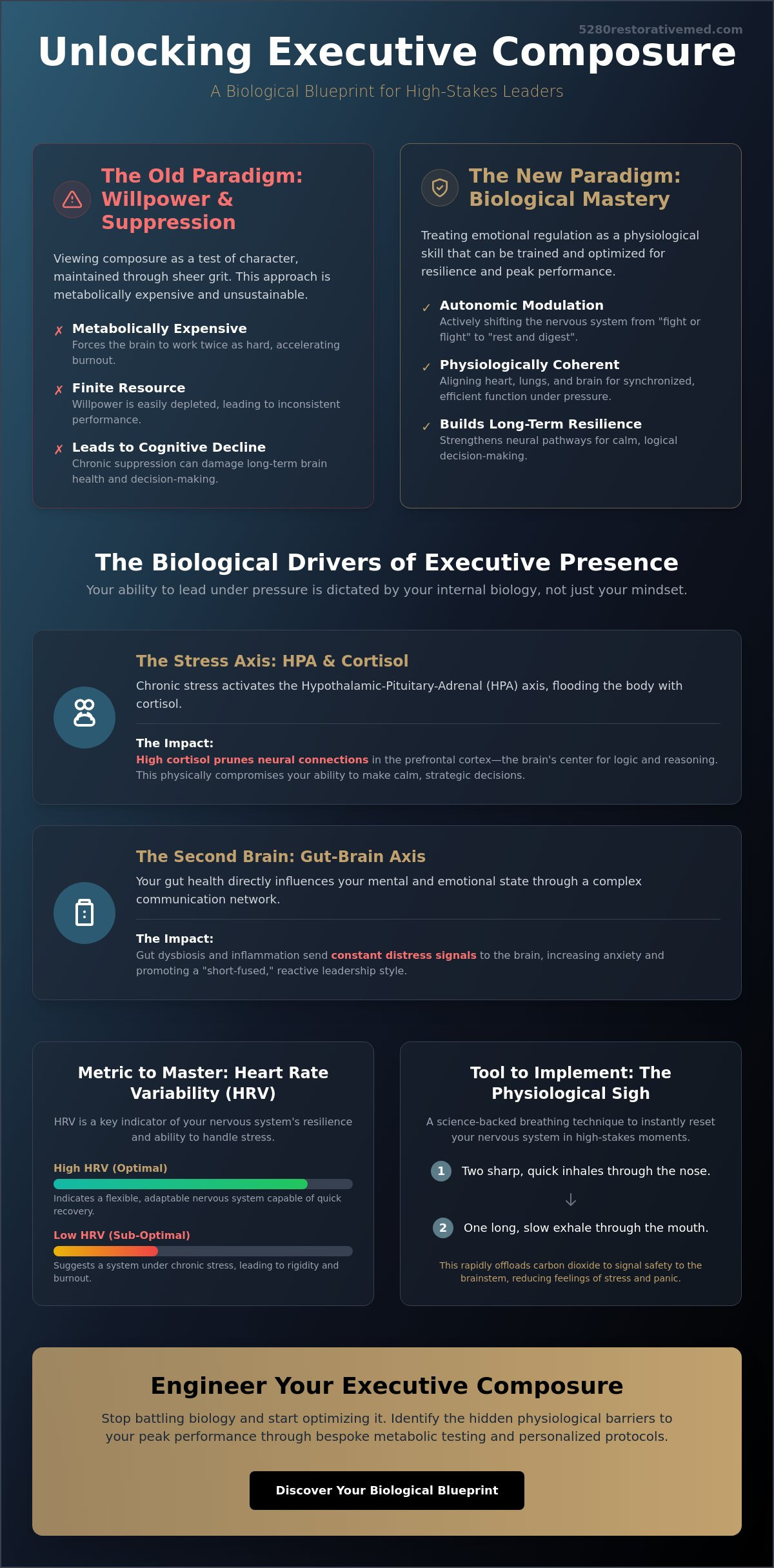
When you sit at the head of a boardroom table, your internal state isn’t just a private experience. It’s a broadcast signal that your entire team receives. Many high-performers view composure as a test of character or a performance to be maintained through sheer grit. However, true Emotional self-regulation is actually the ability to modulate your autonomic nervous system response to external stimuli. It’s the biological capacity to shift from a “fight or flight” state back into a “rest and digest” state while under fire. When you master emotional regulation techniques for leaders, you aren’t just managing your temper; you’re managing your biology.
Traditional leadership training often emphasizes the suppression of emotions. This strategy is fundamentally flawed. Suppression is metabolically expensive, forcing your brain to work twice as hard to process a stressor while simultaneously hiding your reaction. This internal friction accelerates executive burnout and triggers cognitive decline over time. Real executive presence is a state of physiological coherence where the heart, lungs, and brain work in synchronized harmony. In high-stakes moments, your prefrontal cortex, the seat of logical reasoning, often battles your amygdala, the brain’s threat-detection center. Without biological optimization, the amygdala usually wins, resulting in reactive decisions rather than strategic ones.
The High Cost of Emotional Dysregulation in the C-Suite
In multi-million dollar environments, emotional volatility is a liability that erodes team psychological safety and productivity. When a leader is perpetually “on edge,” the team’s collective creativity shuts down as their own nervous systems enter a defensive posture. This environment also breeds decision fatigue, where the constant drain on your neural resources makes even simple choices feel overwhelming. Emotional regulation is a metabolic resource that can be depleted or optimized.
Moving from Psychological Coping to Biological Mastery
Relying on willpower is a poor strategy for long-term leadership. Willpower is a finite resource that inevitably runs dry by the end of a demanding day. Instead, elite leaders focus on Heart Rate Variability (HRV) as a leading indicator of emotional resilience. A high HRV suggests a nervous system that’s flexible and capable of recovering quickly from stress. This transition from psychological coping to biological mastery is why modern executive health programs focus so heavily on the physiological foundations of performance. By stabilizing your internal environment, you ensure that emotional regulation techniques for leaders become a natural byproduct of your health rather than an exhausting daily chore.
The Metabolic Cost of Stress: How Hormones and Gut Health Dictate Leadership Composure
Stress isn’t just a mindset. It’s a biological event. When you face a crisis, your Hypothalamic-Pituitary-Adrenal (HPA) axis orchestrates a massive release of cortisol. While this cascade helps in short bursts, chronic activation is devastating for the executive brain. High cortisol levels actually prune the neural connections in your prefrontal cortex, the very area you need for calm reasoning and strategic thought. This makes traditional emotional regulation techniques for leaders nearly impossible to implement because the biological hardware is literally compromised. You can’t think your way out of a physiological “thinning” of your brain’s logic center.
Your gut health plays a surprisingly dominant role in your executive presence. Recent 2026 research shows that systemic inflammation, often stemming from gut dysbiosis, creates a “short-fused” leadership style. When your gut is inflamed, it sends constant distress signals to the brain that increase anxiety and aggression. This is compounded by insulin resistance, which disrupts brain glucose metabolism. If your brain can’t efficiently use fuel, your emotional stability suffers, leading to the “hangry” executive who snaps during a strategy session. Composure is difficult when your brain is starving for steady energy.
Hormonal Optimization and the “Calm Leader” Profile
Confidence under fire isn’t just about experience. It’s heavily influenced by balanced levels of testosterone and DHEA. These hormones provide a “biological buffer” against the corrosive effects of stress. Many leaders attribute their increasing irritability to the simple process of aging, but it’s often a result of preventable hormonal decline. Utilizing BHRT can help stabilize these mood swings, transforming what looks like a personality flaw back into a state of steady confidence. A study on emotion regulation and leadership performance highlights that physiological stability is a prerequisite for effective cognitive reappraisal. If you suspect your biology is working against you, a Functional Medicine Consultation can pinpoint these specific hormonal imbalances.
Neurotransmitters: The Chemistry of Executive Composure
Your brain’s ability to “down-regulate” after a high-stakes meeting depends on the balance between GABA and Glutamate. Glutamate keeps you alert, but too much leads to persistent anxiety. GABA acts as your internal brake system. If you lack micronutrients like Magnesium or B-vitamins, your brain cannot produce enough GABA to shut off the stress response. A leader’s “short temper” is often a symptom of neurochemical imbalance rather than a lack of discipline. When these chemicals are balanced, you maintain the “alert but calm” state required for elite performance.
5 Science-Backed Emotional Regulation Techniques for High-Pressure Environments
Mastering your internal environment requires more than just awareness; it requires a toolkit of biological overrides. While mindset is important, the most effective emotional regulation techniques for leaders leverage the body’s hardwired circuitry to bypass the reactive brain. These tools aren’t just coping mechanisms; they’re precise interventions that shift your physiology in real-time. By utilizing these five techniques, you can maintain executive function even when your biological stress response is screaming for a “fight or flight” reaction.
- The Physiological Sigh: This is perhaps the fastest way to lower your heart rate. Take a deep inhale through the nose, followed by a second, shorter inhale to fully inflate the lungs’ alveoli. Then, perform a long, slow exhale through the mouth. This offloads accumulated CO2 and signals the brain to exit the stress state in under five seconds.
- Cognitive Appraisal: This involves deliberately reframing a “threat” as a “challenge.” This shift moves neural blood flow away from the reactive amygdala and toward the prefrontal cortex. This skill is a cornerstone of emotional intelligence in leadership, allowing you to maintain logic when stakes are high.
- The 90-Second Rule: An emotion is a biochemical wash that lasts roughly 90 seconds. If you can observe the sensation without “looping” the thoughts that triggered it, the chemical surge passes naturally. The goal is to feel the wave without letting it dictate your next sentence.
- Box Breathing: Inhale for four seconds, hold for four, exhale for four, and hold for four. This rhythmic pattern manually overrides the sympathetic nervous system via the Vagus nerve, forcing a state of calm.
- Peripheral Vision Expansion: Stress creates tunnel vision. By softening your gaze and consciously noticing the edges of the room, you force your brainstem into a parasympathetic state. It is biologically difficult to remain in a high-stress state while maintaining a wide, panoramic view.
Real-Time Implementation During Boardroom Conflict
In a boardroom setting, use micro-pauses to implement these techniques. A three-second silence isn’t a sign of weakness; it’s a display of supreme control. During criticism, try third-person self-talk. Referring to yourself by name in your mind—”What is [Your Name] feeling right now?”—creates the psychological distance needed to reduce emotional intensity. After a high-stakes failure, perform a quick physiological reset before your next meeting to prevent emotional “bleeding” from one interaction into the next.
Neuro-Hacking the Amygdala Hijack
Identify your physical “tells” before an emotional outburst occurs. For many, this is a tight chest, hot ears, or a clenched jaw. If you feel a full amygdala hijack coming, use the mammalian dive reflex. Splashing cold water on your face or holding an ice cube triggers an immediate heart rate reduction. Transitioning from reactive to proactive regulation requires daily practice of these emotional regulation techniques for leaders, ensuring they’re available to you when you need them most.
Building Emotional Resilience Through Advanced Physiological Optimization
While real-time tactics are vital, long-term composure depends on the quality of your biological hardware. If your cells are struggling to produce energy, your patience will inevitably wear thin. Mitochondrial health is the hidden engine of leadership. When cellular energy is low, the brain lacks the resources to fuel the prefrontal cortex, which is responsible for executive control. This metabolic deficit makes you more prone to frustration and impulsive reactions. By optimizing your mitochondria, you create a surplus of cognitive energy that makes emotional regulation techniques for leaders feel less like an exhausting chore and more like a natural state of being.
Sleep architecture is another non-negotiable pillar of resilience. REM sleep specifically acts as overnight therapy, processing emotional data and resetting the amygdala’s sensitivity. When you’re REM-deprived, your brain loses its ability to distinguish between a minor email typo and a genuine corporate crisis. This irritability is often exacerbated by constant exposure to blue light and digital noise, which keeps your nervous system in a state of low-grade alarm. Incorporating adaptogens like Ashwagandha or Rhodiola can help widen your window of stress tolerance by modulating your body’s physiological response to these daily pressures.
Light and Circadian Biology for Mood Stability
Your mood is deeply tied to your circadian rhythm. Morning sunlight exposure is essential for setting the serotonin-melatonin cycle, which dictates your emotional balance throughout the day. For leaders who can’t always get outside, red light therapy offers a clinical way to support mitochondrial energy production directly in the brain. Traveling executives should prioritize a strict evening routine, using blue-light blocking tools to protect their sleep architecture and maintain emotional stability across time zones.
Nutrition for the Resilient Brain
What you eat dictates how you react. An “Anti-Inflammatory Executive Diet” focuses on reducing the systemic inflammation that causes brain fog and emotional reactivity. Crashing blood sugar is perhaps the most common hidden cause of afternoon leadership conflicts. When glucose levels drop, the brain’s ability to regulate mood vanishes. Prioritizing Omega-3 fatty acids and steady fuel sources ensures the neural plasticity required for emotional flexibility. If you’re ready to stop guessing and start optimizing your brain’s fuel source, consider our personalized nutritional counseling to build your bespoke resilience plan.
Engineering Executive Composure: The 5280 Restorative Medicine Approach
While the real-time strategies and lifestyle adjustments discussed previously provide essential support, they often function like software updates on a struggling computer. If the underlying hardware is compromised, even the most effective emotional regulation techniques for leaders will eventually fail under extreme pressure. Generic wellness plans typically fail high-performers because they treat health as the absence of illness rather than the optimization of function. At 5280 Restorative Medicine, we move beyond “managing stress” to engineering a stress-proof biology through bespoke, data-driven protocols.
The synergy between functional medicine and leadership performance is found in the removal of biological “leaks.” These leaks, whether they are subclinical hormonal imbalances, nutrient deficiencies, or gut dysbiosis, act as constant drains on your emotional resilience. By identifying and repairing these foundational issues, we ensure that your baseline state is one of composure rather than chronic “on-edge” irritability. This is the difference between surviving a high-stakes quarter and leading through it with unwavering executive presence.
Precision Diagnostics for the High-Stakes Leader
We begin by looking at the unique blueprint of your body. Through Genetic Analysis, we understand your specific predispositions to stress and anxiety, allowing us to tailor your environment and supplementation to your DNA. Our Metabolic Testing and advanced bloodwork panels go far beyond the “normal” ranges found in standard institutional healthcare. We look for the “optimal” range where peak cognitive and emotional performance occurs. Our multi-month protocols bundle these diagnostic reviews with ongoing clinical support, providing a steady hand as you return to your highest state of function.
Your Next Step Toward Unshakable Leadership
The transition from being a reactive leader to a restored executive requires more than a standard check-up. It requires a high-end health partner who is deeply invested in your individual success. Our boutique clinical environment is designed to be as sophisticated as the leaders we serve, offering a personalized journey that treats your health as a proactive asset. It’s time to stop letting physiological imbalances dictate your leadership style and team culture. Schedule your Executive Health Consultation today to reclaim your vitality, your composure, and your edge.
Mastering the Biological Foundations of Executive Presence
Your ability to lead with composure isn’t a test of your character, but a direct reflection of your internal physiological state. We’ve explored how a dysregulated gut-brain axis, hormonal imbalances, and cellular energy deficits can erode even the strongest resolve. When you optimize these biological pillars, emotional regulation techniques for leaders transition from exhausting mental exercises into an effortless baseline of performance. You can move beyond the “on-edge” feeling of chronic stress and reclaim the cognitive flexibility required for high-stakes decision-making.
Achieving this level of resilience requires more than generic advice; it demands a sophisticated, data-driven partnership. Under the clinical oversight of Dr. Marci Catallo-Madruga, our boutique practice utilizes advanced metabolic and genetic testing protocols to identify the specific biological barriers to your success. This high-end health partnership is tailored specifically for the executive lifestyle, providing the expert guidance needed to exceed your baseline performance. Optimize your biological resilience with a personalized Executive Health Program and take control of your proactive journey toward lasting vitality. Peak mental and physical states are within your reach at any stage of life.
Frequently Asked Questions
What is the most effective emotional regulation technique for a leader in the middle of a crisis?
The Physiological Sigh is the most effective immediate intervention for a leader in the middle of a crisis. By taking a double inhale followed by a long, slow exhale, you offload carbon dioxide and signal your nervous system to exit the fight-or-flight state. This technique allows you to regain cognitive control in under five seconds without losing your presence in the room.
Can hormone imbalances cause a leader to become more irritable or reactive?
Hormone imbalances, particularly declines in testosterone or DHEA, are frequent biological drivers of irritability and reactivity. These hormones act as a physiological buffer against stress; when they’re low, your threshold for frustration drops significantly. Restoring these levels through clinical protocols often transforms what appears to be a personality flaw back into a state of steady, confident leadership.
How does sleep deprivation specifically impact a leader’s emotional regulation?
Sleep deprivation specifically impairs the amygdala, making it overreactive to minor stressors while simultaneously weakening the prefrontal cortex’s ability to regulate it. Without sufficient REM sleep, your brain loses its capacity to process emotional data accurately. This biological deficit makes it nearly impossible to utilize complex emotional regulation techniques for leaders effectively during high-pressure days.
Is there a biological difference between “stress management” and “emotional regulation”?
Stress management generally refers to broad lifestyle adjustments to reduce external pressures, while emotional regulation is the specific, real-time modulation of your autonomic nervous system. Regulation is a biological skill that allows you to maintain physiological coherence even when stress levels are high. It’s the difference between avoiding a storm and becoming the calm center within it.
How can I tell if my emotional outbursts are psychological or physiological?
You can often distinguish between the two by observing your physical “tells” before the emotional surge. If your outburst is preceded by a sudden tight chest, hot ears, or a clenched jaw without a clear narrative trigger, it’s likely a physiological event. When your biology is optimized, you’ll find that psychological triggers no longer provoke the same intense, uncontrollable reactions.
What role does the gut-brain axis play in a leader’s ability to stay calm?
The gut-brain axis serves as the communication highway for your nervous system, with the gut producing over 90% of your body’s serotonin. Systemic inflammation in the gut sends constant distress signals to the brain via the Vagus nerve, heightening anxiety and reducing your baseline for calm. A healthy microbiome is essential for the neurochemical production required to stay composed under fire.
Can metabolic testing help identify why I feel overwhelmed even when things are going well?
Metabolic testing is a powerful tool for identifying hidden biological “leaks,” such as insulin resistance or micronutrient deficiencies, that cause you to feel overwhelmed. When your brain isn’t receiving steady glucose or lacks the magnesium needed for down-regulation, even minor tasks feel like insurmountable crises. Identifying these metabolic markers allows for a targeted, clinical approach to restoring your resilience.
Are there specific supplements that help with emotional regulation for high-performers?
High-performers often benefit from targeted supplement protocols including adaptogens like Ashwagandha and Rhodiola to widen their stress tolerance window. These substances help the body maintain homeostasis during periods of high demand by modulating the cortisol response. Utilizing these as part of broader emotional regulation techniques for leaders ensures your biology supports your professional ambitions rather than hindering them.