
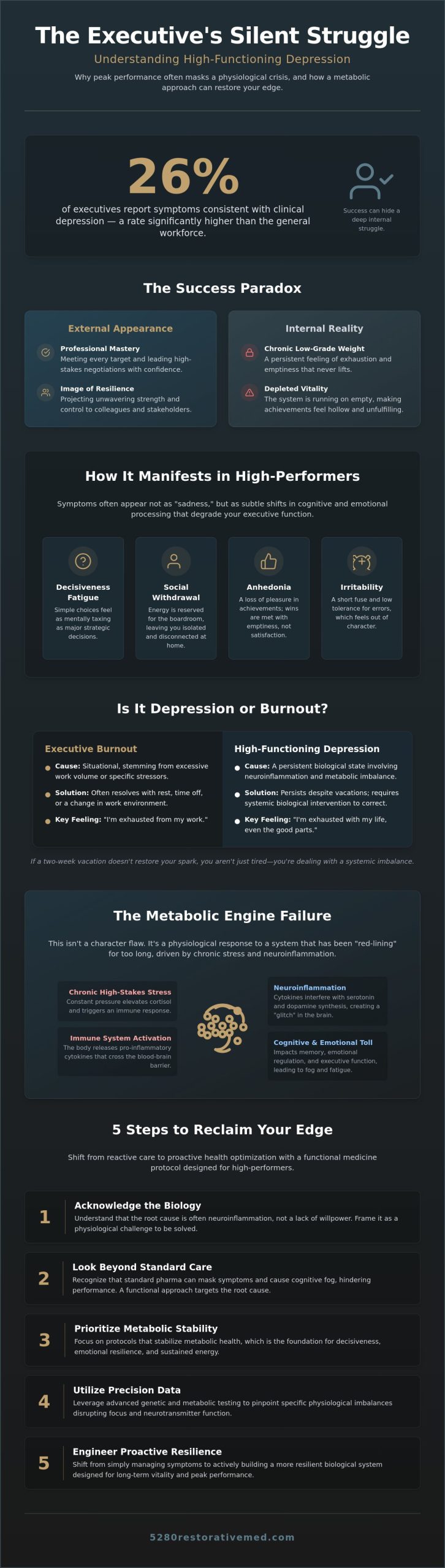
Did you know that 26% of executives report symptoms consistent with clinical depression, a rate significantly higher than the general workforce? For many leaders, managing high-functioning depression as an executive feels like a silent, exhausting second job. You maintain the appearance of total control while your internal engine begins to sputter. You’ve likely found that standard therapy feels too slow or disconnected from the high-stakes reality of your boardroom; this often leads to a quiet fear that your professional edge is permanently dulling.
It’s time to shift the perspective from a psychological struggle to a physiological optimization. You don’t just need to talk through your stress; you need to identify the metabolic root causes behind your mental fatigue. By utilizing a functional medicine approach, you can fix the underlying biological imbalances that drive low mood and cognitive fog. This article explores how precision health allows you to restore decisiveness and maintain peak performance without the crushing emotional toll. You’ll discover how to move beyond the mask and reclaim the vitality that your career and life demand.
Key Takeaways
- Understand why external success often masks internal burnout and how neuroinflammation serves as a biological “off switch” for your professional drive.
- Explore why standard pharmaceutical interventions may hinder high performance and how a functional approach addresses the root cause without side effects like cognitive fog.
- Learn a five-step protocol for managing high-functioning depression as an executive that prioritizes metabolic stability, decisiveness, and emotional resilience.
- Discover how advanced genetic and metabolic testing can pinpoint the specific physiological imbalances disrupting your focus and neurotransmitter balance.
- Shift from reactive care to proactive health optimization through bespoke protocols designed to restore your competitive edge and long-term vitality.
What is High-Functioning Depression in the C-Suite?
To the outside world, you are the picture of resilience and achievement. You meet every quarterly target, lead high-stakes negotiations, and project an image of unwavering confidence. However, beneath this surface of professional mastery lies a chronic, low-grade weight that never quite lifts. This condition is clinically referred to as Persistent Depressive Disorder (PDD), a form of depression that lacks the acute “crash” of major depressive episodes but persists for years. Managing high-functioning depression as an executive is uniquely challenging because your external success often serves as the very reason your internal struggle goes unrecognized.
High-functioning depression is a state where professional competency remains high while internal vitality is depleted. This creates what we call the “Success Paradox.” You might find that the very accolades and promotions you worked years to achieve feel hollow once they arrive. Instead of satisfaction, there is only the pressure of the next milestone. This internal emptiness doesn’t stem from a lack of gratitude or ambition; it’s a physiological signal that your system is running on empty.
For high-performers, symptoms don’t always look like “sadness.” They often manifest as subtle shifts in your cognitive and emotional processing:
- Decisiveness Fatigue: Making simple choices starts to feel as taxing as a multi-million dollar merger.
- Social Withdrawal: You have plenty of energy for the boardroom, but you find yourself completely “dialed out” and isolated once you get home.
- Anhedonia: A distinct loss of pleasure in the wins. The thrill of a successful deal is replaced by a sense of “Is this all there is?”
- Irritability: A shortened fuse with colleagues or family that feels out of character for your usual leadership style.
The Facade of Functionality
Perfectionism is a double-edged sword for the executive. While it drives your career forward, it also acts as a highly effective mask for clinical lows. You’ve likely become so adept at performing your role that you’ve convinced yourself you’re “fine” simply because you aren’t failing. This delay in seeking help is dangerous because it often leads to “Double Depression,” a state where a major depressive episode occurs on top of your existing chronic low mood. Executives often wait until a total systemic collapse occurs before addressing the metabolic roots of their condition.
High-Functioning Depression vs. Executive Burnout
It’s easy to mistake a depressive state for simple burnout. While burnout is typically situational and stems from excessive work volume, high-functioning depression is a persistent biological state that remains even when you take a vacation. If you find that a two-week break doesn’t restore your “spark,” you aren’t just tired; you’re likely dealing with a systemic imbalance. Your high-performer identity may try to dismiss these feelings as a lack of grit, but managing high-functioning depression as an executive requires acknowledging that no amount of willpower can override a depleted neurochemical environment.
The Metabolic Architecture of High-Performance Depression
When you are managing high-functioning depression as an executive, the struggle is rarely a lack of willpower. Instead, it’s often a biological “engine failure” occurring at the cellular level. While traditional psychiatry focuses primarily on neurotransmitter levels, a functional medicine approach looks deeper at the metabolic environment that allows those neurotransmitters to function. Recent insights into the mental health challenges facing executives highlight that the relentless pressure of leadership can trigger a systemic inflammatory response, effectively “glitching” the brain’s ability to maintain a baseline of well-being.
At the heart of this issue is neuroinflammation. When you face chronic, high-stakes stress, your body’s immune system releases pro-inflammatory cytokines that cross the blood-brain barrier. These cytokines interfere with the synthesis of serotonin and dopamine, the very chemicals responsible for your sense of reward and calm. Chronic cortisol elevation leads to hippocampal shrinkage over time, which directly impacts your memory, emotional regulation, and executive function. This isn’t a character flaw; it is a physiological consequence of a system that has been “red-lining” for too long.
Your brain cells also require a massive amount of energy to maintain cognitive clarity. This energy is produced by your mitochondria in the form of ATP. In many high-performers, chronic stress and poor recovery cycles lead to mitochondrial dysfunction. When your brain cells literally lack the ATP to maintain optimal function, you experience the heavy, unmotivated state characteristic of high-functioning depression. This is often exacerbated by hormonal cascades, where declining levels of testosterone and DHEA rob you of the “grit” and competitive drive that once felt effortless. Understanding these markers through metabolic testing is the first step toward a precision recovery.
Neuroinflammation and the Stress Response
The Hypothalamic-Pituitary-Adrenal (HPA) axis is your body’s primary stress management system. In the C-suite, this axis often becomes “stuck” in a pro-inflammatory state. This persistent activation doesn’t just make you feel “stressed”; it changes the way your brain processes information. You begin to perceive neutral situations as threats, and the “off switch” for your stress response becomes less responsive, leading to the persistent low mood associated with managing high-functioning depression as an executive.
Micronutrient Deficiencies in High-Performers
High-stakes roles create a “stress drain” on your internal resources. Your body consumes B vitamins, magnesium, and zinc at an accelerated rate when under pressure. These nutrients are essential co-factors for neurotransmitter production. Without them, your “biochemical floor” drops. Furthermore, executive travel often disrupts the gut-brain axis, leading to poor absorption of Vitamin D and Omega-3s, both of which are critical for protecting the blood-brain barrier and keeping neuroinflammation at bay. Targeted nutritional counseling can help restore these vital foundations.
Beyond Talk Therapy: Why Executives Need a Functional Approach
Standard clinical interventions often rely on a “one-size-fits-all” model that fails the high-achiever. For a CEO or VP, the side effects of traditional Selective Serotonin Reuptake Inhibitors (SSRIs) can be as detrimental as the condition itself. Cognitive fog, weight gain, and diminished libido aren’t just inconveniences; they directly impact your professional presence and personal confidence. Managing high-functioning depression as an executive requires a strategy that doesn’t trade your mental sharpness for emotional stability. You need a protocol that respects the high-stakes environment you navigate daily.
While talk therapy is a valuable tool for processing the unique pressures of leadership, it often addresses the “software” while ignoring the “hardware.” If your underlying physiology is compromised, even the best cognitive behavioral strategies will struggle to take hold. Functional medicine for high-performers bridges this gap by identifying the metabolic root causes that standard psychiatric evaluations frequently overlook. This precision health model offers a superior return on investment by shortening recovery times and restoring the high-level cognitive output your role requires.
The Failure of the “Chemical Imbalance” Myth
The outdated idea that depression is simply a lack of serotonin is finally giving way to a “systemic imbalance” model. Simply adding more serotonin to a sluggish executive brain is like putting premium fuel into a car with a broken transmission. You need to understand why the transmission is failing in the first place. This is why we prioritize testing over guessing. By analyzing your unique biochemistry through genetic analysis and metabolic testing, we can determine if your low mood is driven by chronic inflammation, nutrient depletion, or hormonal shifts rather than a simple neurochemical deficit.
Integrating Biological and Psychological Resilience
True resilience is built at the intersection of biological and psychological health. When your physiology is optimized, you have the “bandwidth” to engage more effectively in leadership coaching or therapy. A critical part of this is sleep architecture. During deep sleep, your glymphatic system actively clears neurotoxic waste from the brain. Without this nightly “detox,” your cognitive performance and mood will inevitably suffer. To further enhance this process, we utilize advanced interventions like red light therapy to boost mitochondrial energy specifically in the prefrontal cortex, the area of the brain responsible for complex decision-making and emotional regulation.
The Executive Recovery Protocol: 5 Steps to Reclaiming Your Edge
Managing high-functioning depression as an executive requires more than a simple shift in perspective; it demands a systematic recalibration of your biological infrastructure. We don’t believe in guesswork. Instead, our protocol focuses on objective data to build a personalized roadmap for your recovery. By addressing the body’s internal systems in a specific order, we can restore the cognitive clarity and emotional resilience that leadership demands.
- Step 1: Advanced Metabolic & Genetic Testing. We map your unique biochemistry to identify exactly where your system is losing efficiency.
- Step 2: Hormone Optimization. We restore the “drive” and “grit” required for high-stakes leadership by balancing your primary endocrine markers.
- Step 3: Gut Health Restoration. Since 90% of your serotonin is produced in the gut, fixing your microbiome is essential for a stable mood.
- Step 4: Precision Supplementation. We use high-grade nutraceuticals based on your specific bloodwork, not generic recommendations.
- Step 5: Lifestyle Engineering. We optimize your environment, focusing on light exposure, sleep architecture, and movement patterns that support brain health.
Precision Testing for Mental Clarity
Standard blood tests often miss the nuances of executive health. We utilize a full thyroid panel, looking far beyond just TSH, to ensure your metabolism is supporting brain function. Adrenal stress indexing allows us to see how your body is actually responding to the pressures of the C-suite. We also look at genetic markers like MTHFR and COMT, which dictate how you process stress and clear neurotransmitters. Organic acid testing (OAT) reveals specific metabolic blocks in the brain that prevent the efficient conversion of nutrients into mood-regulating chemicals. This level of detail is what allows for a truly bespoke intervention.
Hormone Optimization as a Mood Stabilizer
Hormonal imbalances are a frequent, yet overlooked, driver of executive depression. The decline of key markers can lead to a loss of the competitive edge that defined your early career. We prioritize BHRT to restore these levels safely and effectively. It’s important to understand that “normal” lab ranges are often based on a broad, sedentary population; they aren’t “optimal” for a leader managing a multi-million dollar portfolio. By balancing the “Big Three”—cortisol, testosterone, and thyroid—we can stabilize your mood and restore your natural drive. If you are ready to stop managing symptoms and start addressing the cause, schedule a Functional Medicine Consultation to begin your optimization journey.
Engineering Resilience with 5280 Restorative Medicine
At 5280 Restorative Medicine, we understand that your health is your most valuable asset. Managing high-functioning depression as an executive isn’t something you should have to navigate within the constraints of a standard, impersonal healthcare system. Our executive health programs offer a boutique, data-driven alternative designed specifically for the unique physiological and psychological demands of high-level leadership. Under the expert guidance of Dr. Marci Catallo-Madruga, we move beyond surface-level symptoms to rebuild your metabolic foundations from the ground up.
Our comprehensive health optimization protocol is a dynamic process of analysis and adjustment. We begin with the deep-dive testing discussed in previous sections, but the real value lies in the ongoing refinement of your personalized plan. We recognize that your schedule is demanding; therefore, we utilize a hybrid model that combines in-person consultations with virtual support. This ensures your care is both confidential and convenient. This flexibility allows us to monitor your progress and adjust your hormone or supplement protocols in real-time, ensuring you stay at the top of your game without the logistical burden of traditional medical visits.
A Boutique Health Partnership
We treat health as a proactive journey rather than a reactive necessity. In the world of elite performance, simply being “not sick” is a low bar. Our philosophy centers on returning you to health and then exceeding your previous baseline performance. This isn’t just about managing high-functioning depression as an executive; it’s about engineering a state of systemic resilience. By optimizing your biochemistry, we ensure you have the sustainable energy required not only for your career but also for your family and personal passions. Our bespoke approach includes:
- Personalized Clinical Oversight: Direct access to specialized medical expertise that understands the executive lifestyle.
- Data-Driven Refinement: Continuous monitoring of metabolic markers to ensure your protocol evolves with your needs.
- Holistic Integration: Aligning your nutritional, hormonal, and lifestyle factors for maximum cognitive output.
Taking the First Step Toward Peak Vitality
Moving from “functional” to “flourishing” requires a commitment to precision. When your brain and body are aligned, you gain a definitive competitive advantage: the ability to think clearly, lead with empathy, and maintain focus under extreme pressure. Reclaiming your vitality is the ultimate investment in your professional longevity and personal happiness. It’s time to stop surviving the workday and start thriving in every area of your life. Schedule your Executive Health Consultation today and take the first step toward a superior state of physical and mental function.
Reclaiming Your Vitality and Leadership Edge
You’ve spent years honing your professional skills, but the most critical tool in your arsenal is your own biological health. We’ve explored how neuroinflammation, hormonal shifts, and mitochondrial dysfunction can create a silent, heavy strain on even the most successful leaders. By shifting your focus from “toughing it out” to precision biological optimization, you can restore the cognitive clarity and decisiveness that once felt effortless. Managing high-functioning depression as an executive is a proactive journey that begins with understanding your unique metabolic and genetic signature.
Dr. Marci Catallo-Madruga and our specialized team utilize comprehensive metabolic and genetic testing protocols to build a personalized plan tailored to your high-stakes life. We offer national virtual consultations for busy leaders; this ensures that distance is never a barrier to receiving elite, boutique care. You don’t have to carry the weight of a silent struggle alone or settle for a life behind a mask of success. Learn more about our Executive Health Programs and discover how to transition from simply functioning to truly flourishing. Your peak physical and mental state is achievable at any stage of your career.
Frequently Asked Questions
Can I have depression if I am still highly successful at work?
Yes, professional success does not preclude clinical depression. Many leaders maintain high output while experiencing Persistent Depressive Disorder, where the “success facade” masks a chronic internal depletion. This paradox often leads to delayed treatment because you don’t “look” depressed to your colleagues or family, even though your internal vitality has been compromised for years.
What is the difference between high-functioning depression and burnout?
Burnout is typically a situational response to excessive work volume and generally improves with rest or a vacation. High-functioning depression is a persistent biological state that remains even after significant time away from the office. if a two-week break doesn’t restore your internal drive and spark, you’re likely dealing with a systemic depressive state rather than simple exhaustion.
How does metabolic testing help with mood and depression?
Metabolic testing identifies the physiological triggers behind your low mood by analyzing objective data. We look at markers for neuroinflammation, nutrient depletion, and mitochondrial efficiency to pinpoint why your brain isn’t producing or utilizing neurotransmitters effectively. This data-driven approach moves beyond the “chemical imbalance” theory to address the actual biological engine failure causing your symptoms.
Are there natural alternatives to SSRIs for executives?
Yes, functional medicine offers several evidence-based alternatives that avoid the side effects of standard pharmaceuticals. We utilize precision supplement protocols, nutritional counseling, and hormone optimization to restore your biochemical floor. These interventions focus on optimizing your body’s natural production of serotonin and dopamine without the cognitive fog or weight gain often associated with traditional SSRIs.
How long does it take to see results from a functional medicine approach?
Most leaders begin to notice improvements in cognitive clarity and energy levels within four to eight weeks of starting a tailored protocol. While complete metabolic restoration is a longer journey, addressing acute nutrient deficiencies and hormonal imbalances often yields early wins in decisiveness and mood stability. Consistency with your bespoke plan is the key to achieving sustainable results while managing high-functioning depression as an executive.
Is hormone replacement therapy (BHRT) safe for managing mood?
Bioidentical Hormone Replacement Therapy (BHRT) is a safe and highly effective tool for stabilizing mood when managed by an expert. By restoring hormones like testosterone and DHEA to optimal levels, we can resolve the “grit” and “drive” deficits often seen in executive depression. We prioritize precision monitoring to ensure your endocrine system supports both your mental health and your peak physical performance.
What role does gut health play in executive performance and depression?
Your gut health is foundational to your mental performance because the microbiome produces approximately 90% of your body’s serotonin. Chronic stress and executive travel often disrupt the gut-brain axis, leading to systemic inflammation that triggers depressive symptoms. A comprehensive gut health assessment allows us to fix the manufacturing plant for your mood-regulating chemicals and restore your professional edge.
Can I manage high-functioning depression without taking time off work?
You can absolutely begin managing high-functioning depression as an executive while maintaining your professional responsibilities. Our protocols are designed to integrate into a high-stakes lifestyle using a hybrid model of in-person and virtual consultations. This approach focuses on optimizing your biology so that your work performance actually improves as your internal health and cognitive clarity are restored.