
What if your “normal” lab results are actually the very thing standing between you and your peak performance? It’s a common, frustrating experience to feel chronically fatigued or mentally foggy, only to have a provider glance at your blood work and dismiss your concerns because your numbers fall within standard reference ranges. This disconnect happens because standard ranges are often designed to identify acute disease rather than optimize human vitality. Learning how to interpret a comprehensive metabolic panel from a functional perspective allows you to see the subtle shifts in your internal chemistry before they manifest as clinical symptoms.
We believe that health is a proactive journey, and you deserve to know exactly what your biomarkers reveal about your resilience and metabolic efficiency. You’re likely looking for more than just a clean bill of health; you want a superior state of physical and mental function. This guide decodes the complex science behind markers like albumin and bilirubin to help you identify early warning signs of metabolic drift. You will gain actionable insights that transform your lab results from a confusing list of numbers into a strategic roadmap for cognitive and physical excellence.
Key Takeaways
- Shift your perspective from standard reference ranges to the narrow “optimal” windows used in functional medicine to ensure your body functions at its highest capacity.
- Gain a deeper understanding of how to interpret a comprehensive metabolic panel to reveal hidden stressors on your liver, kidneys, and blood sugar regulation.
- Identify subtle patterns between biomarkers, such as the Albumin/Globulin ratio, to pinpoint systemic inflammation that standard reviews often overlook.
- Uncover the truth about your metabolic waste clearance and protein digestion by analyzing the specific relationship between your BUN and Creatinine levels.
- Learn how to transition from raw laboratory data to actionable restorative care by integrating metabolic testing with personalized hormone optimization and executive health protocols.
What is a Comprehensive Metabolic Panel (CMP)?
A Comprehensive Metabolic Panel (CMP) is far more than a routine clinical checklist; it’s a window into your body’s biological efficiency. This sophisticated blood test measures 14 specific biomarkers that provide a real-time snapshot of your internal chemistry. Think of it as the metabolic dashboard for the human body, providing the precise data necessary to fine-tune your performance. While standard medicine often uses these numbers simply to rule out acute disease, understanding how to interpret a comprehensive metabolic panel through a functional lens allows us to identify subtle imbalances before they manifest as physical symptoms. This data serves as the critical baseline for any functional health and wellness protocol, ensuring that every intervention is tailored to your unique physiological needs.
The 14 Biomarkers Included in the Panel
The panel evaluates four critical pillars of health: electrolyte balance, kidney function, liver health, and blood sugar regulation. Each marker offers a specific clue about your metabolic vitality and your body’s ability to maintain homeostasis. These include:
- Blood Sugar: Glucose serves as your primary energy marker, indicating how effectively your body fuels your brain and muscles.
- Proteins: Albumin and Total Protein reflect your nutritional status, tissue repair capacity, and immune function.
- Electrolytes: Sodium, Potassium, Carbon Dioxide, and Chloride manage cellular communication, pH balance, and fluid levels.
- Organ Waste and Enzymes: Markers like ALP, ALT, AST, Bilirubin, BUN, and Creatinine provide an inside look at how your liver and kidneys process and clear metabolic waste.
Why a CMP is Vital for Executive Health
High-performance individuals often operate in high-stress environments that accelerate metabolic wear and tear. This physiological strain is frequently invisible on basic physical exams until it reaches a breaking point. By analyzing these 14 markers with precision, we can detect “metabolic drift,” which is the slow slide away from peak function toward burnout. Identifying these shifts early allows for proactive adjustments to nutrition, supplementation, and recovery protocols. Learning how to interpret a comprehensive metabolic panel is the first step in taking ownership of your biological future. The CMP serves as the essential starting point for our executive health programs, providing the objective data required to move beyond a “normal” baseline and into a state of superior physical and cognitive function.
Decoding the Key Markers: Liver, Kidney, and Glucose
To truly master your health, you must look beyond the binary pass or fail of standard lab results. When considering how to interpret a comprehensive metabolic panel, we focus on the intricate interplay between your energy systems and organ efficiency. This isn’t just about the absence of disease; it’s about optimizing the underlying machinery that drives your daily performance. Each biomarker provides a specific data point that, when viewed through a functional lens, reveals your body’s current state of resilience.
Blood Sugar and Energy Homeostasis
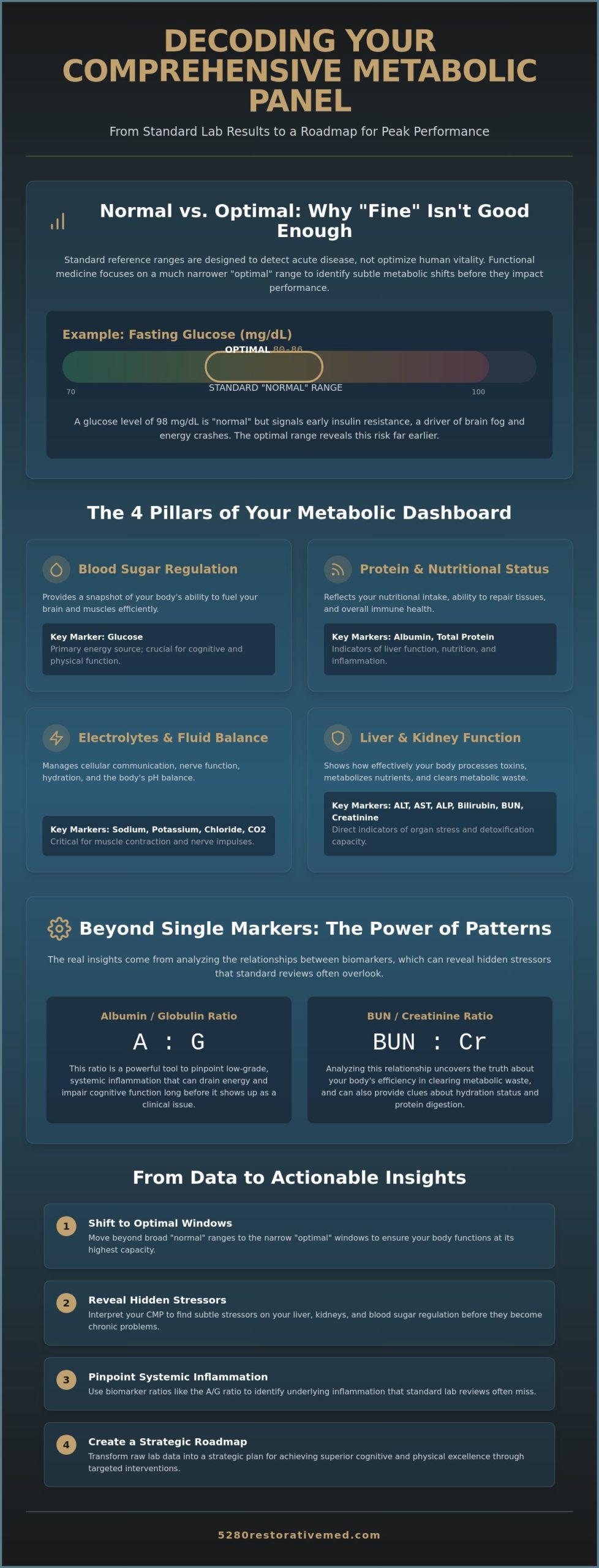
Most individuals see a glucose reading under 100 mg/dL and assume their metabolic health is perfect. However, fasting glucose is merely a snapshot in time. A reading of 98 mg/dL is technically normal by standard lab benchmarks, but in restorative medicine, we look for tight control between 80 and 86 mg/dL. Values creeping toward the high 90s often mask early insulin resistance, which is a primary driver of the afternoon brain fog that plagues many high achievers. Understanding what a CMP measures regarding glucose allows us to stabilize your energy levels before metabolic fatigue becomes your new baseline.
The Liver-Energy Connection
Your liver acts as the central hub for hormone metabolism and detoxification. Enzymes such as Alanine Aminotransferase (ALT) and Aspartate Aminotransferase (AST) are sensitive indicators of cellular integrity within the liver. High-performance lifestyles that include frequent travel, social alcohol consumption, or chronic stress can cause these enzymes to drift toward the upper limit of normal. This “fatty liver drift” or oxidative stress can quietly drain your vitality long before a clinical diagnosis occurs. We prefer to see these enzymes in the lower to middle range of the spectrum. When these markers are optimized, your liver can effectively process toxins and balance the hormones necessary for peak mental clarity.
Kidney Function and Protein Status
Your kidneys serve as the body’s primary filtration system. Blood Urea Nitrogen (BUN) and Creatinine levels tell us how effectively you’re clearing metabolic waste. For those following high-protein diets or intense physical training regimens, these numbers can shift significantly. We assess these markers to ensure your system isn’t being overtaxed by dehydration or excessive protein turnover. Additionally, we evaluate Albumin and Globulin. Albumin reflects your nutritional status and tissue repair capacity, while Globulin acts as a subtle indicator of systemic inflammation. If you find that your current blood work leaves you with more questions than answers, a Functional Medicine Consultation can provide the clarity needed to turn these raw numbers into a personalized action plan for renewal.
Normal vs. Optimal: Why “Fine” Isn’t Good Enough
When you receive your lab results, you’ll likely see a “reference range” next to your numbers. Most patients assume that staying within these boundaries means they are healthy. However, these ranges are merely statistical averages derived from the general population, many of whom are already struggling with sub-clinical issues. If you want to know how to interpret a comprehensive metabolic panel for peak performance, you must understand the difference between being “not sick” and being truly vital. While pathological ranges are designed to identify the presence of disease, functional ranges are engineered to identify the presence of health.
This distinction explains why so many high-performers feel “dismissed” by standard medicine. You might feel chronically fatigued, mentally sluggish, or physically depleted, yet your provider tells you everything is “fine” because your markers aren’t in the red zone yet. In our approach to functional medicine denver, we don’t wait for a system to fail before we intervene. We look for “metabolic drift,” which is the movement away from the narrow window of optimal function where your body performs at its best.
The Comparison: Pathological vs. Functional Ranges
Narrowing the window of what we consider acceptable allows us to catch imbalances early. A marker that is “high-normal” often indicates that your body is under significant physiological stress and is working overtime to maintain balance. The table below illustrates how a Comprehensive Metabolic Panel (CMP) is viewed differently through a functional lens.
| Biomarker | Standard Reference Range | Functional Optimal Range |
|---|---|---|
| Glucose (Fasting) | 70 – 100 mg/dL | 80 – 86 mg/dL |
| Albumin | 3.4 – 5.4 g/dL | 4.5 – 5.0 g/dL |
| ALT (Liver Enzyme) | 4 – 36 U/L | 10 – 26 U/L |
Metabolic Resilience and the Executive Athlete
Metabolic resilience is your body’s ability to bounce back from the stressors of a demanding career and an active lifestyle. For the executive athlete, “normal” hydration and electrolyte markers aren’t enough to sustain high-level cognitive output or intense physical training. We require tighter tolerances. When we analyze how to interpret a comprehensive metabolic panel, we look for the specific ratios that indicate your cells are properly hydrated and your energy production is efficient. By maintaining these biomarkers within optimal ranges, we can engineer a metabolism that is resilient enough to handle high-stress environments without succumbing to burnout or systemic fatigue.
Pattern Recognition: How Biomarkers Work Together
While isolated markers tell you where you are, the relationships between them tell you where you’re going. Mastering how to interpret a comprehensive metabolic panel requires a shift from viewing data points as silos to seeing them as a connected ecosystem. A single number might appear normal, but when paired with another, it reveals a hidden struggle within your physiology. This pattern recognition is what separates a standard screening from a truly restorative health audit that identifies metabolic drift before it becomes a clinical problem.
The Hydration and Protein Balance
The relationship between Blood Urea Nitrogen (BUN) and Creatinine is a prime example of how markers tell a story. BUN often rises when protein intake is high or when the body is in a catabolic state, breaking down its own tissues for energy. If your BUN is elevated while your Creatinine remains stable, it’s a classic signal of dehydration or suboptimal protein digestion. For the high-performer, this isn’t just a clinical curiosity; it translates directly to decreased cognitive focus and slower physical recovery. Similarly, the balance between Sodium and Potassium reflects your cellular communication. Chronic stress and elevated cortisol levels often cause the body to retain sodium and dump potassium. This electrolyte shift can lead to persistent fatigue and brain fog even when your total levels seem acceptable on a standard report.
Inflammation and Immune Readiness
The Albumin/Globulin (A/G) ratio serves as a vital indicator of your systemic environment. Albumin is your primary transport protein, while Globulin is a major component of your immune system. A low A/G ratio often points toward low-grade chronic inflammation or immune overactivity. This pattern can be a subtle hint of underlying issues like mast cell activation syndrome, where the body remains in a state of perpetual high alert. When your immune system is constantly engaged, it drains the resources needed for neurotransmitter production and tissue repair. Maintaining optimal protein levels is critical because these proteins are the raw materials for the chemicals that drive your mood, sleep, and focus.
Finally, we assess the Anion Gap to understand your body’s acid-base balance. This calculation helps us determine how well your cells are oxygenated and how efficiently you’re clearing metabolic acids. If your Anion Gap is outside the optimal window, it suggests your cellular machinery is struggling to produce energy cleanly. If you’re ready to stop guessing and start optimizing your internal chemistry, our Functional Medicine Consultation provides the expertise needed to decode these complex biological patterns and return your system to its peak state.
Next Steps: From Data to Restorative Action
You’ve moved beyond the surface level of your lab reports and started to see the biological story they tell. Understanding how to interpret a comprehensive metabolic panel is a foundational skill, but it’s only the first step in a larger restorative journey. While the CMP provides a vital snapshot of your current state, we view it as the screening phase of a much deeper health audit. Raw data only becomes a catalyst for change when it’s translated into a personalized lifestyle protocol that addresses your specific metabolic barriers.
One of the most powerful applications of this data is its role in hormone health. Your metabolic environment dictates how well your body utilizes and processes hormones. This is why we often integrate CMP data with bhrt (bioidentical hormone replacement therapy) for total optimization. If your liver enzymes are drifting or your glucose control is suboptimal, your body won’t respond to hormone therapy with the same efficiency. By stabilizing your metabolic baseline first, we ensure that every other intervention, from supplements to hormones, yields the maximum possible benefit for your cognitive and physical vitality.
Advanced Testing Beyond the CMP
To build a truly bulletproof metabolism, we often need to look at markers that standard exams ignore. While the CMP tracks your current glucose, it doesn’t tell us how hard your pancreas is working to maintain those levels. Adding fasting insulin and HbA1c provides a more complete picture of your long-term blood sugar regulation. We also frequently include inflammatory markers like C-Reactive Protein (CRP) to assess systemic stress. Genetic analysis also reveals your predispositions for certain metabolic pathways, allowing us to tailor your nutritional counseling and supplement protocols to your DNA rather than a population average.
Partnering with a Functional Medicine Expert
The transition from diagnostic testing to restorative action requires a partner who understands the nuances of human performance. There’s a profound difference between a standard 15-minute physical and a restorative health consultation. In a typical setting, you might be told your results are normal even if you’re struggling to get through the day. We take the time to listen to your concerns and cross-reference them with your functional ranges. This personalized approach allows us to build bespoke protocols that don’t just return you to a baseline but help you exceed it. If you’re ready to stop settling for fine and start engineering your peak state, Schedule your comprehensive metabolic assessment today.
Take Command of Your Biological Potential
You’ve seen that your lab results are more than just a clinical checklist; they are a dynamic map of your internal resilience. By shifting your focus from standard reference ranges to functional optimal windows, you can identify hidden barriers to your daily performance. Mastering how to interpret a comprehensive metabolic panel allows you to address subtle shifts in your liver, kidney, and glucose markers before they manifest as chronic fatigue or cognitive decline. This proactive approach ensures your body remains a reliable asset rather than a source of frustration.
True optimization requires a professional partner who understands the unique demands of a high-performance lifestyle. Led by Dr. Marci Catallo-Madruga, our practice specializes in moving beyond standard care through the integration of advanced metabolic and genetic testing. We invite you to Apply for the Executive Health Program to receive a bespoke health protocol tailored to your unique biological chemistry. You don’t have to settle for “fine” when a superior state of health is within your reach. We are here to guide you toward a future of renewed energy and lasting vitality.
Frequently Asked Questions
Do I need to fast before a comprehensive metabolic panel?
Yes, you should fast for 8 to 12 hours before your blood draw. Since the panel includes a glucose measurement, consuming food or beverages other than water can artificially inflate your blood sugar readings. Maintaining a fasting state ensures the data reflects your baseline metabolic function rather than a temporary post-meal spike. This accuracy is essential when learning how to interpret a comprehensive metabolic panel for long-term health optimization.
What is the difference between a BMP and a CMP?
A Basic Metabolic Panel (BMP) contains only 8 biomarkers, while a Comprehensive Metabolic Panel (CMP) includes 14. The primary difference is the addition of liver function markers in the CMP, such as ALP, ALT, AST, and Bilirubin. While a BMP focuses primarily on kidney function and electrolytes, the CMP provides a more holistic view of your internal chemistry, making it the preferred choice for detailed metabolic testing.
Can stress affect my comprehensive metabolic panel results?
Acute and chronic stress can significantly alter your results by triggering the release of cortisol. This hormone can cause fasting glucose to rise and lead to electrolyte imbalances, specifically causing the body to retain sodium while losing potassium. If you’re under extreme pressure, your “normal” results might actually reflect a body struggling to maintain homeostasis, which is why we consider lifestyle context during every restorative consultation.
What does it mean if my Glucose is normal but I have symptoms of insulin resistance?
Fasting glucose is often the last marker to fail in metabolic health. You may still experience brain fog or weight gain because your body is producing excessive insulin to keep that glucose number within a “normal” range. We often pair the CMP with fasting insulin or HbA1c tests to identify early metabolic drift. These advanced metrics help uncover insulin resistance that a standard glucose snapshot might easily overlook.
Why is my BUN high if my kidney function is otherwise normal?
An isolated high Blood Urea Nitrogen (BUN) reading often points to lifestyle factors rather than kidney disease. If your creatinine and GFR are optimal, an elevated BUN usually suggests a high-protein diet or chronic dehydration. This is a common finding among executive athletes who prioritize protein intake but may not be matching it with adequate fluid and electrolyte support to clear metabolic waste efficiently from the system.
How often should high-performers get a CMP done?
High-performers should generally consider metabolic testing every 3 to 6 months. This frequency allows us to monitor how your body responds to high-stress periods, frequent travel, or changes in your supplement protocols. Regular testing transforms a one-time data point into a meaningful trend, providing the necessary insights to make proactive adjustments before minor metabolic shifts turn into significant barriers to your physical or cognitive performance.
Can a CMP detect inflammation?
While the CMP isn’t a direct test for inflammation like C-Reactive Protein, it offers subtle clues through protein patterns. A low Albumin to Globulin (A/G) ratio can signal that your immune system is overactive or that low-grade chronic inflammation is present. By analyzing these specific ratios, we can detect systemic stress that might be draining your energy and interfering with your ability to maintain a superior state of health.
What should I do if my doctor says my CMP results are “normal” but I feel unwell?
If your results fall within standard ranges but you still feel suboptimal, it’s time to look at functional optimal windows. Standard ranges are designed to catch late-stage disease, not to foster peak vitality. We recommend a Functional Medicine Consultation to review your markers through a restorative lens. This deeper dive helps identify the metabolic drift that standard exams often ignore, providing a clear path back to how to interpret a comprehensive metabolic panel for excellence.