
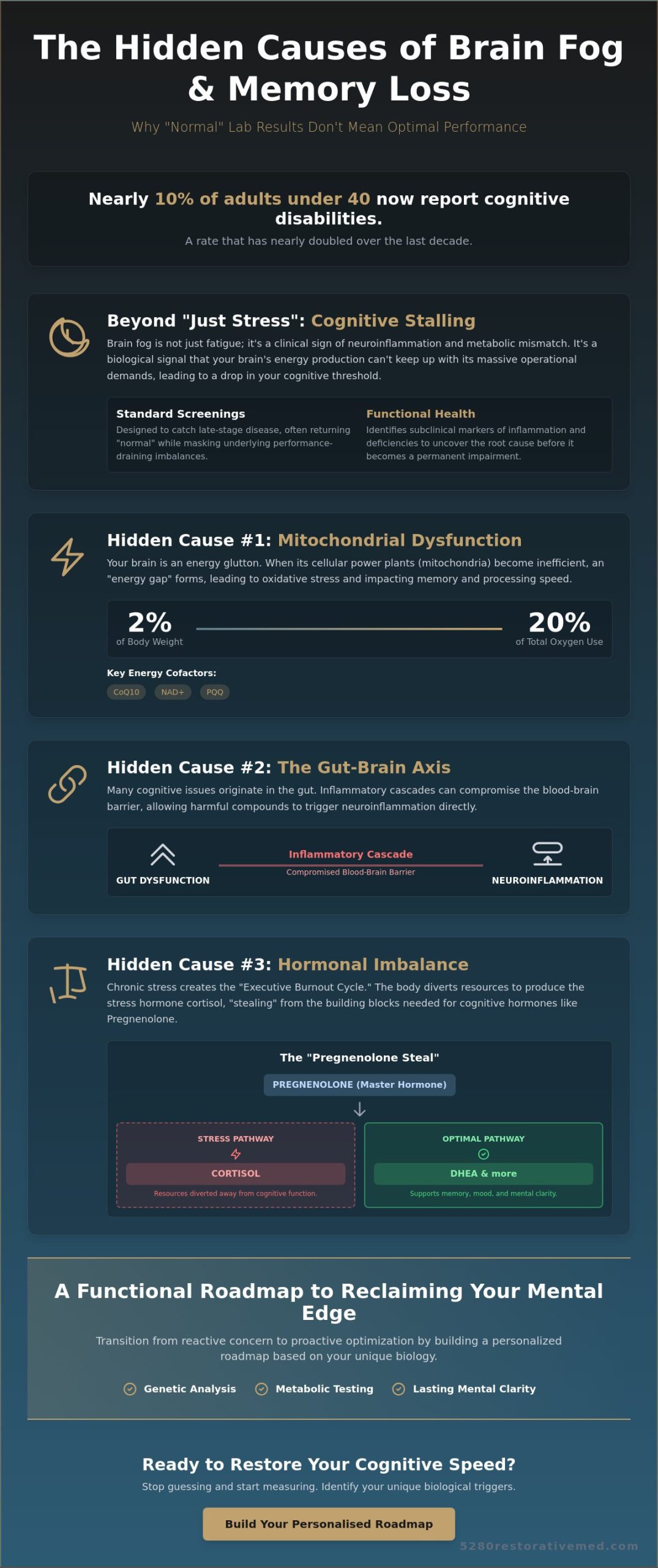
Nearly 10% of adults under the age of 40 now report cognitive disabilities, a rate that has nearly doubled over the last decade according to current health statistics. You know the frustration of reaching for a word that isn’t there or losing your professional edge despite getting enough sleep. It’s even more disheartening when standard medical screenings come back “normal” while you continue to struggle with the hidden causes of brain fog and memory loss. We understand that these symptoms are often metabolic distress signals, indicating that your neurobiology is being outpaced by systemic inflammation or cellular energy failure.
You don’t have to accept a decline in performance as your new baseline. This article explores the specific hormonal, metabolic, and cellular root causes that traditional screenings often overlook. We’ll provide a data-driven roadmap to help you identify your unique biological triggers and restore your cognitive speed. By shifting from reactive concern to proactive optimization, you can reclaim your mental clarity and achieve a superior state of function.
Key Takeaways
- Shift your perspective from viewing cognitive stalling as simple stress to understanding it as a biological signal of neuroinflammation and metabolic mismatch.
- Explore how mitochondrial energy failures create a significant gap in the brain’s massive oxygen and energy requirements, impacting your processing speed.
- Uncover how the hidden causes of brain fog and memory loss often originate in the gut through inflammatory cascades that compromise the blood-brain barrier.
- Learn how the “pregnenolone steal” and cortisol imbalances divert essential resources away from cognitive performance to fuel chronic stress responses.
- Transition from reactive concern to proactive health by utilizing genetic analysis and metabolic testing to build a personalized roadmap for lasting mental clarity.
Beyond “Just Stress”: Redefining Cognitive Stalling in High-Performers
High-performers often dismiss mental fatigue as a byproduct of a demanding schedule. However, when your mental sharpness begins to dull, it’s rarely just about a lack of sleep. Brain fog is a clinical manifestation of neuroinflammation and metabolic mismatch. It’s the brain’s way of signaling that its energy production can’t keep up with its operational demands. While many people use the term casually, understanding What is Brain Fog in a clinical context reveals it as a state of “cognitive stalling.” This isn’t just temporary fatigue. It’s a persistent drop in your cognitive threshold where hidden stressors begin to outpace your biological resilience.
Resilient individuals often push through these early warning signs, relying on sheer willpower to maintain their output. This grit is an asset, but it can also mask the hidden causes of brain fog and memory loss until the underlying systems are severely strained. Cognitive stalling occurs when the brain’s metabolic “debt” becomes too high to ignore. Unlike the transient tiredness that follows a late night, this chronic impairment feels like a permanent reduction in your processing speed and mental agility.
The Symptoms of Neuro-Metabolic Distress
For the executive or entrepreneur, cognitive distress shows up in subtle but devastating ways. You might find yourself searching for common words during a high-stakes presentation or struggling to make rapid-fire decisions that used to feel intuitive. That familiar “afternoon slump” isn’t just a sign of a long day; it’s often a marker of glucose instability and mitochondrial lag. When your working memory capacity shrinks, it becomes harder to hold multiple complex variables in your mind at once. This isn’t a lack of discipline. It’s a physiological bottleneck that limits your executive function.
Why “Normal” Labs Leave You in the Fog
Many patients visit their primary care doctor only to be told their blood work is perfect. Standard medical screenings are designed to catch late-stage disease, not to optimize performance. Your body is remarkably good at compensating for imbalances, often masking the hidden causes of brain fog and memory loss until you reach a total performance crash. To truly understand why your mental clarity is slipping, you must look beyond the standard reference ranges. Moving toward functional health and wellness allows us to identify subclinical markers of inflammation and nutrient deficiencies before they become permanent impairments. We focus on the gaps where your health isn’t just “fine,” but failing to meet the demands of your life.
Hidden Cause #1: Mitochondrial Dysfunction and the Energy Gap
The brain is a metabolic glutton. Despite representing only 2% of your body weight, it consumes roughly 20% of your total oxygen intake. This massive energy demand is met by mitochondria, the cellular power plants that generate ATP. When these power plants become inefficient, a “mitochondrial mismatch” occurs. This isn’t just about feeling tired; it’s a physiological crisis that leads to oxidative stress, particularly within the hippocampus, the brain’s primary center for memory. This cellular energy failure is one of the most overlooked hidden causes of brain fog and memory loss, often manifesting as a physical sensation of “mental heaviness” that no amount of caffeine can lift.
Maintaining a robust neuro-energy supply requires specific cofactors. Molecules like CoQ10, NAD+, and PQQ are essential for the electron transport chain to function efficiently. Without them, your neurons struggle to fire, and the brain begins to prioritize basic survival over high-level executive function. While many conventional causes of brain fog focus on lifestyle alone, the root often lies at this microscopic level. The recent FDA approvals of mitochondrial-specific therapies like Forzinity and Kygevvi in late 2025 mark a new era in medicine, shifting the focus from symptom management to addressing these foundational cellular causes.
The Impact of Environmental Toxins on Brain Energy
Your mitochondria are highly sensitive to environmental interference. Heavy metals and mycotoxins from mold act as direct mitochondrial “poisons” that halt ATP production. These toxins trigger microglial activation, which is the brain’s resident immune response. Once activated, these cells release pro-inflammatory cytokines that perpetuate chronic neuroinflammation. If your cellular engines are clogged with toxins, cognitive restoration is nearly impossible. We find that identifying these specific triggers through a Functional Medicine Consultation is essential for anyone seeking to exceed their current baseline performance.
Bio-Optimization for Mitochondrial Health
Restoring your mental edge requires a proactive approach to cellular health. One of the most effective interventions is red light therapy, which utilizes specific wavelengths to stimulate cytochrome c oxidase, a key enzyme in ATP production. Beyond technology, your fuel source matters. Shifting the brain from a glucose-heavy metabolism to a more fat-efficient fuel state can stabilize energy levels and reduce oxidative byproducts. Pairing this shift with micronutrients like magnesium and acetyl-L-carnitine acts as a “spark plug” for cerebral ATP, ensuring your brain has the surplus energy needed for peak performance.
Hidden Cause #2: The Gut-Brain Axis and Systemic Inflammation
The brain does not exist in a vacuum. It is inextricably linked to the gastrointestinal system through a complex communication network known as the gut-brain axis. When the intestinal lining becomes compromised, a condition often termed “leaky gut,” it frequently leads to a “leaky brain.” This occurs because the same inflammatory signals that increase gut permeability can also degrade the integrity of the blood-brain barrier. Once this barrier is breached, Lipopolysaccharides (LPS), which are endotoxins from gram-negative bacteria, enter the systemic circulation. These toxins trigger a cascade of neuroinflammation, acting as one of the primary hidden causes of brain fog and memory loss that standard blood work fails to detect.
Beyond structural integrity, your microbiome serves as a chemical factory for the mind. A significant portion of your neurotransmitters, including GABA and serotonin, are produced or regulated by gut bacteria. When microbiome diversity is low, your brain lacks the chemical precursors necessary for calm, focused thought. Addressing these underlying medical issues requires a shift away from localized brain treatments toward a systemic approach that prioritizes intestinal health as a foundation for cognitive clarity.
MCAS and the Neuroinflammatory Loop
For many high-performers, the sensation of a “brain on fire” is driven by mast cell activation syndrome (MCAS). Mast cells are immune sentinels that release histamine and other pro-inflammatory mediators in response to perceived threats. When these cells become overactive, they create a state of chronic neuroinflammation that mimics the symptoms of severe cognitive fatigue. You might notice that your brain fog intensifies after certain meals or environmental exposures. Standard allergy medications often fail here because they only block histamine receptors rather than stabilizing the mast cells themselves. Identifying these triggers is essential to breaking the cycle of cognitive haze.
The Role of Stealth Infections
Systemic inflammation is frequently fueled by latent viral loads or stealth infections that the immune system is struggling to contain. Viruses like Epstein-Barr (EBV) or HHV-6, as well as chronic Lyme and its coinfections, act as a constant drain on your metabolic resources. Your body diverts energy away from the prefrontal cortex to fuel a perpetual immune battle. This diversion results in persistent memory loss and a diminished ability to process complex information. Calming the immune system begins in the gut. By restoring the microbiome and sealing the intestinal barrier, we can reduce the systemic “noise” that prevents your brain from functioning at its peak capacity.
Hidden Cause #3: Hormonal Imbalance and the “Executive Burnout” Cycle
Your hormones are the chemical messengers that dictate how your brain processes information. When these signals are crossed, the result is often a persistent mental haze. One of the primary hidden causes of brain fog and memory loss is a disrupted Cortisol Awakening Response (CAR). Ideally, cortisol should spike shortly after waking to provide immediate mental clarity and focus. If your CAR is flat due to chronic stress, you’ll likely struggle with morning fog that persists regardless of how much caffeine you consume. This isn’t a lack of willpower; it’s a physiological failure to jumpstart your brain’s daily operations.
This issue is often worsened by a biochemical phenomenon known as the “pregnenolone steal.” Pregnenolone is a precursor to both stress hormones and cognitive-enhancing hormones like testosterone and estrogen. When you’re stuck in a cycle of executive burnout, your body prioritizes survival. It diverts resources to produce cortisol, leaving your brain’s neuroprotective sex hormones depleted. Many patients also hear their thyroid is “fine” because their TSH is in range. That’s not enough data for a high-performer. Your brain requires optimal levels of free T3 to maintain processing speed. A standard lab result often masks a subclinical deficiency that stalls your cognitive output while your doctor says you’re healthy.
BHRT and Cognitive Longevity
Declining sex hormones are directly linked to a loss of synaptic plasticity. Estrogen and testosterone aren’t just for reproductive health; they are profoundly neuroprotective. Recent research from April 2026 emphasizes the “timing hypothesis,” suggesting that initiating hormone therapy close to the onset of menopause or andropause is crucial for maintaining cognitive function. In February 2026, the FDA removed the black-box warning from hormone replacement products, acknowledging the evolving safety profile of these treatments. Utilizing BHRT allows us to restore a neuroprotective environment with precision. We customize these protocols to ensure stable levels, avoiding the disruptive “peaks and valleys” common in standardized replacement methods.
The Adrenal-Cognitive Connection
Chronic high cortisol does more than just make you feel stressed. Over time, elevated glucocorticoids can actually lead to atrophy in the hippocampus, the part of the brain responsible for forming new memories. This transition from being “wired and tired” to total cognitive burnout is a hallmark of HPA axis dysfunction. Resetting this axis requires more than just “relaxing.” It demands a targeted approach involving specific micronutrients and lifestyle modifications to signal safety to your nervous system. If you’re ready to stop guessing and start optimizing, our Hormone Optimization protocols are designed to help you reclaim your edge.
A Functional Roadmap to Reclaiming Your Mental Edge
Engineering a return to peak cognitive function requires a departure from the “wait and see” approach of traditional medicine. We believe in a “test, don’t guess” philosophy that treats your neurobiology as a high-performance system. By identifying the hidden causes of brain fog and memory loss through precise data, we can move beyond general advice and into targeted biological engineering. This process often begins with comprehensive Genetic Analysis. Understanding your MTHFR status or APOE4-related risks allows us to tailor your methylation support and lipid management, effectively lowering the cognitive risks that standard blood work completely ignores.
You don’t have to settle for a baseline that feels like “surviving.” This personalized roadmap is the only way to resolve the hidden causes of brain fog and memory loss that have persisted despite your best efforts. By looking at the intersections of your gut, hormones, and cellular energy, we build a foundation that supports long-term mental clarity and professional performance.
Advanced Diagnostics for Cognitive Clarity
To see the full picture, we utilize diagnostics that go deeper than the surface. Organic Acid Testing (OAT) provides a metabolic snapshot of your neurotransmitter metabolites, revealing how your brain is actually processing chemicals like dopamine and serotonin. We also look at advanced lipid panels and inflammatory markers such as hs-CRP and Homocysteine. These values tell us if your vascular system is providing the clean, efficient blood flow your neurons require. When we find a deficiency, we don’t just suggest a generic multivitamin; we create bespoke Supplement Protocols based on your actual cellular needs.
The Executive Health Path
High-performers need more than just a list of recommendations; they need a structured architecture for success. Our Executive Health Program integrates every aspect of your biology, from nutritional counseling to bio-optimization. This level of functional medicine denver high-performers rely on provides the accountability and precision required to maintain an edge in high-stakes environments. We don’t just aim for the absence of illness; we aim for a superior state of physical and mental function at every stage of life. If you’re ready to uncover the specific triggers holding you back, Schedule a consultation with 5280 Restorative Medicine today.
Reclaim Your Cognitive Edge Through Precision Medicine
You’ve seen that cognitive stalling isn’t an inevitable part of aging or a permanent side effect of a demanding career. It’s a biological signal that your systems are out of balance. Whether it’s mitochondrial energy gaps, intestinal permeability, or the “pregnenolone steal” depleting your neuroprotective hormones, these hidden causes of brain fog and memory loss can be identified and corrected. Relying on standard lab results often leaves high-performers in a state of sub-optimal health; true restoration requires a deeper, data-driven investigation into your unique genetic and metabolic markers.
Led by Dr. Marci Catallo-Madruga, an expert in metabolic resilience, our practice specializes in engineering health protocols specifically for the high-stakes demands of your life. We use advanced genetic and metabolic testing to create an architecture for your long-term mental clarity. You don’t have to navigate this journey alone. Apply for the Executive Health Program at 5280 Restorative Medicine to begin your transition from surviving to thriving. Your peak mental state is achievable; it’s time to build the biological foundation that supports your highest ambitions.
Frequently Asked Questions
Can brain fog be a sign of something serious like early-onset dementia?
While the sensation is alarming, brain fog is typically a reversible metabolic distress signal rather than a permanent neurodegenerative disease. It indicates that your current neurobiology is struggling to keep up with systemic inflammation or energy demands. However, persistent cognitive stalling should be investigated through advanced diagnostics to differentiate between temporary functional gaps and more serious long-term risks to your brain health.
How long does it typically take to clear brain fog using a functional medicine approach?
Most high-performers begin to notice significant improvements in mental clarity and processing speed within 4 to 12 weeks. This timeline allows for the stabilization of blood sugar, the reduction of systemic inflammation, and the restoration of mitochondrial function. True cognitive optimization is a journey of cellular repair. The exact duration depends on the complexity of your specific biological triggers and metabolic debt.
Why do my blood tests come back normal if I am still experiencing memory loss?
Standard lab results are designed to identify late-stage disease, not to evaluate peak performance. They often fail to detect subclinical hidden causes of brain fog and memory loss like mitochondrial energy gaps or nutrient deficiencies. Your body is highly skilled at compensating for imbalances, which keeps your markers within “normal” ranges even as your cognitive threshold drops and your mental clarity begins to fade.
Are there specific supplements that are “gold standards” for clearing brain fog?
There is no universal pill because effective supplementation must be personalized to your unique metabolic profile. However, cofactors like CoQ10, NAD+, and high-quality Omega-3 fatty acids are foundational for supporting ATP production and reducing oxidative stress. We use metabolic testing to identify your specific deficiencies, ensuring that your supplement protocol acts as a precision tool for cognitive restoration rather than a generic guess.
How does gut health directly affect my ability to concentrate at work?
The gut-brain axis acts as a chemical highway for your mind. When your microbiome is imbalanced, it triggers systemic inflammatory cascades that can degrade the blood-brain barrier. This allows endotoxins to enter the brain, activating immune cells that slow down your neural processing speed. Research involving 15 human studies published through 2025 confirms that rebalancing the gut microbiome is a critical step in maintaining cognitive focus.
What role does heavy metal toxicity play in cognitive decline?
Heavy metals like lead, mercury, and aluminum act as direct mitochondrial poisons that halt energy production in your neurons. They trigger chronic oxidative stress and microglial activation, which creates a state of persistent neuroinflammation. This toxicity lowers your cognitive threshold, making it harder to handle complex tasks and leading to the “mental heaviness” often associated with the early stages of cognitive decline.
Can hormone replacement therapy (BHRT) help with mental clarity?
Optimized hormone levels are essential for maintaining synaptic plasticity and cerebral blood flow. Following the removal of the FDA black-box warning in February 2026, more individuals are utilizing BHRT to address the hidden causes of brain fog and memory loss linked to hormonal depletion. Starting therapy close to the onset of hormonal shifts is particularly effective for protecting the brain from the executive burnout cycle and restoring mental sharpness.
Is brain fog a permanent condition or can it be reversed?
Brain fog is almost always a reversible condition when the underlying biological triggers are properly addressed. It’s a manifestation of physiological stress, not a permanent diagnosis of decline. By shifting from reactive care to a proactive, data-driven strategy, you can close the energy gaps in your brain and restore your cognitive speed. You have the power to reclaim your professional edge and achieve superior mental function.