
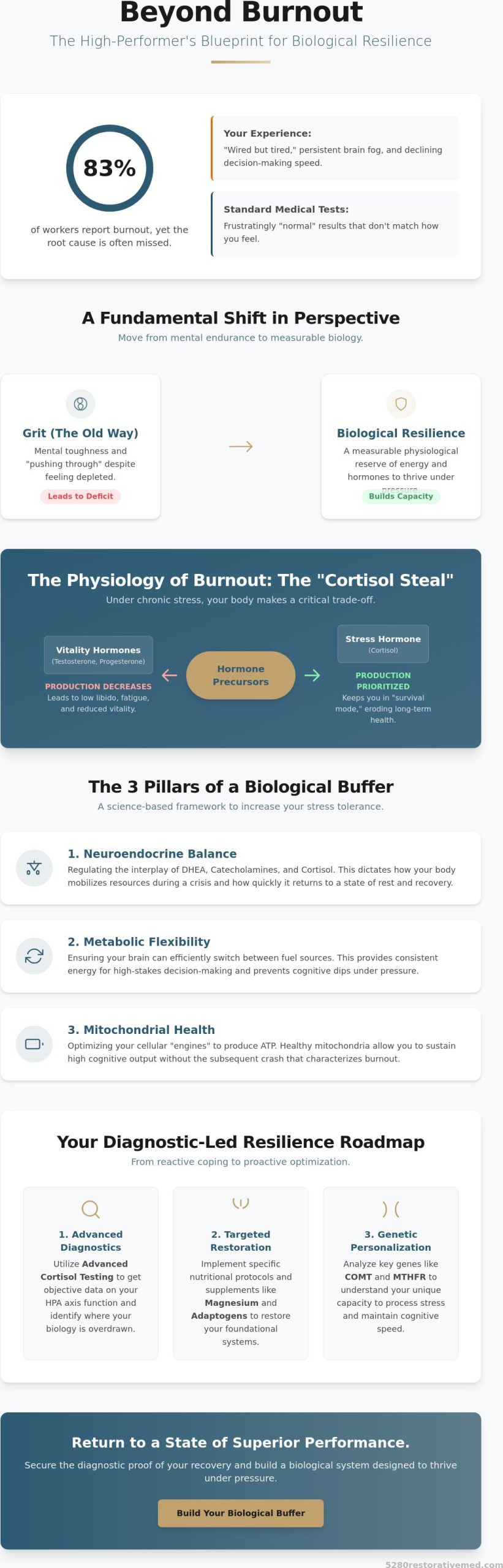
What if your persistent brain fog and “wired but tired” exhaustion aren’t signs of a failing mindset, but measurable evidence of a physiological system under siege? For many high-performers, the frustration lies in feeling a distinct decline in decision-making speed while standard medical tests return frustratingly normal results. With 83% of workers globally reporting burnout struggles as of 2026, it’s clear that traditional approaches are falling short. Utilizing advanced cortisol testing for burnout allows us to look beneath the surface, providing the objective data needed to understand why your body is no longer rebounding from the pressures of the modern workplace.
You already know that simply managing stress isn’t enough when your professional demands continue to escalate. We agree that you deserve more than a generic suggestion to sleep more or work less. This article reveals how to move beyond basic coping mechanisms to build a robust biological buffer against burnout through metabolic optimization and functional medicine. We’ll explore a science-based framework designed to increase your stress tolerance and restore peak cognitive function. By shifting from reactive care to proactive physiological enhancement, you can secure the diagnostic proof of your recovery and return to a state of superior performance.
Key Takeaways
- Redefine resilience as a measurable biological reserve of hormones and energy rather than a simple test of mental endurance.
- Explore why traditional stress management often fails when the nervous system is depleted and how chronic pressure leads to the “cortisol steal.”
- Learn how advanced cortisol testing for burnout provides the objective data required to transition from reactive coping to proactive metabolic optimization.
- Discover the specific nutritional foundations and targeted supplement protocols, including magnesium and adaptogens, that help restore your HPA axis function.
- Identify how your unique genetic profile, specifically the COMT and MTHFR genes, influences your individual capacity to process stress and maintain cognitive speed.
Defining Workplace Resilience: Moving Beyond ‘Toughing It Out’
For years, the corporate world has treated resilience as a psychological virtue, a testament to one’s mental toughness. In the high-stakes environment of 2026, we recognize that this definition is dangerously incomplete. True resilience isn’t a personality trait; it’s a measurable physiological capacity determined by your metabolic and hormonal health. While grit represents the mental effort you exert to overcome a challenge, resilience is the biological reserve that allows you to do so without compromising your long-term health. Biological resilience is the body’s ability to maintain homeostasis under extreme cognitive load. When this reserve is depleted, even the most disciplined executive will find their performance slipping. This shift in perspective is why cortisol testing for burnout has become a foundational tool for high-performers who refuse to accept “normal” lab results as an excuse for feeling substandard.
The Resilience Gap: Why You Can’t ‘Mindset’ Your Way Out of Burnout
Many high-performers mistake “pushing through” for resilience, but this is often just grit masking a deepening physiological deficit. When your Hypothalamic-Pituitary-Adrenal (HPA) axis is dysregulated, no amount of positive thinking or meditation can bridge the gap. There’s a direct relationship between your cellular energy, known as ATP, and your ability to regulate emotions and make complex decisions. If your mitochondria aren’t producing enough fuel, your brain’s executive function begins to flicker. Relying on sheer willpower when your biology is failing leads to a “resilience gap” where mental effort exceeds physiological capacity. Utilizing cortisol testing for burnout helps identify exactly where your biological bank account is overdrawn, allowing for a targeted clinical intervention rather than another self-help book.
The Three Pillars of Biological Resilience
Building a robust metabolic buffer requires a focus on three distinct physiological areas:
- Neuroendocrine Balance: This involves the delicate dance between DHEA, catecholamines, and Cortisol. These hormones dictate how your body mobilizes resources during a crisis and how quickly it returns to a state of rest.
- Metabolic Flexibility: This is your brain’s ability to switch efficiently between fuel sources. During periods of high-stress decision-making, your cognitive demand for energy spikes; metabolic flexibility ensures that fuel is always available.
- Mitochondrial Health: Your mitochondria are the literal engines of your stress response. Healthy mitochondria allow you to sustain high levels of cognitive output without the subsequent “crash” that characterizes burnout.
By addressing these pillars, you move beyond the “toughing it out” mentality. You aren’t just surviving the work week; you’re building a biological system designed to thrive under pressure.
The Physiology of the Stress Response: How Your Body Manages Pressure
Your body’s response to a high-pressure boardroom or a looming deadline isn’t just a mental state; it’s a complex chemical cascade. The Hypothalamic-Pituitary-Adrenal (HPA) axis acts as your internal command center, coordinating the dialogue between your brain and your adrenal glands. When this system functions optimally, you experience sharp focus and quick decision-making. However, chronic workplace pressure often forces the body into a state known as the “cortisol steal.” In this survival mode, your biology prioritizes the production of stress hormones at the expense of sex hormones like testosterone and progesterone. This trade-off explains why many executives maintain their professional drive while seeing their libido and overall vitality vanish. Understanding these hormonal shifts is critical for effective hormone optimization and returning to your peak physical state.
The role of catecholamines, specifically adrenaline and noradrenaline, is equally vital. These chemicals provide the “edge” needed for intense executive function. While they’re essential for short-term focus, an over-reliance on them leads to a state of hyper-vigilance that eventually erodes your cognitive reserves. Research indicates that advanced diagnostic tools to detect burnout can identify these imbalances before they become debilitating. By utilizing cortisol testing for burnout, we can move beyond guessing and start measuring the actual physiological cost of your career.
Cortisol: The Master Regulator and Its Hidden Costs
Healthy cortisol follows a strict diurnal rhythm. You should experience a sharp rise in the morning to fuel your transition into the day, followed by a gradual decline that allows for restorative sleep. When this curve flattens due to chronic stress, it results in persistent brain fog and “tired but wired” nights. This functional adrenal insufficiency means your body can no longer mount an appropriate response to daily demands. Over time, high, dysregulated cortisol levels trigger systemic inflammation, which further degrades your metabolic health and cognitive clarity.
The Gut-Brain-Stress Connection
Stress doesn’t stay confined to your nervous system; it directly impacts your digestive health. Chronic pressure compromises your intestinal barrier, often leading to increased systemic inflammation. Your microbiome is responsible for producing a significant portion of your GABA and Serotonin, the neurotransmitters that keep you calm and focused. When the gut is compromised, your mood and resilience follow suit. Digestive issues like bloating or food sensitivities are often the first quiet warnings of a failing resilience buffer. If you’ve noticed these signs, a Functional Medicine Consultation can help map out a path to restoration.
Why Standard Stress Management Fails High-Performers
Most executives have tried “unplugging” for a weekend only to return to the office feeling just as depleted by Tuesday morning. This happens because standard stress management treats burnout as a psychological state rather than a physiological deficiency. For a high-performer, the “Meditation Paradox” is a common hurdle; while breathing exercises and mindfulness have their place, they cannot fix a nutrient-depleted nervous system or a dysregulated HPA axis. If your biological engine is running on empty, mental techniques alone won’t provide the restoration you need. This is where functional health and wellness differs from standard insurance-based medicine. Instead of waiting for a disease to manifest, we focus on root-cause optimization to ensure your body can actually handle the cognitive load you demand of it.
Generic health advice often misses the mark for Type A personalities because it fails to account for the unique intensity of their lifestyle. Standard protocols usually suggest “doing less,” which isn’t always a viable option for those at the helm of an organization. Science now shows the physiological link between burnout and cortisol is often characterized by hypocortisolism, a state where the body can no longer produce enough cortisol to meet daily demands. Utilizing cortisol testing for burnout allows us to move beyond surface-level suggestions and create a clinical roadmap tailored to your specific metabolic needs.
The Stimulant Trap: Borrowing Energy from Tomorrow
Many high-performers rely on excessive caffeine and other stimulants to manufacture the focus they used to have naturally. This creates a dangerous “stimulant trap” where you’re effectively borrowing energy from your future self. Caffeine masks HPA axis dysfunction by forcing another hit of adrenaline from already fatigued glands. If you find yourself needing a third cup of coffee just to navigate late-night emails or international travel, your resilience is likely borrowed rather than built. Recognizing these signs is the first step toward reclaiming your natural vitality through cortisol testing for burnout and targeted metabolic support.
The Flaw in Work-Life Balance Rhetoric
The traditional concept of “work-life balance” suggests a passive retreat from professional life, but high-performers often thrive on Work-Life Integration. You don’t necessarily need more time off; you need better biological support to stay engaged. This requires a shift toward Active Recovery, which involves specific protocols to down-regulate the nervous system efficiently. Building a resilience protocol that fits into a 60-hour work week isn’t about finding more hours in the day. It’s about optimizing your internal chemistry so that your time away from the desk actually results in measurable physiological repair.
Building the Biological Buffer: Bio-Optimization Strategies
Building a biological buffer requires shifting your focus from surviving the day to fortifying the system. Your body needs specific raw materials to produce the hormones and neurotransmitters that manage stress. High-quality protein provides the amino acids necessary for neurotransmitter synthesis, while healthy fats serve as the structural foundation for your hormones. Without these, your HPA axis is essentially trying to build a skyscraper with straw. Once we identify your specific deficiencies through cortisol testing for burnout, we can move toward a bespoke protocol that prioritizes these foundations.
Targeted supplementation is the next step. Understanding specific magnesium benefits is crucial, as this mineral is involved in over 300 enzymatic reactions and is rapidly depleted during high-stakes negotiations. Beyond nutrition, advanced modalities like red light therapy offer a non-invasive way to optimize mitochondrial resilience, ensuring your cellular engines can keep up with your cognitive demands. We also utilize hormetic stressors, such as intentional cold exposure and heat therapy, to “train” your nervous system to remain calm under pressure. These practices don’t just help you relax; they physically expand your capacity to handle stress. If you’re ready to stop guessing and start optimizing, our Executive Health Program provides the diagnostic precision needed to build your biological reserve.
Nutraceuticals for High-Stakes Environments
In the heat of a critical meeting, your brain needs more than just willpower. Phosphatidylserine is an essential phospholipid that helps blunt the “wired” feeling of high cortisol, protecting your brain from the damaging effects of chronic activation. L-Theanine, often found in green tea, promotes a state of calm focus without the sedation associated with pharmaceutical options. It’s also vital to address B-vitamin depletion. These vitamins are the spark plugs of your metabolic engine, and they’re often the first nutrients to vanish when workplace demands escalate. Restoring these levels is a non-negotiable step in recovering from the physiological cost of high-level leadership.
Bio-Optimization Protocols for the C-Suite
Your resilience isn’t just built in the office; it’s protected in the hours before sleep. Using blue light blocking technology in the evening preserves your melatonin production, which is essential for the next day’s cognitive reserve. We also encourage using wearable data to track Heart Rate Variability (HRV). HRV is a powerful metric that measures the balance of your autonomic nervous system, providing a real-time snapshot of your resilience levels. For those who are constantly on the move, a travel-friendly resilience kit including specific adaptogens and electrolyte blends ensures that cortisol testing for burnout results continue to trend in the right direction, regardless of your time zone.
The Executive Health Roadmap: Diagnostic-Led Resilience
You wouldn’t attempt to lead a corporation without a transparent balance sheet, yet many executives manage their biological health through intuition and guesswork. Diagnostic-led resilience replaces this uncertainty with clinical precision. You cannot optimize what you do not measure, and for the high-performer, standard blood panels are rarely sufficient. We utilize metabolic testing to look deep within your cellular function, identifying where your energy production is faltering. Effective cortisol testing for burnout provides the objective baseline needed to stop a downward performance spiral and begin the journey toward physiological renewal.
Genetic analysis offers another layer of bespoke insight. By identifying specific variations in the COMT and MTHFR genes, we can understand your unique capacity for processing stress and clearing catecholamines from your system. Some individuals are genetically predisposed to maintain focus under pressure but struggle to down-regulate afterward, while others may experience a rapid depletion of neurotransmitters. Our Executive Health Program integrates these data points to create a blueprint that is entirely unique to your biology. The goal of restorative medicine isn’t simply to return you to a “normal” range that ignores your high-output lifestyle; it’s to reach an optimal state where your physical and mental capacity exceeds your professional demands.
Advanced Diagnostics for Stress Resilience
Standard medicine often relies on a single morning blood draw to check cortisol, but this snapshot misses the critical diurnal rhythm that dictates your daily energy. We prefer a 4-point salivary cortisol test, which tracks your levels from the moment you wake until you go to bed. This provides a “movie” of your stress response rather than a still photo, revealing if your curve is flat, inverted, or peaking at the wrong times. We also screen for micronutrient deficiencies, such as zinc and magnesium, which act as the cofactors for your stress response. Occasionally, we find that mast cell activation syndrome is a hidden driver of perceived stress, as systemic inflammation can mimic the symptoms of psychological burnout. By identifying these biological roadblocks, we ensure your recovery protocol is grounded in science rather than generalities.
Your Path to Sustainable High Performance
A comprehensive health protocol for high-performers is a dynamic process. It begins with intensive diagnostics but requires regular monitoring and clinical adjustments to account for changing workplace demands and travel schedules. You can expect a sophisticated blend of nutritional counseling, hormone optimization, and targeted supplement protocols that evolve as your resilience grows. This isn’t a temporary fix; it’s a long-term strategy for maintaining your competitive edge without sacrificing your well-being. We invite you to reclaim your vitality and exceed your baseline performance through a personalized consultation designed for the unique needs of the modern leader.
Reclaiming Your Biological Edge
Transitioning from surviving to thriving requires a fundamental shift in how you view your body’s response to pressure. Resilience isn’t a personality trait you either have or don’t; it’s a measurable biological reserve that can be rebuilt. By moving beyond generic stress management and embracing a diagnostic-led approach, you can restore cognitive speed and eliminate the persistent brain fog that holds you back. Utilizing advanced cortisol testing for burnout allows us to pinpoint exactly where your HPA axis is struggling and create a targeted plan for recovery.
Dr. Marci Catallo-Madruga specializes in crafting these personalized protocols, utilizing 4-point cortisol analysis and genetic testing to uncover your body’s specific needs. Whether you’re in the office or traveling, our national virtual consultations ensure you have a high-end health partner regardless of your location. It’s time to stop pushing through the exhaustion and start building a biological buffer that supports your professional ambitions.
Reclaim your vitality and build lasting resilience-Explore our Executive Health Programs
Your peak physical and mental state is achievable. We’re here to guide you toward a superior state of function and renewal.
Frequently Asked Questions
How can I tell if I am just stressed or actually burned out?
You can distinguish between the two by assessing your recovery capacity. Stress is a reaction to immediate pressure that typically resolves with rest, whereas burnout is a state of chronic physiological exhaustion where rest no longer restores your energy. Utilizing cortisol testing for burnout provides the diagnostic proof needed to see if your HPA axis has reached a state of functional insufficiency.
Is it possible to increase my stress tolerance as I get older?
Yes, you can biologically upgrade your stress tolerance at any age by focusing on mitochondrial resilience and metabolic flexibility. While the body’s natural reserves may decline over time, targeted interventions like hormone optimization and cellular support help you maintain a high-performance state. It’s about shifting from a reactive approach to a proactive journey of physiological enhancement and renewal.
Which supplements are best for immediate stress resilience at work?
Adaptogens such as Rhodiola Rosea and Ashwagandha are excellent for modulating the stress response in real-time. These botanical agents help your body adapt to high-stakes environments without the “crash” associated with stimulants. L-Theanine is another effective option for maintaining calm focus during intense negotiations, as it promotes alpha brain wave activity without causing drowsiness or loss of edge.
How does metabolic testing help with workplace performance?
Metabolic testing identifies exactly how your cells produce and utilize energy, which is the foundation of executive function. By measuring specific biomarkers, we can see if your brain is receiving the fuel it needs for rapid decision-making and sustained focus. This data allows us to create a bespoke blueprint that eliminates the guesswork from your daily performance strategy.
Can hormone optimization help me handle a high-pressure job?
Hormone optimization is a critical tool for managing a demanding career because it restores the biological buffer that chronic stress depletes. When levels of DHEA or other key hormones are optimized, your cognitive resilience and emotional regulation improve significantly. This clinical intervention ensures that your body has the hormonal support required to meet the heavy demands of a leadership role.
How long does it take to biologically build resilience to stress?
Most high-performers begin to feel a shift in their cognitive clarity and energy within the first few weeks of a tailored protocol. However, biologically rebuilding deep resilience and fully recalibrating the HPA axis typically takes three to six months of consistent clinical support. This timeline allows for the restoration of nutrient stores and the repair of your body’s internal stress command center.
Why does my regular doctor not test for these stress biomarkers?
Traditional medical settings are designed for acute care and the diagnosis of specific diseases rather than the optimization of performance. Your regular doctor likely tests for total adrenal failure but may not screen for the subtle imbalances that lead to professional burnout. Functional medicine fills this gap by focusing on the superior state of physical function required for executive success.
Is adrenal fatigue a real medical diagnosis in functional medicine?
While “adrenal fatigue” is a popular term, functional medicine more accurately defines this condition as HPA axis dysregulation. It’s not that your adrenal glands are simply tired; it’s that the communication between your brain and your adrenals has become compromised. Using cortisol testing for burnout helps us map this communication breakdown so we can apply precise, science-based interventions to restore balance.