
Why does your doctor insist your blood work is “perfect” when you can’t get through the afternoon without a third cup of coffee? It’s a staggering reality for the 1.3% of U.S. adults living with ME/CFS, especially since research indicates that up to 90% of cases remain undiagnosed. If you’re battling persistent brain fog and declining productivity, learning how to find the source of chronic fatigue requires looking beyond the basic labs that only scratch the surface of your biology.
You deserve more than being told to “just get more rest” when your body feels like it’s running on an empty battery. We agree that your exhaustion isn’t a lack of willpower; it’s a measurable metabolic check-engine light that demands a deeper investigation. This guide shares the advanced diagnostic framework used to identify the hidden hormonal, cellular, and mitochondrial triggers that traditional medicine often misses. You’ll discover a clear roadmap for specialized testing and the biological explanations you need to finally reclaim your peak cognitive and physical performance.
Key Takeaways
- Understand why standard lab results often miss early-stage dysfunction and how to identify the gap between “clinical normal” and your biological optimal.
- Discover why your mitochondria may be entering a protective state and how neuroendocrine desensitization contributes to persistent brain fog.
- Learn how to find the source of chronic fatigue through advanced diagnostics like organic acid analysis and comprehensive 4-point cortisol mapping.
- Implement a systematic framework to quantify your exhaustion and audit critical lifestyle factors, including glycemic variability and toxic load.
- Shift your focus from temporary symptom management to long-term functional restoration using personalized protocols that stabilize cellular health.
The “Normal” Lab Trap: Why Standard Medicine Fails to Find the Source of Chronic Fatigue
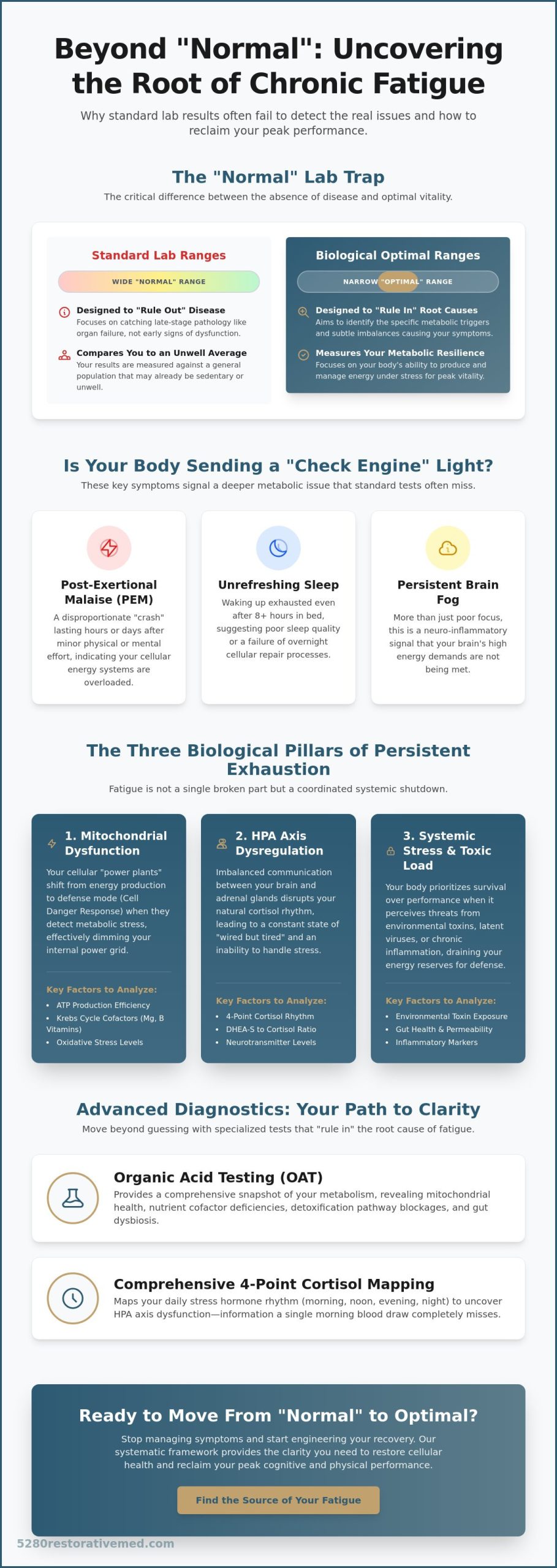
Hearing that your labs are “normal” when you can barely climb a flight of stairs is more than frustrating; it’s a form of clinical gaslighting that leaves high-performers feeling abandoned by the system. Standard reference ranges are calculated from the statistical average of the general population. This means your results are being compared to a group that includes people who are already unwell, sedentary, or aging prematurely. There is a massive difference between a clinical “normal” that merely indicates the absence of disease and a biological “optimal” that reflects peak vitality.
A standard Complete Blood Count (CBC) or Thyroid Stimulating Hormone (TSH) test is designed to catch end-stage pathology, such as profound anemia or overt organ failure. These tests are blunt instruments. They don’t detect the subtle, early-stage mitochondrial dysfunction or hormonal desensitization that precedes a total system crash. This is why the search for how to find the source of chronic fatigue often hits a dead end in traditional settings. We believe your health should be measured by metabolic resilience: your body’s ability to produce and manage energy under stress, rather than just the absence of a diagnosable illness.
The Problem with “Ruling Out” vs. “Ruling In”
Traditional medicine operates on a “rule out” model. Once major diseases like cancer or heart failure are excluded, the investigation typically stops. For the high-achiever, this leaves a gap between feeling fine and being functionally exhausted. Our approach to functional health and wellness shifts the focus toward “ruling in” the specific metabolic triggers of your fatigue. We move beyond pathological markers to analyze how your systems interact, ensuring your biological machinery is actually optimized for the demands of your life.
Symptoms That Signal a Deeper Metabolic Issue
If you’re wondering how to find the source of chronic fatigue, start by looking at your body’s unique warning lights. A primary indicator is Post-Exertional Malaise (PEM), where even minor physical or mental effort causes a disproportionate “crash” that lasts for days. This hallmark symptom of Myalgic encephalomyelitis/chronic fatigue syndrome signals that your cellular power plants are struggling to keep up. Other red flags include unrefreshing sleep despite long hours in bed and persistent brain fog. In a clinical context, brain fog isn’t just a lack of focus; it’s a neuro-inflammatory signal that your brain’s energy demands aren’t being met.
Identifying the Three Biological Pillars of Persistent Exhaustion
While many providers claim the origin of systemic tiredness is a mystery, clinical research points to three primary pillars of dysfunction. Understanding these mechanisms is essential for anyone wondering how to find the source of chronic fatigue. It isn’t a single “broken” part; it’s a coordinated systemic shutdown. When your body perceives a threat, whether from environmental toxins or latent viral loads, it prioritizes survival over high-level performance. This shift drains your reserves and leaves you searching for answers that standard medicine rarely provides.
Mitochondrial Dysfunction and ATP Production
Your mitochondria are more than just cellular power plants; they act as biological sensors. When they detect metabolic stress, they trigger the Cell Danger Response (CDR). This evolutionary mechanism shifts mitochondria from energy production to cellular defense, effectively “powering down” your internal grid. To restore vitality, we must optimize ATP production. Evidence suggests that red light therapy can support this process by stimulating cytochrome c oxidase within the cells. Standard labs often miss the specific cofactors required for the Krebs cycle, such as magnesium, carnitine, and B vitamins, which are the true currency of your energy.
The Cortisol-DHEA Balance and HPA Axis
The second pillar is the neuroendocrine axis, specifically the communication between your brain and adrenal glands. A single morning cortisol draw is insufficient for a real diagnosis because it fails to show your diurnal rhythm, or “cortisol slope.” Chronic stress eventually desensitizes your cortisol receptors, leading to the “wired but tired” feeling many high-achievers experience. In these cases, bhrt can be a powerful tool for stabilizing energy levels and restoring the hormonal foundation necessary for cognitive clarity. Determining how to find the source of chronic fatigue requires mapping these hormones over a full 24 hour period to see where the rhythm breaks down.
Silent Inflammation and Mast Cell Activation
Finally, the gut-immune connection serves as a major energy sink. Low-grade inflammation from gut permeability or mast cell activation syndrome creates a state of perpetual “sick-day” fatigue. This chronic immune activation can drain up to 20% of your daily energy as your body diverts resources to fight perceived internal threats. Uncovering these hidden barriers is the first step toward reclaiming your life. If you’re ready to move beyond basic testing, a specialized metabolic testing protocol can provide the clinical clarity needed to identify your unique triggers.
Advanced Diagnostics: Choosing Tests That Rule “In” the Root Cause
Standard medical protocols are designed to identify the presence of disease, but they rarely investigate the absence of health. When you’re seeking how to find the source of chronic fatigue, you must shift from a “rule out” mentality to a “rule in” strategy. This involves utilizing sophisticated diagnostic tools that measure the functional capacity of your cells, hormones, and internal ecosystems. By identifying specific metabolic roadblocks, we can move beyond the vague label of “tiredness” and pinpoint the exact biological mechanisms that have stalled.
A comprehensive approach begins with mapping the neuroendocrine system. While most providers only check Thyroid Stimulating Hormone (TSH), a truly optimized profile includes Free T3, Reverse T3, and a 4-point salivary cortisol test. TSH only tells us what the brain is asking for; it doesn’t tell us if your tissues are actually receiving and utilizing the active hormone. Similarly, measuring your cortisol at four distinct points throughout the day allows us to see if your energy production matches your circadian needs, providing a level of detail that a single morning blood draw simply cannot offer.
Metabolic Testing vs. Basic Blood Panels
Metabolic testing is the clinical analysis of chemical byproducts in the urine that reveal the real-time efficiency of your cellular machinery. Unlike serum blood tests that show a snapshot of what’s circulating, organic acid analysis shows us the “exhaust” of your cellular engines. This data reveals whether you’re effectively converting fats and carbohydrates into energy or if you have specific micronutrient deficiencies inside the cell. Our Executive Health Program integrates these deep-dive diagnostics to ensure that high-performers aren’t just “not sick,” but are biologically optimized for the demands of their careers.
Genetic Predispositions to Fatigue
Your DNA acts as the blueprint for your energy metabolism, and specific variations can significantly impact your daily vitality. Through a targeted Genetic Analysis, we identify Single Nucleotide Polymorphisms (SNPs) like MTHFR and COMT. These genetic markers dictate how well you methylate, which is a process essential for detoxifying environmental stressors and producing the neurotransmitters required for mental energy. Uncovering these predispositions allows us to move away from trial-and-error and toward bespoke supplement protocols that address your unique genomic requirements. Knowing your genetic landscape is a critical step in understanding how to find the source of chronic fatigue that has persisted despite your best efforts at lifestyle change.
Finally, we must address the gut microbiome. Advanced sequencing identifies bacterial imbalances that drive systemic inflammation and drain your energy reserves. By reconciling your genetic data with your current microbiome and metabolic state, we create a clear, data-driven roadmap for your recovery.
A Systematic Framework to Uncover Your Unique Fatigue Triggers
Relying on a simple symptom diary is a passive approach that often fails to yield actionable insights. To truly understand how to find the source of chronic fatigue, you need a systematic, data-driven framework that moves from subjective feeling to objective measurement. This process transforms vague exhaustion into a series of clinical data points that we can address with precision. Our framework follows five critical steps to ensure no biological stone is left unturned.
- Step 1: Quantify the Fatigue. We use clinical tools like the Fatigue Severity Scale to establish a baseline. This allows us to measure progress objectively rather than relying on memory.
- Step 2: Audit Lifestyle Pillars. We examine glycemic variability, toxic load, and sleep hygiene. These are the foundations that either support or drain your metabolic reserves.
- Step 3: Execute Advanced Testing. Based on your profile, we perform the metabolic and hormonal mapping discussed in previous sections to identify the physiological “why.”
- Step 4: Correlate Data with Symptoms. We align your lab results with your lived experience to identify the primary driver of your symptoms.
- Step 5: Implement a Bespoke Protocol. We move away from standardized care, creating a recovery plan tailored specifically to your unique biological requirements.
Auditing Your “Energy Leaks”
Wearable technology has revolutionized our ability to audit physiological strain in real-time. By tracking Heart Rate Variability (HRV) and deep sleep stages, we can see how your nervous system recovers from daily stress. Often, hidden food sensitivities cause post-meal energy crashes that go unnoticed, creating a constant drain on your system. Even “decision fatigue” from a high-pressure career has a measurable impact on mitochondrial output. When your brain is overtaxed, it signals the body to conserve energy, leading to the physical heaviness you feel by mid-afternoon.
Interpreting the Data with a Functional Expert
Interpreting the complex interplay between genetic SNPs, organic acid markers, and hormonal rhythms is not a DIY project. Many high-performers fall into the trap of “supplement hopping,” trying various vitamins without diagnostic confirmation. This often does more harm than good by masking symptoms or creating further imbalances. You need a health partner who can synthesize these complex results into a cohesive narrative of recovery. If you are ready to stop guessing, you can find a functional medicine denver provider who specializes in engineering metabolic resilience for high-achievers. Learning how to find the source of chronic fatigue is the first step toward reclaiming your edge and exceeding your previous baseline performance.
Ready to uncover the biological triggers holding you back? Schedule a Functional Medicine Consultation today to begin your personalized diagnostic journey.
Engineering Your Recovery: Beyond Symptom Management
Standard medical advice for persistent exhaustion often focuses on “pacing” or learning to live within your new, smaller limits. We reject the idea that you should simply manage your decline. Once you’ve learned how to find the source of chronic fatigue through our diagnostic framework, the focus shifts to restorative engineering. This isn’t about masking symptoms with stimulants; it’s about rebuilding the biological structures that produce and sustain energy. True recovery requires a transition from reactive care to a proactive, multi-month protocol designed to stabilize your cellular environment.
Your recovery begins at the cellular level. Personalized nutrition plays a vital role in stabilizing mitochondrial membranes, which are often damaged by oxidative stress and inflammation. By providing specific phospholipids and fatty acids, we help repair the “skin” of your cellular power plants. This structural support ensures that the ATP production we discussed earlier can actually occur efficiently. When combined with targeted supplementation based on your organic acid and genetic gaps, your body finally receives the exact raw materials it has been missing.
A structured protocol typically spans three to six months. This duration is necessary because biological systems, particularly the neuroendocrine axis, don’t reset overnight. We work through phases of detoxification, nutrient replenishment, and finally, optimization to ensure your results are sustainable. This steady, educational rhythm prevents the system from being overwhelmed and allows us to fine-tune your approach based on real-time feedback from your body.
The Executive Approach to Health Optimization
High-performers operate under a different set of physiological demands than the average population. For a CEO or a specialized professional, “normal” lab results are a failing grade if they don’t support high-level cognitive function and physical endurance. Our executive health programs are designed to integrate seamlessly into a demanding schedule, providing a high ROI on your most valuable asset: your vitality. Reclaiming your cognitive edge doesn’t just improve your quality of life; it restores your capacity to lead and innovate at your highest potential.
Next Steps: Reclaiming Your Vitality
Moving from a state of chronic exhaustion to peak performance requires a data-backed strategy rather than a series of guesses. Now that you understand how to find the source of chronic fatigue, the path forward involves consistent monitoring and protocol adjustments. Biological systems are dynamic, and your recovery plan must be equally responsive to your progress. Precision medicine offers a sense of hope grounded in hard science, proving that your best physical and mental states aren’t just in the past. They’re achievable through a dedicated partnership focused on your unique biological blueprint.
Reclaiming Your Edge Through Precision Diagnostics
Persistent exhaustion is not a life sentence; it’s a signal that your metabolic machinery requires recalibration. By shifting your perspective from “ruling out” disease to “ruling in” optimal function, you can identify the hidden mitochondrial and hormonal barriers that standard labs overlook. We’ve explored the importance of mapping the neuroendocrine axis and utilizing organic acid analysis to see exactly where your energy production has stalled. Applying these clinical frameworks is the only way to truly understand how to find the source of chronic fatigue and move beyond temporary fixes.
Led by Dr. Marci Catallo-Madruga, a dedicated Functional Medicine Expert, our practice specializes in engineering metabolic resilience for executives and high-performers. We provide bespoke protocols grounded in advanced metabolic testing and genetic analysis to ensure your recovery is as unique as your biology. You don’t have to settle for “normal” when peak physical and mental states are within reach. Reclaim your vitality with a comprehensive health optimization program and start your journey toward exceeding your previous baseline. Your superior state of health is achievable at any stage of life.
Frequently Asked Questions
How is chronic fatigue different from just being tired?
Chronic fatigue is distinguished from ordinary tiredness by its persistent nature and the presence of Post-Exertional Malaise (PEM). While normal fatigue improves with a good night of sleep, chronic exhaustion is unrefreshing and often accompanied by cognitive impairment or “brain fog.” It represents a systemic failure of energy production at the cellular level rather than just a busy week or a temporary lack of rest.
Can chronic fatigue be cured, or just managed?
We focus on restoring biological function and engineering metabolic resilience rather than just “managing” symptoms. While traditional medicine often views this condition as something to live with, many patients experience significant functional recovery by identifying and resolving their specific metabolic and hormonal triggers. Our goal is to return you to a state of superior physical and mental performance where fatigue no longer dictates your daily life.
What is the most common hidden cause of fatigue in high-performers?
Mitochondrial dysfunction, often triggered by the Cell Danger Response (CDR), is a primary hidden cause among high-performers. When your cellular power plants perceive prolonged stress or toxic load, they shift from energy production to cellular defense. This biological “power down” is frequently coupled with HPA axis dysregulation, where your cortisol rhythm becomes flattened, leaving you feeling “wired but tired” regardless of your caffeine intake.
Why do my lab results say I am normal when I feel exhausted?
Standard lab results rely on broad reference ranges designed to identify end-stage disease rather than early-stage dysfunction. You may fall within the “normal” range for a thyroid or blood count test while being far from your biological “optimal.” Learning how to find the source of chronic fatigue requires looking at functional markers that measure how your systems are actually performing under the demands of a high-pressure lifestyle.
Is there a specific blood test that can find the source of fatigue?
There is no single “fatigue blood test” because exhaustion is a multi-systemic issue. Instead, we utilize a combination of advanced diagnostics, including organic acid analysis, 4-point salivary cortisol mapping, and comprehensive thyroid panels. These tests allow us to see the chemical byproducts of your metabolism and the exact rhythm of your hormones, providing a much clearer picture of your health than a basic CBC or TSH draw.
How long does it take to recover energy once the source is found?
Most patients begin to feel a shift within the first few weeks of a targeted protocol, but full metabolic restoration typically takes three to six months. This timeline allows your body to repair mitochondrial membranes, rebalance hormonal rhythms, and resolve systemic inflammation. Recovery is a steady, progressive journey as biological systems require time to rebuild their foundational reserves and return to peak physical function.
Can gut health really cause brain fog and physical exhaustion?
Gut health is a major driver of systemic energy because an imbalanced microbiome or “leaky gut” triggers chronic immune activation. This low-grade inflammation can drain a significant portion of your daily energy as your body diverts resources to fight perceived internal threats. The gut-brain axis ensures that intestinal inflammation directly impacts cognitive clarity, often manifesting as the persistent brain fog that plagues many high-achievers.
Should I see a specialist or my primary care doctor for chronic fatigue?
While your primary care doctor is essential for ruling out acute pathologies, a functional medicine specialist is often better equipped to identify the root cause of chronic dysfunction. Primary care settings are typically limited by insurance structures and standard lab panels. A specialized health partner provides the deep-dive diagnostics and bespoke protocols necessary to understand how to find the source of chronic fatigue and engineer a path back to peak performance.