
What if the very lab results telling you that “everything is fine” are actually overlooking the biological fire simmering beneath the surface? It’s incredibly frustrating to wake up with persistent brain fog or joint stiffness only to be told your biomarkers fall within a standard reference range. You know your body isn’t performing at its peak, and “normal” simply isn’t enough when you’re struggling to recover from a simple workout or stay sharp through a long afternoon.
Learning how to fix chronic inflammation in the body requires moving beyond these basic metrics and investigating the sophisticated interplay of your gut microbiome, metabolic health, and genetic markers. This blueprint provides the clinical protocols and diagnostic insights you need to identify hidden root causes and resolve systemic inflammation for good. We’ll explore the latest 2026 functional medicine standards to help you move from simply managing symptoms to achieving a state of superior physical and mental function through a clear, data-driven health protocol. It’s time to stop guessing about your health and start engineering a path toward renewal and peak performance.
Key Takeaways
- Understand the critical distinction between acute healing and systemic immune activation to finally learn how to fix chronic inflammation in the body.
- Identify hidden environmental triggers and toxic loads that keep your immune system on high alert, moving your focus from simple dieting to total physiological resilience.
- Discover why generic “anti-inflammatory” foods may actually be triggers for your specific biology, requiring a more personalized diagnostic approach.
- Replace standard medical guesswork with advanced metabolic and hormonal testing to build a precise, data-driven roadmap for restoring cognitive clarity.
- Learn how a bespoke health optimization program can bridge the gap between “normal” lab results and the peak physical performance you deserve.
The Silent Performance Killer: Understanding Chronic Inflammation in 2026
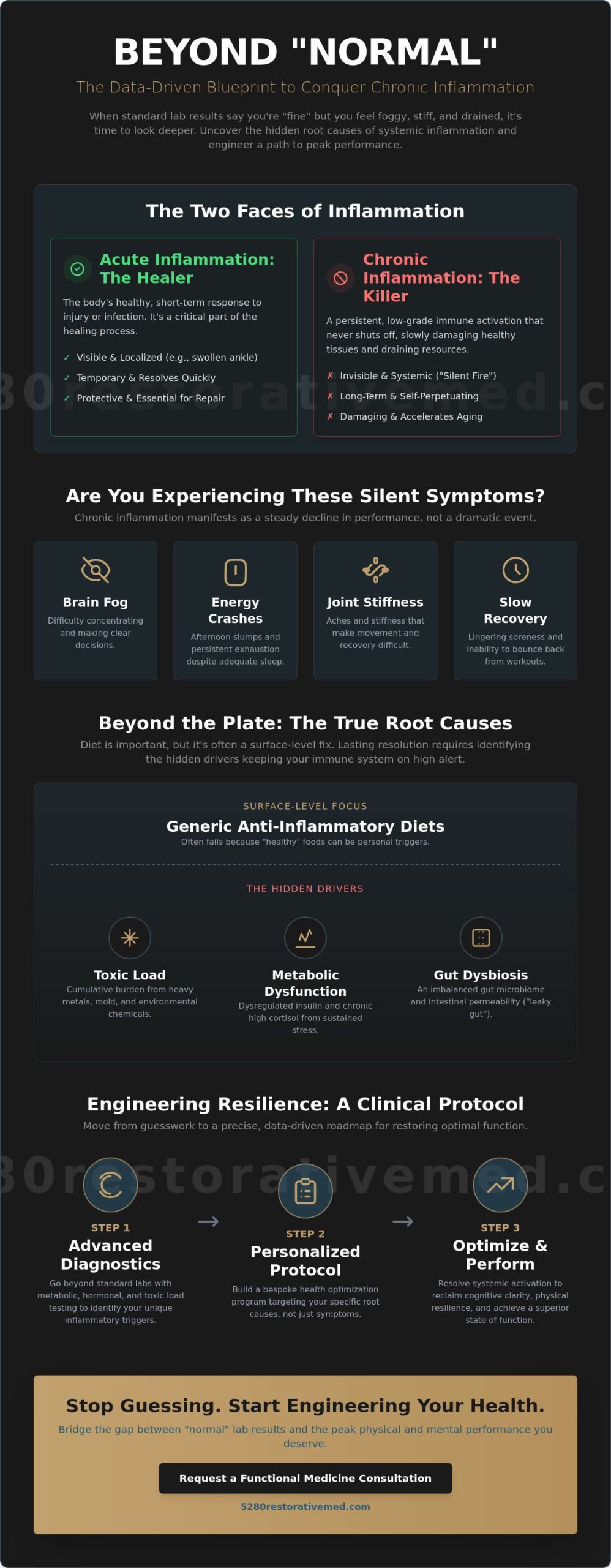
Most people associate inflammation with a swollen ankle or a red, painful bee sting. This visible, temporary response is actually a sign of a healthy immune system doing its job. However, the type of inflammation that erodes your quality of life is far more insidious. Chronic inflammation is a persistent, low-grade immune activation that does not resolve. It’s like a pilot light that stays lit, slowly consuming your body’s resources and dampening your vitality. If you want to understand how to fix chronic inflammation in the body, you must first recognize it as a systemic performance killer rather than a localized injury.
Symptoms of this internal fire are rarely dramatic. They manifest as persistent brain fog that clouds your decision-making, afternoon energy crashes that leave you reaching for caffeine, and lingering joint stiffness that makes recovery feel impossible. High-performers are particularly susceptible. Constant high-cortisol environments, common in executive and high-stress roles, eventually dysregulate the immune system. When stress becomes the norm, the body loses its ability to switch off the inflammatory response, leading to a state of permanent biological alert.
Acute vs. Chronic: When the Body Stays in “Red Alert”
At the cellular level, this process involves the NF-kB pathway, a major switch for your immune system. When triggered, it releases a cascade of pro-inflammatory cytokines. In an acute scenario, these molecules help repair tissue. In a chronic state, they circulate endlessly, eventually damaging healthy cells and eroding mitochondrial function. Your mitochondria are the power plants of your cells; when they’re under constant inflammatory attack, your overall energy production plummets. This is why you feel exhausted despite sleeping well. The body is diverting all its energy to a war it shouldn’t be fighting.
The Long-Term Risks of Unchecked Systemic Activation
Unchecked systemic activation acts as a biological accelerant for aging. It’s a primary driver behind cardiovascular disease, metabolic syndrome, and neurodegenerative conditions. For those seeking a superior state of physical function, inflammation represents the ultimate barrier. It prevents you from reaching your baseline, let alone exceeding it. Resolving this activation is not just about avoiding illness. It’s about reclaiming the mental clarity and physical resilience required for a high-performance life. To truly understand how to fix chronic inflammation in the body, we must look beyond the symptoms and address the underlying drivers of this immune dysfunction.
Beyond the Plate: Identifying the Root Causes of Systemic Inflammation
While many resources suggest that swapping processed snacks for leafy greens is the only way to fight inflammation, the reality is far more complex. Your body is a sophisticated sensory system that processes every aspect of its environment, from the air you breathe to the light you’re exposed to at night. If you want to master how to fix chronic inflammation in the body, you must investigate your “toxic load.” This term refers to the cumulative burden of environmental triggers, such as heavy metals, mold, and synthetic chemicals, which keep your immune system in a state of perpetual hyper-vigilance. These factors often exist entirely outside of your diet, yet they drive the same destructive immune cascades.
Internal metabolic signals also act as powerful inflammatory drivers. Dysregulated insulin, often caused by subtle blood sugar imbalances, directly stimulates pro-inflammatory pathways. Similarly, chronic elevations in cortisol don’t just make you feel “wired”; they eventually lead to glucocorticoid receptor resistance. This means your body loses its natural ability to dampen the immune response, leaving you in a state of systemic activation that no single superfood can resolve on its own. Reclaiming your energy requires more than generic advice; it requires a strategy that respects your unique biological context. For those ready to move beyond basic wellness trends, a Functional Medicine Consultation can provide the data needed to identify your specific triggers.
Gut Dysbiosis and Intestinal Permeability
The gut serves as the primary gatekeeper for your immune system. When the delicate lining of your intestines becomes compromised, a condition known as “leaky gut,” undigested food particles and bacterial toxins slip into the bloodstream. This triggers a massive systemic immune response as your body identifies these particles as foreign invaders. Maintaining high microbiome diversity is essential for setting a low inflammatory set-point. Utilizing a comprehensive gut health assessment allows us to pinpoint these hidden triggers and repair the intestinal barrier, addressing the root of the problem rather than just masking the symptoms.
Chronic Stress and the Cortisol-Inflammation Loop
High-pressure lifestyles create a relentless demand for cortisol. Over time, your cells become less sensitive to this hormone, which is supposed to be your body’s primary anti-inflammatory agent. This resistance accelerates mitochondrial decay, leaving you physically and mentally drained. Poor sleep hygiene further compounds the issue by preventing “nocturnal clearing,” the process where your brain and body flush out metabolic waste and inflammatory markers. Without this reset, you start every day at a biological disadvantage, with inflammatory cytokines still circulating from the day before. Understanding how to fix chronic inflammation in the body necessitates a radical commitment to optimizing these recovery windows.
The Limits of Generic Advice: Why Diet Alone Often Fails
Adopting a generic anti-inflammatory diet is often the first step people take when they feel their health slipping. While cutting out processed sugars is a positive move, a one-size-fits-all approach frequently fails to deliver the results high-performers expect. The reality is that “healthy” foods aren’t universally beneficial. For some individuals, nightshades like tomatoes and peppers or high-lectin foods like beans can actually trigger a systemic immune response. To truly understand how to fix chronic inflammation in the body, you must move beyond dietary trends and investigate your unique biological data. Without metabolic and genetic context, even the cleanest diet remains a game of sophisticated guesswork.
Bio-individuality means that your neighbor’s “superfood” could be your inflammatory trigger. This is why some people thrive on a Mediterranean protocol while others continue to struggle with cognitive fatigue and joint pain. Reaching a superior state of physical function requires a shift from following general guidelines to executing a personalized strategy based on your body’s specific requirements. You don’t just need a meal plan; you need a clinical roadmap that accounts for your internal biochemistry and identifies the specific drivers of your immune activation.
The Role of Genetic Markers and Bio-Individuality
Your genetic blueprint dictates how you process nutrients and clear metabolic waste. Single Nucleotide Polymorphisms (SNPs), such as the MTHFR mutation, can significantly impair your body’s ability to detoxify and regulate homocysteine levels. These genetic markers are often the “missing link” in understanding why inflammation persists despite a healthy lifestyle. Utilizing genetic analysis removes the trial-and-error from your health journey. It allows us to tailor your supplement and nutritional protocols to your specific DNA, ensuring your body has the support it needs to maintain a low inflammatory set-point.
Diagnostic Gaps in Standard Medical Care
Standard blood work is designed to catch disease, not to optimize performance. You’ve likely been told your results are “within normal limits,” yet you don’t feel optimal. Standard ranges are based on a broad population average that often includes individuals with sub-clinical health issues. In functional medicine, we focus on optimal ranges for advanced biomarkers like high-sensitivity C-reactive protein (hs-CRP), homocysteine, and ferritin. These markers provide a much more sensitive look at your systemic health. By identifying elevations in these areas early, we can determine how to fix chronic inflammation in the body before it manifests as a more serious condition.
Engineering Resilience: A Clinical Protocol for Resolving Inflammation
Resolving systemic immune activation requires a transition from reactive symptom management to proactive physiological engineering. While standard care often relies on temporary fixes like NSAIDs to mask discomfort, these medications do nothing to address the underlying metabolic dysfunction. To truly understand how to fix chronic inflammation in the body, you must implement a structured protocol that prioritizes data over guesswork. This approach focuses on extinguishing the “internal fire” by identifying specific biological imbalances and utilizing advanced therapies to restore your body’s natural equilibrium.
Engineering resilience is about more than just feeling better today; it’s about building a biological foundation that supports high performance for decades. By integrating clinical diagnostics with personalized interventions, you can move beyond the limitations of generic wellness advice. If you’re ready to stop managing symptoms and start optimizing your biology, our Executive Health Program provides the comprehensive framework needed for this level of precision.
Step 1: Comprehensive Metabolic and Hormonal Testing
The first stage of any effective protocol is a deep dive into your internal biochemistry. We prioritize checking the HPA axis and thyroid function, as these systems govern your body’s stress response and energy production. Utilizing advanced metabolic testing allows us to identify fuel-burning inefficiencies that drive systemic stress. Metabolic resilience is the body’s ability to adapt to stressors without triggering a chronic inflammatory response. Without this data, any attempt to fix inflammation is merely a shot in the dark.
Step 2: Targeted Nutritional and Supplement Protocols
Once we have identified your specific clinical deficiencies, we move beyond “anti-inflammatory foods” to high-potency therapeutic agents. This isn’t about following the latest supplement trends; it’s about using substances like Omega-3 fatty acids, Curcumin, and Resveratrol to modulate your immune pathways at a cellular level. Vitamin D and Magnesium also play critical roles in regulating your inflammatory set-point. These Supplement Protocols must be personalized based on your laboratory findings to ensure they are effectively addressing your body’s unique requirements.
Step 3: Circadian and Lifestyle Optimization
High-performers often overlook the biological necessity of restorative cycles. Deep sleep is non-negotiable for the glymphatic system, which acts as the brain’s detoxification pathway to flush out metabolic waste. We also utilize hormetic stressors, such as sauna sessions and cold plunges, to stimulate cellular repair and lower systemic inflammation. These controlled exposures teach your body to handle stress more efficiently. Additionally, incorporating “active recovery” into your routine ensures that you preserve performance even during high-stress business cycles, preventing the accumulation of nocturnal inflammatory markers.
For those seeking to accelerate cellular repair, red light therapy offers a powerful tool for mitochondrial optimization. By delivering specific wavelengths of light directly to your cells, you can enhance energy production and further dampen the inflammatory response. This multi-layered strategy is the most effective way to learn how to fix chronic inflammation in the body while simultaneously reaching a state of superior physical function.
Personalized Optimization: Reclaiming Your Vitality with 5280 Restorative Medicine
Achieving true biological renewal requires more than a standard office visit; it demands a dedicated partnership. At 5280 Restorative Medicine, we serve as an expert guide for high-performers who refuse to settle for “normal” lab results. Our boutique approach stands in stark contrast to high-volume institutional healthcare, where time is limited and care is often standardized. We understand that your journey to discover how to fix chronic inflammation in the body is unique, necessitating a highly personalized strategy that evolves with your progress. By moving from reactive health management to proactive performance engineering, you take control of your biological future.
Our multi-month health optimization programs are designed to provide the depth of care that complex systemic issues require. We don’t just provide a list of instructions and send you on your way. Instead, we invest in your long-term success, offering a sophisticated environment where health is treated as a proactive journey. This level of investment ensures that every protocol is fine-tuned to your body’s changing needs, allowing you to exceed your previous baseline and reach a state of superior physical function.
The Executive Health Program Advantage
The Executive Health Program represents the pinnacle of personalized medicine. By combining advanced Genetic Analysis and Metabolic Testing with deep clinical expertise, we create a comprehensive picture of your internal landscape. This data-driven foundation allows us to implement ongoing monitoring and protocol adjustments that institutional models simply can’t offer. Our primary focus is returning you to your peak physical and mental states, ensuring that brain fog and fatigue are replaced by sustained energy and cognitive clarity.
Your Path Forward to Peak Performance
The transition from systemic inflammation to metabolic resilience is a transformative process. It begins with identifying your unique triggers and ends with a body that is capable of adapting to stress without breaking down. Vitality and peak performance are achievable at any stage of life when you have the right data and a clear roadmap to follow. If you’re ready to learn how to fix chronic inflammation in the body through a bespoke, clinical approach, we invite you to schedule a Functional Medicine Consultation. It’s time to reclaim your vitality and engineer a state of health that supports your highest ambitions.
Reclaiming Your Biological Edge
True vitality isn’t found in a generic meal plan or a standard blood panel. It’s engineered through a deep understanding of your unique biological blueprint. We’ve explored how moving beyond surface-level symptoms and addressing root causes like gut permeability and toxic load can transform your health. Learning how to fix chronic inflammation in the body is ultimately about replacing guesswork with precision. By utilizing advanced metabolic and genetic testing, you can finally identify the specific triggers keeping you from your peak physical and mental states.
At 5280 Restorative Medicine, Dr. Marci Catallo-Madruga provides the high-performance focused care you need to exceed your baseline. Our boutique practice specializes in personalized protocols that respect your bio-individuality and lifestyle demands. Precision changes everything. It’s time to stop settling for “normal” and start pursuing the superior function you deserve. Apply for our Executive Health Program and reclaim your vitality today. A life of clarity, energy, and resilience is well within your reach.
Frequently Asked Questions
What are the fastest ways to reduce systemic inflammation naturally?
The most immediate way to dampen systemic activation naturally is through a combination of circadian optimization, therapeutic cold exposure, and the removal of ultra-processed foods. Aligning your sleep cycle with natural light helps regulate the glymphatic system’s detoxification process. Additionally, the latest 2025-2030 Dietary Guidelines for Americans suggest limiting added sugars to no more than 10 grams per meal to prevent the insulin spikes that drive inflammatory cascades.
Can chronic inflammation be cured, or just managed?
Chronic inflammation can be resolved by identifying and eliminating the specific root causes that keep your immune system on high alert. Unlike traditional management that relies on masking symptoms with medication, the goal of functional medicine is to return your body to a state of metabolic resilience. Once you understand how to fix chronic inflammation in the body by addressing gut health and toxic load, your immune system can return to its natural baseline.
How do I know if my inflammation is high if my doctor says my blood work is normal?
Standard medical tests often use broad reference ranges that are designed to detect late-stage disease rather than early-stage dysfunction. You may feel symptoms like persistent brain fog or joint stiffness even when your results are “within normal limits.” Functional medicine practitioners look at optimal ranges for sensitive biomarkers that reveal low-grade activation long before it manifests as a diagnosable condition in traditional settings.
Is there a specific test for chronic inflammation?
Clinical diagnostics for systemic inflammation involve several sensitive biomarkers, including high-sensitivity C-reactive protein (hs-CRP), homocysteine, and ferritin levels. While no single test provides the full picture, combining these markers with advanced metabolic and genetic testing offers a comprehensive view of your immune status. This data-driven approach allows for a more precise intervention than generic health screenings can provide.
Do anti-inflammatory supplements actually work?
Targeted therapeutic agents like high-potency Omega-3s, Curcumin, and Resveratrol are highly effective when they are used to address documented clinical deficiencies. Generic, one-size-fits-all supplements often fail because they don’t account for your specific biochemical needs or genetic predispositions. Supplementation should always be personalized based on laboratory findings to ensure the nutrients are modulating the correct immune pathways for your unique biology.
How long does it take to see results when fixing chronic inflammation?
Most individuals begin to notice significant improvements in energy levels and cognitive clarity within 4 to 12 weeks of starting a personalized protocol. While the initial “cooling” of the immune system happens relatively quickly, the full process of how to fix chronic inflammation in the body and restore mitochondrial function can take several months. Consistency with lifestyle and nutritional adjustments is essential for achieving long-term metabolic resilience.
Can stress alone cause chronic inflammation even if I eat perfectly?
Yes, chronic psychological stress is a primary driver of immune dysregulation through the persistent release of cortisol. High-pressure environments lead to glucocorticoid receptor resistance, where your cells no longer respond to the body’s natural anti-inflammatory signals. Even with a perfect diet, unmanaged stress can keep your body in a state of permanent “red alert,” eventually damaging your cardiovascular and nervous systems.
What is the link between gut health and systemic inflammation?
The gut serves as the primary gatekeeper for your immune system, housing approximately 70 percent of your immune cells. When the intestinal lining becomes permeable, bacterial toxins and undigested food particles slip into the bloodstream, triggering a systemic immune response. Resolving this “leaky gut” and restoring microbiome diversity is a non-negotiable step for anyone seeking to eliminate systemic pain and brain fog for good.