
You can spend nine hours in bed and still wake up with the cognitive processing speed of someone who stayed up all night. It’s a common frustration for high-performers who track their rest on an Apple Watch Series 11 or Oura Ring only to find their Stage 3 recovery is consistently low. You’re likely already familiar with the heavy weight of brain fog and the slow physical recovery that follows a night of shallow rest. Understanding how to increase deep sleep for better performance requires moving beyond simple bedroom tips and into the precision of your own biology.
At 5280 Restorative Medicine, we believe that vitality is a proactive journey rather than a reactive necessity. This guide will teach you how to master the biological mechanics of Stage 3 sleep to unlock superior mental clarity and optimize your hormonal health. We’ll examine the latest January 2026 FDA guidance on wellness wearables, the role of metabolic testing, and how personalized restoration plans can finally clear the fog. You’ll learn exactly how to shift your physiology from merely surviving the day to operating at a superior state of health.
Key Takeaways
- Understand how Stage 3 sleep functions as a glymphatic “brain wash” to clear metabolic waste and restore cognitive clarity for the day ahead.
- Implement the 3-2-1 Rule to manage evening cortisol spikes and successfully transition your nervous system from sympathetic dominance to deep restorative rest.
- Discover clinical strategies on how to increase deep sleep for better performance by optimizing your full-spectrum light exposure and stabilizing nighttime blood sugar levels.
- Identify hidden physiological barriers, such as chronic inflammation, that can prevent your brain from entering the deep delta-wave states necessary for physical repair.
- Learn why moving beyond generic sleep hygiene toward personalized protocols, including genetic analysis and metabolic testing, is essential for sustained peak vitality.
The Deep Sleep Deficit: Why High-Performers Struggle with Stage 3 Recovery
High-performers often pride themselves on efficiency, yet many are operating with a biological deficit that no amount of caffeine can fix. Stage 3 sleep, also known as slow-wave sleep, is the period of intense delta-wave activity where the brain and body undergo their most rigorous maintenance. Deep sleep is the critical window for physical repair and memory consolidation. While you might see high REM numbers on your tracker, your deep sleep often suffers because of sympathetic dominance. This “fight or flight” state, fueled by high-stakes decision-making and constant connectivity, prevents the nervous system from downshifting into the restorative N3 phase.
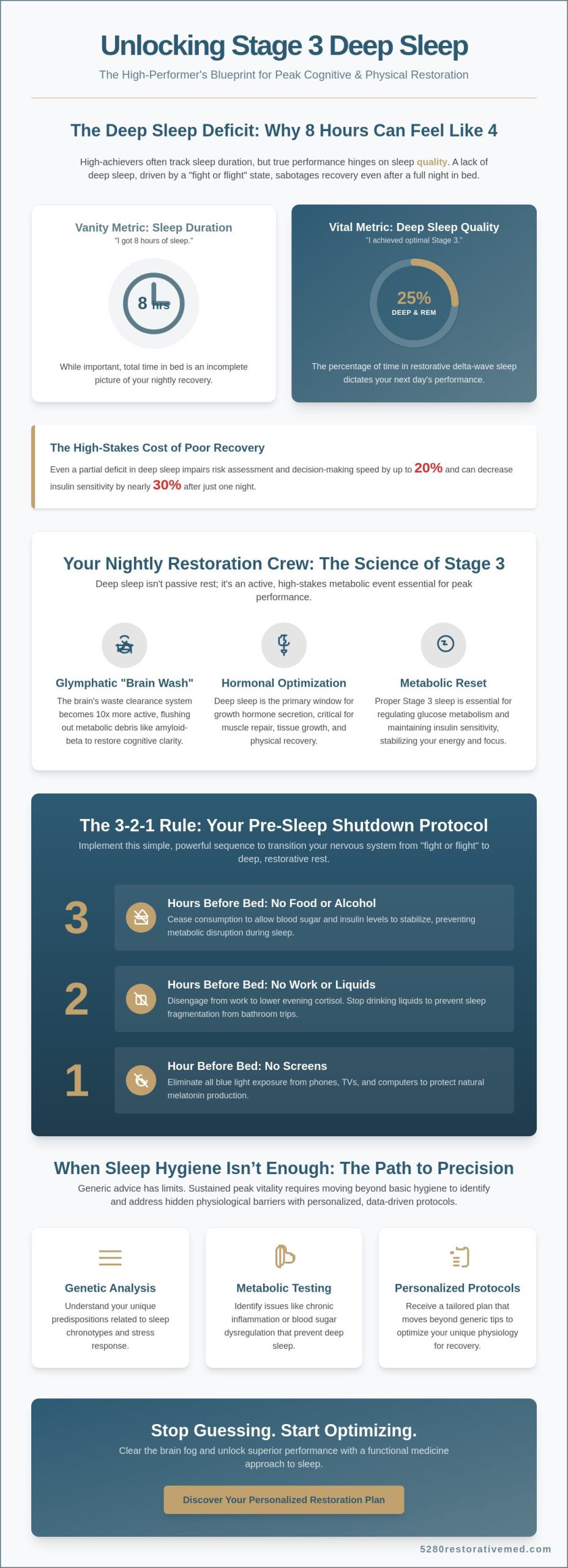
When you miss this restorative window, your executive function takes a measurable hit. Research indicates that even a partial deficit in deep sleep impairs risk assessment and decision-making speed by up to 20% compared to fully restored peers. Learning how to increase deep sleep for better performance isn’t just about feeling rested; it’s about maintaining a competitive edge. Without this phase, your brain lacks the ability to filter out the cognitive noise of the previous day, leading to the persistent brain fog that plagues many executives and athletes.
The Difference Between Sleep Duration and Sleep Quality
For the high-achiever, total sleep duration is often a vanity metric. You can spend eight hours in bed and still wake up unrefreshed if your sleep architecture is fragmented. Wearables like the Fitbit or Apple Watch provide a Sleep Score, but without clinical context, these numbers can be misleading. True restoration depends on the percentage of time spent in delta-wave activity rather than just the total minutes on the clock. At 5280 Restorative Medicine, we look beyond the total time in bed to ensure your sleep cycles are functioning as an optimized system of recovery.
The High-Stakes Cost of Poor Recovery
Skipping deep sleep triggers a cascade of metabolic failures. Delta waves are directly linked to the secretion of growth hormone, which facilitates tissue repair and muscle growth. Without it, your physical recovery from training slows significantly. Additionally, poor Stage 3 sleep disrupts glucose metabolism. Just one night of restricted deep sleep can decrease insulin sensitivity by nearly 30%, making it harder for your body to manage energy and maintain focus. The idea that you can simply “power through” is a biological myth that eventually leads to burnout and decreased longevity. Real performance requires a proactive approach to cellular health and hormonal optimization.
The Biology of Stage 3: Glymphatic Drainage and Hormonal Restoration
To understand how to increase deep sleep for better performance, you must look at the microscopic processes occurring within the brain’s architecture. Stage 3 is not just a quiet period of rest; it is a high-stakes metabolic event. During this phase, the glymphatic system becomes nearly ten times more active than during wakefulness. It acts as a biological “brain wash,” utilizing cerebrospinal fluid to flush out metabolic debris that accumulates throughout your working day. This process is essential for maintaining the mental agility required for high-level decision making and executive focus.
This stage also serves as the primary window for Mitochondrial Optimization. Your cellular powerhouses use this downtime to repair and replicate, ensuring you have the ATP necessary for tomorrow’s physical and cognitive output. However, many high-performers inadvertently block this process through a disrupted cortisol-melatonin seesaw. When evening stress spikes keep cortisol levels high, the brain cannot transition into the deep delta-wave state. Your body also requires a drop in core temperature, typically about 2 to 3 degrees, to signal the onset of N3 sleep. If your environment or internal biology keeps you too warm, you’ll remain stuck in lighter, less restorative stages.
Brain Detoxification and Cognitive Longevity
During the deepest parts of Stage 3, the brain clears amyloid-beta and tau proteins. These specific proteins are the primary markers linked to neurodegenerative decline. For those with a high cognitive load, the volume of metabolic waste produced is significantly higher, requiring a more thorough “wash” each night. Prioritizing this detoxification process is a foundational step toward long-term brain health and cognitive longevity. If you’re curious about your own biomarkers, a functional medicine consultation can help identify the specific physiological roadblocks in your path.
The Hormonal Cascade of Deep Sleep
Stage 3 is the heavy lifter for your endocrine system. It is the dominant window for the secretion of testosterone and human growth hormone, which are vital for muscle repair and fat metabolism. Deep sleep also regulates the delicate balance between ghrelin and leptin, the hormones that dictate hunger and satiety. When deep sleep is cut short, leptin drops and ghrelin rises, leading to the “brain-starved” cravings common in sleep-deprived professionals. For a deeper look at how these cycles impact your vitality, explore our BHRT guide to understand the connection between hormonal restoration and peak performance.
Advanced Strategies to Increase Deep Sleep for Better Performance
Mastering the internal mechanics of Stage 3 is only the first step. To see measurable results on your Oura Ring or Apple Watch, you must implement specific environmental and behavioral shifts. Learning how to increase deep sleep for better performance often begins with full spectrum light control. While blue light glasses are a start, true optimization requires viewing sunlight within 30 minutes of waking and switching to amber or red wavelengths after sunset to stimulate natural melatonin production. This anchor for your circadian rhythm ensures the brain knows exactly when to initiate the deep sleep cycle.
The 3-2-1 Rule is a non-negotiable framework for our executive patients at 5280 Restorative Medicine. You should finish your last meal at least 3 hours before bed to prevent digestion from raising your core temperature and heart rate. Stop all work-related tasks 2 hours before sleep to allow your nervous system to exit sympathetic dominance. Finally, eliminate screens 1 hour before bed to protect your brain from disruptive blue light. Temperature hacking is another vital tool; utilizing a cooling mattress or keeping your bedroom between 60 and 67°F can force your body into the N3 stage more efficiently. Magnesium glycinate specifically supports the GABAergic system for deeper delta waves.
Nutrient Timing and Performance Supplementation
Alcohol is one of the most significant disruptors of sleep architecture. While it might help you fall asleep faster, it drastically reduces Stage 3 and REM quality by increasing your resting heart rate. For those seeking targeted support, we often recommend a combination of Magnesium, L-Theanine, and Apigenin. These compounds work synergistically to lower cortisol and promote cellular relaxation. You can find more details on safe, clinical-grade options in our guide to Functional Health and Wellness.
Environmental Bio-hacks for the Bedroom
Your bedroom should function as a dedicated “sleep cave.” This means maintaining decibel levels below 30 and ensuring 100% blackout precision. Even a small LED light from a charger can disrupt your skin’s photoreceptors and signal wakefulness to the brain. Many of our patients also find success with evening Red Light Therapy. This specific wavelength helps stimulate mitochondrial repair and prepares the brain for the glymphatic drainage process. For a technical breakdown of this technology, refer to our Red Light Therapy guide.
The Hidden Barriers: When Sleep Hygiene Isn’t Enough
Sometimes, the most disciplined evening routine fails to move the needle on your recovery metrics. If you’ve followed the 3-2-1 rule and optimized your “sleep cave” but still see low Stage 3 percentages, internal biological barriers are likely at play. Learning how to increase deep sleep for better performance involves identifying these silent disruptors before they lead to long-term burnout. When your cellular environment is compromised, even the best mattress cannot force your brain into a restorative state.
Chronic inflammation and metabolic instability often act as the primary gatekeepers to deep rest. A “leaky” system, whether originating in the gut or through systemic inflammation, prevents the brain from maintaining the steady delta-wave activity required for Stage 3. Furthermore, the presence of Mast Cell Activation Syndrome (MCAS) can serve as a silent disruptor. In this condition, mast cells release a flood of histamine and other mediators that signal wakefulness to the brain, effectively locking you out of the deep sleep you need for cognitive recovery.
Metabolic Dysfunction and Nocturnal Arousal
Many high-achievers suffer from subtle insulin resistance or nocturnal hypoglycemia. When your blood sugar drops precipitously in the middle of the night, your body perceives a crisis. It triggers a “fight or flight” response, releasing cortisol and adrenaline to stabilize your levels. This midnight cortisol spike is the primary reason you might wake up at 3:00 AM with a racing mind. Even if you don’t fully wake up, these micro-arousals prevent you from reaching the deep, restorative delta-wave states. Your “healthy” high-protein diet might actually be contributing to this if your timing and metabolic flexibility aren’t optimized.
The Inflammation-Sleep Connection
Chronic inflammation acts as a persistent signal of “danger” to your central nervous system. Pro-inflammatory cytokines can disrupt the circadian clock at a cellular level, making it difficult for the brain to transition into Stage 3. Your gut health is also central to this process, as it produces the precursors for the neurotransmitters that facilitate sleep. If your microbiome is out of balance, your brain lacks the raw materials for restoration. To stop guessing and start optimizing, schedule a functional medicine consultation to uncover the root causes of your sleep deficit.
Precision Restoration: The Functional Medicine Approach to Sleep
Generic sleep advice often fails because it ignores your unique biochemical blueprint. While standard medical practices might suggest basic hygiene or pharmaceutical sedatives, true optimization requires a deeper look into your metabolic and genetic profile. At 5280 Restorative Medicine, we move beyond surface-level symptoms to identify the precise reasons why your Stage 3 recovery is lagging. Understanding how to increase deep sleep for better performance starts with clinical data, not guesswork. By utilizing Functional Medicine for High-Performers, we can engineer metabolic resilience that supports deep, restorative rest.
Our clinical process treats health as a proactive journey. We don’t just look for the absence of a sleep disorder; we look for the presence of peak vitality. This involves a sophisticated balance of clinical authority and personalized care, ensuring that every protocol is tailored to your specific physiological needs. By identifying the root causes of sleep failure, such as hormonal imbalances or nutrient deficiencies, we help you transition from a state of survival to one of superior health and mental clarity.
Metabolic Testing for Sleep Precision
We utilize advanced diagnostics to map your internal environment with surgical precision. This often includes:
- DUTCH Testing: Mapping your 24-hour cortisol rhythm to identify the midnight stress spikes that interrupt delta-wave activity.
- Micronutrient Analysis: Identifying deficiencies in magnesium, zinc, or B-vitamins that stall the synthesis of sleep-inducing neurotransmitters.
- Genetic Analysis: Evaluating your unique markers to understand your caffeine metabolism and circadian rhythm predispositions.
These data points allow us to move past generic recommendations. Instead of telling you to “lower your stress,” we provide a targeted supplement and lifestyle plan that addresses your body’s specific metabolic demands.
Engineering Your Peak Performance
The Executive Health Program at 5280 Restorative Medicine is designed for individuals who require more than a “normal” lab result. High-performers need optimal ranges to maintain their competitive edge. A standard GP might overlook subtle insulin resistance or subclinical thyroid issues, but these are often the very factors that ruin sleep quality. We focus on the pairing of restoration and optimization, ensuring your body has the resources it needs to enter Stage 3 sleep every night. If you’re ready to stop guessing how to increase deep sleep for better performance, it’s time to partner with a boutique clinical practice that is invested in your individual success. Schedule your consultation with 5280 Restorative Medicine today to begin your journey toward optimized recovery.
Take Control of Your Recovery Architecture
Mastering your sleep architecture is the ultimate leverage for long-term executive output. You’ve learned that Stage 3 isn’t just a rest period; it’s a high-stakes biological event where your glymphatic system clears metabolic waste and your hormones reset for the day ahead. While lifestyle hacks like the 3-2-1 rule and light management provide a solid foundation, achieving consistent results often requires a deeper clinical investigation into your unique metabolic markers. Understanding how to increase deep sleep for better performance means moving beyond general tips and addressing the root causes of physiological stress.
At 5280 Restorative Medicine, we specialize in helping high-performers bridge the gap between basic health and peak vitality. Led by Dr. Marci Catallo-Madruga, our practice utilizes a root-cause functional medicine approach to solve the complex biological puzzles that stall recovery. Through specialized Executive Health Optimization, we help you identify hidden barriers like chronic inflammation or hormonal imbalances that disrupt your rest. Reclaim your vitality and optimize your performance with 5280 Restorative Medicine. You don’t have to settle for waking up unrefreshed; superior health is a measurable and achievable goal.
Frequently Asked Questions
How much deep sleep do I actually need for peak cognitive performance?
Most healthy adults require between 15% and 25% of their total sleep duration to be spent in Stage 3. For an eight-hour night, this translates to roughly 72 to 120 minutes of deep rest. If you’re consistently falling below this threshold, your cognitive processing and physical recovery will suffer. Achieving this specific balance is essential for anyone researching how to increase deep sleep for better performance.
Can I “catch up” on deep sleep during the weekends?
You can’t effectively catch up on deep sleep by sleeping in on the weekends. While you might sleep longer on Saturday, your body primarily prioritizes REM sleep during these extended periods. Deep sleep is driven by the homeostatic pressure built up during your daily activity. Missing Stage 3 during the work week creates a biological deficit that extra weekend hours won’t fully resolve.
Why does my Oura ring show low deep sleep even when I feel okay?
Consumer wearables like the Oura Ring or Apple Watch have about an 83% accuracy rate for sleep-wake classification, but they can misinterpret stages if your heart rate doesn’t drop significantly. If you feel alert despite low scores, your device might be struggling with data precision. Conversely, high-performers often use adrenaline and cortisol to mask the symptoms of a chronic deep sleep deficit during the day.
Is it possible to get too much deep sleep?
It’s very difficult to get too much deep sleep. In most clinical cases, an unusually high percentage of Stage 3 sleep indicates that the body is recovering from significant physical stress or a period of severe sleep deprivation. Your brain naturally regulates the amount of delta-wave activity it needs. If you’re seeing high numbers, it’s likely your body is simply catching up on vital cellular repair work.
What is the best temperature for increasing deep sleep?
Research suggests that the ideal bedroom temperature for deep sleep is between 60 and 67 degrees Fahrenheit. Your core body temperature must drop by about 2 to 3 degrees to successfully initiate the N3 stage. If your environment is too warm, your heart rate remains elevated. This prevents the physiological downshifting required for the most restorative parts of your sleep cycle.
Does caffeine affect deep sleep even if I fall asleep easily?
Caffeine drastically reduces the quality of your deep sleep even if you fall asleep quickly. It has a half-life of roughly 5 to 6 hours, meaning half the caffeine from a 4:00 PM coffee is still active at 10:00 PM. It works by blocking adenosine receptors, which prevents the brain from entering the deeper delta-wave states necessary for cellular restoration and memory consolidation.
How does alcohol impact my Stage 3 sleep cycles?
Alcohol acts as a sedative that helps you fall unconscious, but it destroys your sleep architecture. It increases your resting heart rate and raises your core temperature, both of which are direct antagonists to Stage 3 sleep. Studies show that even moderate alcohol consumption can reduce sleep quality by 24%. You’ll spend more time in light sleep and less time in the deep recovery phase.
Can hormone replacement therapy (BHRT) improve my deep sleep scores?
Hormone optimization can significantly improve your Stage 3 scores. Progesterone, for example, has a calming effect on the brain’s GABA receptors, which facilitates the transition into deep rest. At 5280 Restorative Medicine, we often find that balancing testosterone and growth hormone levels is a key strategy for how to increase deep sleep for better performance. This approach ensures your biology supports restoration rather than fighting it.