
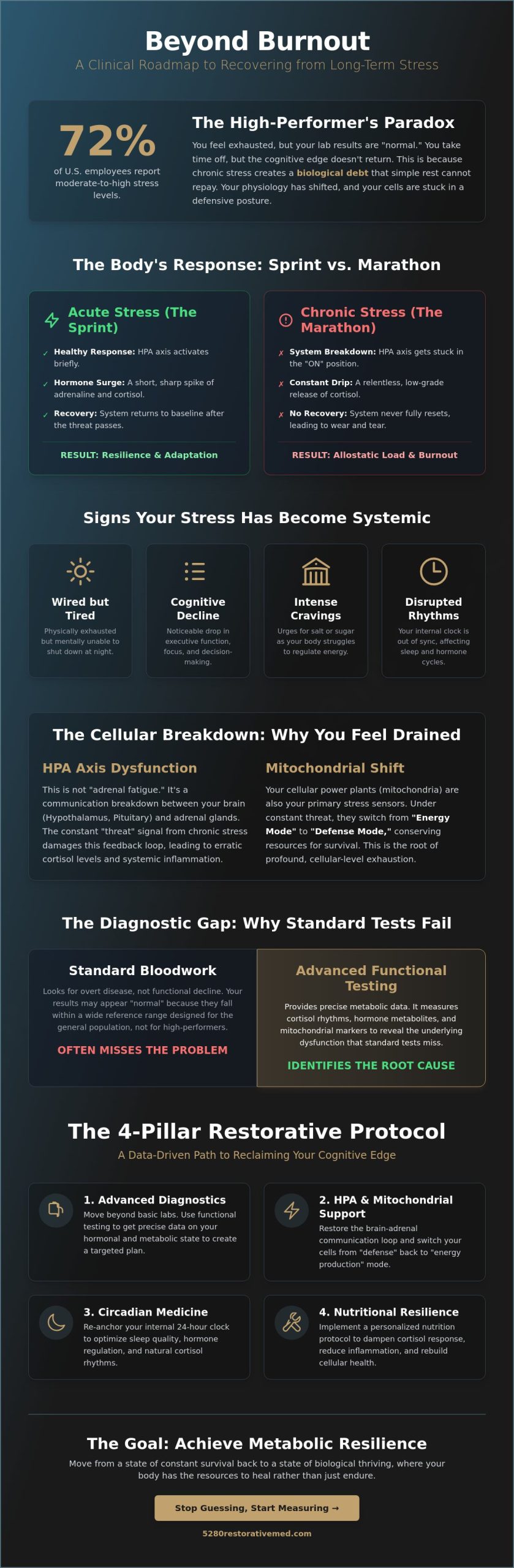
What if your “normal” lab results are actually masking a physiological breakdown that rest alone cannot fix? For many high-performers, the frustration of a fading cognitive edge despite adequate sleep is a daily reality. With 72% of U.S. employees reporting moderate-to-high stress levels, the traditional advice to simply “unplug” often fails to address the underlying damage. You need a clinical strategy for how to recover from long term stress that goes beyond basic self-care and targets the biological debt your body has accumulated.
We believe that your health is your most critical asset and requires a sophisticated, data-driven approach. This article provides a clinical roadmap to reversing the hormonal and metabolic shifts caused by chronic pressure. You’ll learn how advanced diagnostics, such as metabolic testing and hormone optimization, provide the scientific validation your symptoms deserve. We’re moving past the simple absence of illness toward a personalized functional medicine protocol designed to restore your peak physical and mental function. It’s time to stop guessing and start measuring your path back to excellence.
Key Takeaways
- Understand why traditional rest often fails to reverse years of physiological strain and how to address the allostatic load affecting your performance.
- Explore the clinical intersection of HPA axis dysfunction and mitochondrial health to identify the cellular roots of your exhaustion.
- Learn why functional testing provides the precise metabolic data needed to understand how to recover from long term stress when standard bloodwork appears normal.
- Discover actionable strategies within circadian medicine and nutritional resilience to re-anchor your internal clock and dampen cortisol responses.
- Move beyond basic wellness with a bespoke, data-driven protocol designed to optimize your metabolic resilience and reclaim your cognitive edge.
The High-Performer’s Paradox: Why Rest Isn’t Enough for Long-Term Stress
High-performers often operate under the illusion that their drive is an infinite resource. You’ve likely experienced “eustress,” that positive, short-term pressure that sharpens your focus and drives results. However, when this pressure becomes a permanent fixture, it transforms into destructive chronic stress. A common mistake is believing a week on a beach can undo months of relentless output. It doesn’t work because your physiology has shifted its baseline, and your cells are stuck in a defensive posture. True recovery requires understanding how to recover from long term stress by addressing the deep metabolic shifts that have taken place. Our goal is to move you beyond mere survival toward metabolic resilience, where your body can once again handle pressure without breaking down.
The Difference Between Acute and Chronic Biological Responses
Your body is designed for the sprint, not the marathon of modern executive life. In an acute scenario, the HPA axis triggers a rapid release of adrenaline and cortisol to ensure immediate survival. Once the threat passes, levels should return to baseline. In chronic stress, this system never shuts off, creating a constant cortisol “drip” that signals the body to prioritize immediate survival over long-term repair, immune function, and reproductive health. When your biology is stuck in this loop, it actively diverts energy away from cellular regeneration and hormone production to maintain a state of high alert. Allostatic Load is the biological cost of adaptation.
Signs Your Stress Has Become Systemic
When stress moves from your mind into your cells, the symptoms become systemic and often mimic “normal aging” or simple executive burnout. You might find yourself “wired but tired,” feeling physically exhausted all day but unable to quiet your mind at 11:00 PM. Disrupted circadian rhythms, intense salt or sugar cravings, and a noticeable decline in executive decision-making are clear red flags that the damage has become internal. These aren’t just signs of a busy season; they are indicators that your metabolic resilience is compromised. Understanding these signals is the first step toward comprehensive functional health and wellness assessments that look beyond the surface. Learning how to recover from long term stress means moving from a state of constant survival back to a state of biological thriving, where your body has the resources to heal rather than just endure.
The Biology of Burnout: HPA Axis and Mitochondrial Dysfunction
Burnout is not a lack of willpower; it’s a measurable state of biological energy failure. When you push through persistent pressure, your body undergoes a profound shift in how it manages resources. At the heart of this transition is HPA Axis Dysfunction. While often colloquially called “adrenal fatigue,” the clinical reality is a breakdown in communication between your brain and your adrenal glands. This miscommunication leads to a state of chronic oxidative stress, which accelerates cellular aging and depletes your internal reserves. Understanding these mechanisms is essential when determining how to recover from long term stress, as you cannot fix a systemic energy crisis with caffeine or sheer determination.
The HPA Axis: Your Internal Thermostat
Think of the HPA axis as your body’s central thermostat for stress. It involves a complex feedback loop where the hypothalamus and pituitary glands in the brain signal the adrenal glands to produce cortisol. In a healthy state, once the stressor is gone, the system resets. However, chronic high-performance demands can break the “off switch.” When cortisol levels remain elevated or become erratic, the body enters a state of systemic inflammation. This persistent activation changes how stress affects the body, shifting it from a state of growth and repair to a state of constant defense. Over time, this results in the “wired but tired” phenomenon where your body is exhausted, yet your nervous system remains on high alert.
Mitochondrial Health and Energy Failure
Your mitochondria are more than just power plants; they act as the primary stress sensors of your cells. When they perceive a constant threat, they shift from “energy mode” to “defense mode.” This survival strategy prioritizes cellular protection over the production of ATP, the currency of energy. The result is a noticeable drop in cognitive edge, manifesting as brain fog and a decreased capacity for complex decision-making. To reverse this, we must focus on cellular optimization. Specialized tools like red light therapy can help signal the mitochondria to return to efficient energy production, which is a cornerstone of any recovery protocol.
Another critical aspect of this biological debt is the “Pregnenolone Steal.” Because your body views survival as its top priority, it will hijack the building blocks of your sex hormones, such as testosterone and estrogen, to produce more cortisol. This hormonal theft explains why chronic stress often leads to a lower libido, mood swings, and a loss of muscle mass. If you feel like your body is working against you, a Functional Medicine Consultation can provide the clarity needed to identify these specific hormonal imbalances. Learning how to recover from long term stress requires a precise understanding of your unique biochemical signature, allowing us to move from generalized advice to a targeted, clinical roadmap for restoration.
Why Standard Bloodwork Fails to Detect Chronic Stress
Many high-performers walk out of their annual physicals with a “clean bill of health” while feeling like their biology is failing them. This disconnect occurs because standard laboratory ranges are designed to identify acute disease, not to measure the subtle metabolic shifts that precede a total burnout. If you are searching for how to recover from long term stress, you must realize that conventional “normal” ranges are based on a broad population bell curve that often includes individuals who are already unwell. To reclaim peak function, we must shift our focus from clinical normalcy to functional optimization.
A single morning blood draw for cortisol is a common diagnostic trap. It provides a static snapshot of a hormone that should follow a dynamic, rhythmic cycle. To understand your state of recovery, we utilize 4-point saliva or dried urine testing to map your diurnal rhythm. This reveals whether you have a “blunted” morning response or an elevated evening spike, both of which require vastly different clinical interventions. We also analyze markers like DHEA-S to assess your adrenal reserve and hs-CRP to measure the systemic inflammation that chronic stress inevitably triggers. Understanding these nuances is the only way to build a roadmap that actually works.
Individual stress tolerance is also deeply influenced by your genetic blueprint. Analyzing genes like COMT, which dictates how quickly you clear stress neurotransmitters like dopamine and norepinephrine, explains why two people can experience the same workload but have entirely different biological outcomes. Similarly, MTHFR mutations can impact your ability to produce the methyl groups needed for DNA repair and detoxification. By combining these genetic insights with functional labs, we create a clear picture of your unique metabolic vulnerabilities.
Functional vs. Conventional Lab Testing
Conventional testing often overlooks the “subclinical” states that drain your performance. For instance, your TSH might fall within a standard range even if stress-induced inflammation is suppressing the conversion of thyroid hormone into its active form, Free T3. While a standard doctor might see a “normal” TSH and move on, we recognize this as a sign of metabolic down-regulation. Our Executive Health Programs utilize comprehensive metabolic testing to identify these hidden performance drains before they lead to systemic failure.
The Role of Hormonal Balance
As discussed in the previous section, the “Pregnenolone Steal” causes your body to sacrifice sex hormones to maintain cortisol production. This frequently results in depleted testosterone in men and low progesterone in women, leading to mood instability and loss of muscle mass. In some cases, BHRT is a necessary tool to kickstart the recovery process and restore a sense of vitality. However, hormone optimization is always a secondary step; we must first address the primary stress response to ensure your body is in a state where it can actually utilize these hormones for repair and growth. Learning how to recover from long term stress is a sequential process that begins with stabilizing your internal environment.
The Restorative Protocol: 4 Pillars of Stress Recovery
For the executive athlete, the advice to simply “reduce stress” is often impractical and dismissive of their professional reality. Instead, the focus must shift toward resilience engineering. This involves optimizing your internal systems to withstand high-pressure environments without triggering systemic collapse. Reclaiming your edge requires a clinical framework that addresses the biological debt we’ve discussed in previous sections. This protocol provides a scientific roadmap for how to recover from long term stress through four foundational pillars: circadian medicine, nutritional resilience, targeted supplementation, and strategic recovery.
Re-Anchoring the Circadian Rhythm
Your internal clock dictates nearly every metabolic process, from cortisol production to cellular repair. Re-anchoring this rhythm begins with morning sunlight exposure within thirty minutes of waking, which sets the “timer” for evening melatonin release. Conversely, mitigating blue light exposure after sunset prevents the suppression of restorative hormones. Consistent meal timing is equally vital, as it provides a secondary signal to your HPA axis that the environment is safe and predictable. It’s essential to understand that sleep architecture is more important than sleep duration. High-quality, deep-sleep cycles are where the actual neurological and hormonal restoration occurs, and these cycles are easily disrupted by irregular schedules.
Nutritional and Supplement Support
Nutritional resilience focuses on maintaining blood sugar stability to prevent unnecessary adrenal load. Every time your blood sugar crashes, your body releases cortisol to mobilize glucose, further taxing an already exhausted system. We prioritize high-quality proteins and healthy fats to dampen this response. We also utilize specific micronutrients like Vitamin C, B-vitamins, and Magnesium Glycinate to support the nervous system. In some cases, chronic stress can trigger mast cell activation syndrome, a condition where the immune system remains in a state of hyper-reactivity. This requires specific dietary shifts to lower the systemic inflammatory burden and allow the gut to heal.
The final pillars involve targeted supplementation and a radical shift in how you view movement. While adaptogens like Ashwagandha or Rhodiola can help modulate the stress response, they must be part of a broader Supplement Protocol tailored to your specific lab results. Furthermore, we must address the exercise paradox. For a body in burnout, high-intensity workouts can actually worsen HPA dysfunction by driving cortisol even higher. Replacing HIIT with restorative movement, such as zone 2 walking or restorative yoga, allows your body to exit “defense mode” and enter “repair mode.” If you are ready to move beyond generic advice and implement a data-driven strategy, a Functional Medicine Consultation is the most effective way to identify which pillars require the most immediate attention in your unique case. Learning how to recover from long term stress is not about doing less; it’s about doing the right things for your specific biology.
Engineering Metabolic Resilience: The Functional Medicine Path
Recovery is only the first phase of your journey. While understanding how to recover from long term stress is essential for stopping the immediate biological drain, the ultimate goal for any high-performer is metabolic resilience. This is the ability of your body to encounter high-pressure environments and recover rapidly without entering a state of systemic dysfunction. We view your health as your most critical business asset. Just as you wouldn’t manage a high-value portfolio with guesswork, you shouldn’t manage your biology with “off-the-shelf” wellness advice. A data-driven, clinical approach ensures that your physical and cognitive capacity can support your professional ambitions for the long term.
Bespoke Protocols for High-Performers
Generic health advice fails because it ignores your unique biochemical signature. Our approach at 5280 Restorative Medicine integrates genetic data, comprehensive metabolic testing, and personalized lifestyle design to create a blueprint for your specific needs. We utilize a functional medicine philosophy that seeks the root cause of fatigue and cognitive decline rather than merely suppressing symptoms. This sophisticated strategy focuses on cognitive longevity and sustainable energy production. By optimizing your cellular health, we move you beyond the baseline of “not sick” and into a state of peak physiological function where your body and mind operate with precision.
Taking the First Step Toward Restoration
Reclaiming your vitality requires an efficient, structured partnership. High-performers often lack the time to navigate complex health challenges alone, which is why our Executive Health Program is designed for maximum clinical impact with minimal friction. We act as your expert guide, interpreting complex data points and translating them into actionable, multi-month optimization strategies. This collaborative process ensures that every intervention, from hormone optimization to nutritional counseling, is aligned with your specific performance goals.
True restoration is a proactive journey, not a reactive necessity. When you prioritize the biological systems that drive your decision-making and endurance, you secure your most important competitive advantage. If you are ready to stop managing symptoms and start engineering a superior state of health, we are here to provide the clinical roadmap. The path to discovering how to recover from long term stress begins with a single, data-driven decision to invest in your future self. Schedule a consultation to reclaim your vitality and experience the difference of boutique, personalized medical care.
Reclaim Your Peak Performance Through Metabolic Resilience
You’ve learned that chronic stress is a physiological reality that requires more than just a vacation to resolve. By addressing HPA axis dysfunction and mitochondrial health, you can move from a state of survival back to optimal function. Understanding how to recover from long term stress is the first step toward building a body that doesn’t just endure pressure but thrives under it. We utilize advanced diagnostics to ensure your path forward is based on data rather than broad assumptions.
Led by functional medicine expert Dr. Marci Catallo-Madruga, our practice specializes in creating comprehensive metabolic and genetic diagnostic reviews for high-performers. We design tailored protocols that focus on sustainable energy and cognitive longevity. Your health is your most valuable asset, and it’s time to treat it with the clinical precision it deserves. Apply for an Executive Health Optimization Program today to start your journey toward renewed vitality. You have the power to redefine your baseline and achieve a state of lasting physical and mental excellence.
Frequently Asked Questions
How long does it take to recover from long-term chronic stress?
Clinical recovery generally requires three to twelve months depending on the depth of your metabolic debt. Most high-performers observe significant improvements in cognitive clarity and sleep quality within the first four to six weeks of a structured protocol. However, the process of how to recover from long term stress involves deep hormonal recalibration, which requires consistent adherence to circadian and nutritional pillars to achieve lasting results.
Can chronic stress cause permanent damage to the body?
Most physiological shifts caused by stress, such as HPA axis dysfunction, are reversible with targeted clinical intervention. While prolonged cortisol elevation can accelerate cellular aging and impact telomere length, the body possesses a remarkable capacity for repair when the right metabolic environment is established. Early detection through functional testing is the most effective way to prevent transient imbalances from manifesting as chronic degenerative conditions.
Is “Adrenal Fatigue” a real medical diagnosis?
“Adrenal Fatigue” is a colloquial term for what we clinically define as HPA Axis Dysfunction. In most cases, the adrenal glands haven’t “failed” or run out of hormones. Instead, the signaling pathway between the brain and the adrenal glands has become dysregulated. This distinction is vital because our recovery protocols focus on neurological and metabolic recalibration rather than simply “boosting” the adrenal glands themselves.
What are the best supplements for recovering from long-term stress?
Effective recovery utilizes a tiered approach of adaptogens, minerals, and mitochondrial supports tailored to your lab results. Foundational support typically includes Magnesium Glycinate, Vitamin C, and a methylated B-complex to stabilize the nervous system. For those focused on how to recover from long term stress, we often incorporate adaptogens like Ashwagandha or Rhodiola to modulate the cortisol response based on your specific diurnal rhythm.
Why do I feel more tired after I finally stop working or take a vacation?
This phenomenon is known as the “let-down effect,” occurring when your body finally exits a state of high-adrenaline survival mode. When the constant production of stress hormones finally dips, your underlying exhaustion becomes visible to your conscious mind. It’s a clear indicator that your body is attempting to shift from a defensive posture into a repair phase, highlighting the true depth of your fatigue.
How does chronic stress affect my gut health and immune system?
Persistent cortisol elevation increases intestinal permeability and suppresses secretory IgA, which is your primary defense against pathogens. This often leads to new food sensitivities, digestive discomfort, and a higher frequency of minor illnesses. Our protocols prioritize a gut health assessment because restoring the intestinal barrier is essential for lowering systemic inflammation and allowing the rest of the body to heal.
What is the best type of exercise when recovering from burnout?
Restorative movement, such as Zone 2 walking or restorative yoga, is the most effective choice during the initial recovery phase. High-intensity interval training (HIIT) acts as a significant physiological stressor that can further deplete your cortisol reserves and stall your progress. As your metabolic resilience improves, we gradually reintroduce more demanding physical activity to ensure your cardiovascular system remains optimized without overtaxing your adrenals.
Can functional medicine help if my standard bloodwork is normal?
Functional medicine excels in this exact scenario because we utilize narrower “optimal” ranges to identify physiological strain before it becomes a clinical disease. While standard labs might miss subclinical thyroid suppression or erratic cortisol patterns, our metabolic testing reveals the actual drivers of your symptoms. This data-driven approach provides the scientific validation you need to move beyond “normal” and return to your peak performance state.