
Why does your brain feel clouded and your energy seem to vanish even when your diet is meticulously clean? For many high-performers, the missing link isn’t another restrictive meal plan; it’s a clinical understanding of how to support detoxification pathways naturally. You likely recognize that your body is designed to filter out environmental stressors, yet you might still feel surprisingly sensitive to certain smells or find yourself hitting a cognitive wall by mid-afternoon. It’s frustrating to feel sluggish when you’re doing everything right on paper.
This article provides a clinical framework for optimizing your body’s natural filtration systems to reclaim cognitive clarity and metabolic resilience. As the FDA reassesses supplement regulations in early 2026, it’s vital to look past marketing claims and focus on physiological evidence. We’ll move beyond the unregulated cleanse products that health institutions like Johns Hopkins caution against. Instead, we’ll explore the precise sequence of drainage and biotransformation. You’ll discover the specific nutrients your body needs to manage environmental toxic load sustainably. We’re moving away from reactive habits and toward a proactive journey that restores your superior state of physical function.
Key Takeaways
- Learn how to manage your “Total Toxic Burden” to eliminate the persistent brain fog that often accompanies high-performance lifestyles.
- Understand the three phases of metabolic biotransformation and why Phase II conjugation is the secret to safely neutralizing reactive compounds.
- Master the “Drainage Funnel” strategy to prioritize your body’s primary exit routes, providing a safe and effective way for how to support detoxification pathways naturally.
- Identify the specific clinical nutrients and amino acids needed to induce Nrf2 pathways and fuel your body’s internal filtration systems.
- Discover how metabolic testing and genetic analysis replace generic “detox kits” with a personalized protocol tailored to your unique biological needs.
The Biological Cost of High Performance: Why Detox Pathways Matter
Metabolic detoxification is often misunderstood as a temporary intervention or a restrictive “cleanse.” In reality, it’s a relentless, 24/7 biological process of biotransformation and elimination. This complex system works to neutralize substances that could otherwise damage your cellular machinery and impede your cognitive function. For high-achievers, maintaining these pathways is essential. Peak cognitive output depends on a clean internal environment. Learning The Three Phases of Metabolic Detoxification is the first step toward building true physiological resilience.
We often talk about “Total Toxic Burden.” This is the cumulative load of environmental pollutants, dietary additives, and endogenous toxins produced by your own body during stress or intense physical activity. When this burden exceeds your body’s capacity to process it, performance stalls. You don’t just feel tired; you experience a systemic slowdown. This is why understanding how to support detoxification pathways naturally becomes a competitive advantage rather than just a wellness trend. Supporting these pathways is a prerequisite for achieving the mental clarity required at the executive level.
Beyond the ‘Cleanse’ Myth
Most commercial juice cleanses focus on deprivation rather than physiological support. Clinical metabolic support is different. It requires a proactive strategy that provides the specific cofactors your liver and kidneys need to function at a superior state. With the FDA’s 2026 reassessment of supplement regulations and the introduction of the Dietary Supplement Regulatory Uniformity Act, it’s more important than ever to rely on clinical evidence rather than marketing labels. Instead of reacting to a “sluggish” feeling once a year, high-performers benefit from ongoing maintenance. We use Metabolic Testing to identify specific bottlenecks in your unique biochemistry, ensuring your protocol is bespoke rather than standardized.
Symptoms of a Stalled Detoxification System
When your filtration systems are overwhelmed, the signs are rarely subtle. You might notice:
- Sensitivity to perfumes, cleaning chemicals, or heavy exhaust.
- Persistent brain fog that stays despite adequate sleep.
- Skin eruptions or unexplained inflammatory responses.
- Metabolic resistance, where weight loss feels impossible despite a clean diet.
Poor clearance often leads to toxin recirculation. If your gut health is compromised, neutralized toxins can be reabsorbed into the bloodstream. This cycle of inflammation can even trigger mast cell activation syndrome, creating a state of chronic hyper-reactivity that drains your energy. Discovering how to support detoxification pathways naturally allows you to break this cycle. It’s about returning to a baseline of health and then exceeding it to reach your full potential.
The Three Phases of Metabolic Detoxification: A Clinical Breakdown
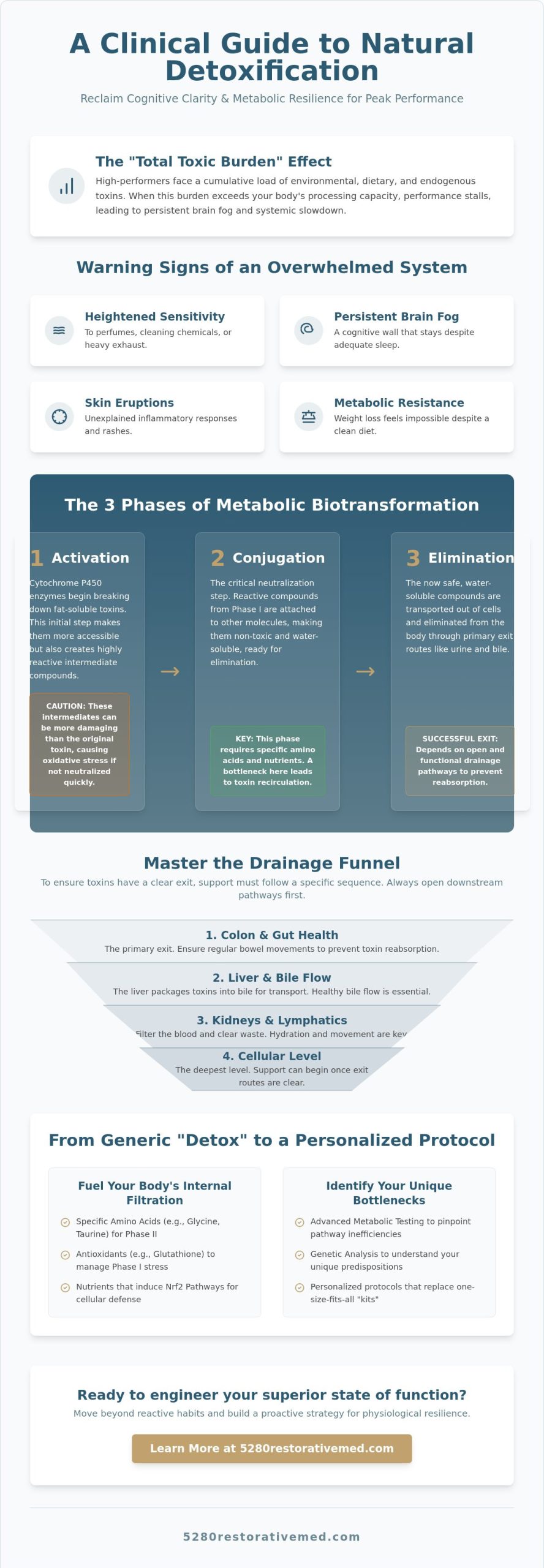
Understanding how to support detoxification pathways naturally requires looking at the liver as a sophisticated biochemical assembly line. This process isn’t a single event but a three-stage sequence designed to transform fat-soluble toxins into water-soluble substances that your body can safely excrete. If one stage of this assembly line moves faster than the others, it creates a bottleneck that can lead to systemic inflammation, metabolic stalling, and cognitive fatigue. For the high-performer, maintaining the rhythm of this sequence is the difference between peak mental clarity and persistent burnout.
Phase I: The Activation Stage
Phase I biotransformation is the initial oxidation, reduction, or hydrolysis of a xenobiotic. During this stage, a family of enzymes known as Cytochrome P450 begins the process of breaking down toxins, such as heavy metals, pesticides, and metabolic waste. While this makes the toxins more “accessible” for the next stage, it also makes them highly reactive. These intermediate metabolites are often more damaging than the original toxin. Without a steady supply of antioxidants to quench the resulting free radicals, this stage can cause significant oxidative stress. High-performers often find that their Phase I is pushed into overdrive by caffeine or certain medications, making the balance of the next phase even more critical.
Phase II: The Neutralization Stage
Phase II, or conjugation, is where the real neutralization happens. Your liver attaches a specific molecule, such as a methyl group, a sulfur group, or a glutathione molecule, to the reactive intermediates from Phase I. This process makes the substance water-soluble and ready for transport. Major pathways in this stage include methylation, sulfation, and glucuronidation. Glutathione serves as the master antioxidant here; it’s the primary “escort” that binds to toxins to prevent them from damaging your DNA. This stage is particularly vital for managing the breakdown products of your own hormones. For a deeper look at how this impacts performance, see our BHRT guide which discusses the detoxification of metabolized hormones.
A significant risk for many high-achievers is the “pathological detoxifier” profile. This occurs when Phase I is overactive but Phase II is sluggish. The body creates reactive intermediates faster than it can neutralize them, leading to “detox reactions” like headaches, irritability, and skin flares. Ensuring your body has the specific amino acids and minerals required for conjugation is the cornerstone of how to support detoxification pathways naturally. If you suspect your system is imbalanced, a Functional Medicine Consultation can provide the clinical clarity needed to optimize these specific pathways.
Phase III: The Elimination Stage
Phase III is the final transport phase. Once toxins are neutralized and water-soluble, specialized transporter proteins move them out of the liver cells and into the bile or kidneys for final excretion. This stage depends heavily on consistent hydration and gallbladder health. If Phase III is blocked, even the most efficient Phase I and II processes won’t prevent toxins from being reabsorbed into the bloodstream. True metabolic resilience comes from ensuring this three-part system flows without interruption, allowing you to maintain a superior state of physical function.
Drainage vs. Detoxification: Why the Sequence of Support Is Critical
Many high-performers jump into aggressive protocols only to experience “detox reactions” like migraines, skin flares, or intense fatigue. These symptoms are rarely a sign of success. Instead, they often indicate a drainage failure. While biotransformation happens at the cellular level, drainage is the physical movement of those neutralized toxins out of your body. Understanding the sequence of these exit routes is the most overlooked aspect of how to support detoxification pathways naturally.
Think of your body’s elimination systems as a “Drainage Funnel.” The narrowest part of the funnel, the colon and the bile ducts, must be open and moving before you attempt to clear the systemic “top” of the funnel, such as the lymph and cells. If you mobilize toxins from your fat cells while the bottom of the funnel is blocked, you risk re-toxification. This occurs when liberated toxins cannot exit and instead recirculate in the bloodstream, often crossing the blood-brain barrier and causing the very brain fog you are trying to resolve.
Your nervous system plays a decisive role in this process. Chronic high-stakes environments push the body into a sympathetic, “fight or flight” mode. In this state, the body deprioritizes “housekeeping” functions. Active drainage effectively halts. Transitioning the body into a parasympathetic state through specialized protocols is a clinical requirement for any effective clearance strategy.
The Lymphatic System: The Body’s Secondary Filtration
The lymphatic system acts as a secondary filtration network, moving cellular waste toward the venous system for eventual processing by the liver. Unlike the circulatory system, the lymph has no central pump. It relies on movement, deep breathing, and proper hydration to flow. Practical strategies like dry brushing or daily movement are foundational. Additionally, we often utilize red light therapy to support cellular energy. Optimizing mitochondrial function ensures that the cells have the ATP required to push waste into the lymphatic channels effectively.
Bile Flow: The Critical Link to Toxin Exit
Bile is the vehicle that carries neutralized toxins from the liver into the small intestine for excretion. Sluggish bile flow is perhaps the most common Phase III bottleneck. When bile becomes too viscous, toxins linger in the gallbladder or are reabsorbed in the gut. You can support bile health by incorporating bitter foods like arugula or dandelion greens and utilizing phosphatidylcholine to improve bile solubility. Identifying if your exit routes are blocked is a core part of learning how to support detoxification pathways naturally without the setbacks of a “healing crisis.”
Natural Strategies to Optimize Biotransformation and Clearance
Once you’ve ensured your drainage pathways are open, you can begin the work of fueling the biochemical machinery of the liver. Learning how to support detoxification pathways naturally involves more than just eating well; it requires providing the specific substrates that drive biotransformation. High-performers often have higher metabolic demands, making the precision of these inputs vital for maintaining cognitive clarity and metabolic resilience. It’s about giving your body the raw materials it needs to exceed its baseline performance.
Amino acids like glycine, taurine, and glutamine are non-negotiable for Phase II conjugation. These molecules act as the “glue” that attaches to toxins, making them water-soluble and ready for excretion. Without sufficient protein intake or targeted supplementation, Phase II can stall, leading to the accumulation of reactive intermediates. Additionally, sauna therapy offers a powerful lifestyle bio-hack for the modern executive. By inducing deep sweating, you can facilitate the excretion of lipophilic toxins through the skin, which provides an alternative route for fat-soluble compounds that might otherwise burden the liver.
Hydration is equally nuanced. Simply drinking more water isn’t enough if your mineral balance is off. We recommend focusing on electrolytes to maintain cellular pressure and utilizing silica-rich water to assist in the clearance of heavy metals like aluminum. These strategies ensure that your internal filtration systems have the resources to operate at a superior state. If you are looking for a tailored approach to these protocols, our Nutritional Counseling can help you identify the exact nutrient densities your body requires for peak function.
Targeted Nutrient Support for Phase II
The Nrf2 genetic pathway is your body’s primary defense against oxidative stress. Sulforaphane, found in cruciferous vegetables like broccoli sprouts, is a potent inducer of this pathway, essentially “turning on” the production of internal antioxidants. Methylation is another critical Phase II process that requires B12, folate, and choline to process toxins and neurotransmitters effectively. Milk thistle (silymarin) supports hepatocyte regeneration and protein synthesis, helping the liver recover from the metabolic demands of high performance. These nutrients are essential for anyone looking for how to support detoxification pathways naturally while maintaining a rigorous professional schedule.
Environmental Control: Reducing the Inbound Load
Bio-optimization starts with removing the obstacles to health. For the executive, this means controlling the office and home environment to reduce the “Total Toxic Burden” we discussed earlier. High-quality air and water filtration systems are essential for minimizing the intake of volatile organic compounds and heavy metals. Personal care products and fragrances are often hidden sources of endocrine disruptors that can mimic hormones and stall metabolic progress. Finally, be vigilant about mold and mycotoxins in older buildings or damp environments; these can severely compromise your metabolic resilience and trigger chronic inflammatory responses that drain your mental energy.
Engineering a Personalized Detoxification Protocol
Standardized “detox kits” found in health food stores often fail because they ignore the unique biochemical individuality of the high-performer. These off the shelf products frequently rely on harsh laxatives or generic nutrients that may not address your specific enzymatic bottlenecks. If you possess a sluggish Phase II pathway, as we discussed earlier, an aggressive, non-specific kit can actually make you feel worse by mobilizing toxins faster than you can neutralize them. True optimization requires a move away from reactive, one size fits all solutions toward a data driven strategy.
The most effective way to understand how to support detoxification pathways naturally is through precise diagnostics. We utilize metabolic testing to identify individual genetic and nutrient deficiencies that dictate your clearance capacity. This clinical approach ensures that every supplement and dietary intervention serves a specific purpose. It transforms a generic wellness goal into a sophisticated engineering project designed to reclaim your cognitive clarity and metabolic resilience.
At 5280 Restorative Medicine, we design bespoke health protocols that bridge the gap between complex science and your daily well-being. This isn’t just about the absence of illness; it’s about exceeding your baseline performance. By identifying and clearing the biological obstacles that cause brain fog and fatigue, you can return to a superior state of physical function that supports your professional and personal ambitions.
Advanced Diagnostics for Detoxification
We look deep into your unique blueprint using genetic analysis to identify Single Nucleotide Polymorphisms (SNPs) like MTHFR or COMT. These genetic markers significantly affect the speed of your methylation and conjugation pathways. Additionally, Organic Acid Testing (OAT) allows us to assess the real time efficiency of your Phase I and Phase II systems by measuring metabolic byproducts in the urine. We also monitor systemic inflammation through comprehensive bloodwork, ensuring that your protocol is adjusted as your body returns to balance. This level of detail is essential for anyone serious about how to support detoxification pathways naturally without guesswork.
Partnering with a Functional Medicine Expert
Navigating the complexities of physiological enhancement is easier with a clinical guide. Our Executive Health Program integrates detoxification into a broader performance strategy, treating your health as a proactive journey rather than a reactive necessity. We provide the sophisticated balance of clinical authority and empathetic care needed to navigate these interventions safely. This partnership allows you to focus on your high stakes responsibilities while we handle the intricate details of your biological optimization. We encourage you to take the next step toward reclaiming your vitality and achieving the peak physical and mental states you deserve.
Elevating Your Performance Through Precision Clearance
You now have the clinical roadmap to move from persistent cognitive fatigue toward a state of peak mental clarity. We have established that effective detoxification is a specific sequence, requiring open drainage pathways and the precise nutrient cofactors needed for biotransformation. Understanding how to support detoxification pathways naturally is more than a wellness goal; it is a foundational requirement for long term metabolic resilience and executive performance. By prioritizing your body’s natural filtration systems, you aren’t just avoiding burnout; you’re actively investing in your most valuable asset.
Led by Dr. Marci Catallo-Madruga, 5280 Restorative Medicine specializes in functional medicine for high-performers who require a sophisticated approach to health. We replace generic advice with bespoke protocols developed from advanced metabolic and genetic testing. Our focus remains on root-cause optimization, ensuring your body has the resources to exceed its baseline function every day. Reclaim your cognitive edge with a personalized Executive Health Program from 5280 Restorative Medicine. Your proactive journey toward renewed vitality and superior physical function begins with this clinical partnership.
Frequently Asked Questions
What are the signs that my detoxification pathways are blocked?
Common clinical signs of blocked pathways include persistent brain fog, chemical sensitivities, and unexplained fatigue. You might also notice skin flares, such as acne or rashes, and digestive stagnation. When these exit routes are compromised, toxins recirculate in the bloodstream. This often leads to metabolic stalling, where weight loss becomes difficult despite a clean diet and consistent exercise.
How long does it take to naturally support and ‘reset’ detox pathways?
A meaningful reset of your biological filtration systems typically takes between 21 and 90 days. While cellular biotransformation happens daily, the physical drainage of accumulated lipophilic toxins from fat tissues requires a sustained approach. High-performers often notice improved cognitive clarity within the first two weeks, but reaching a superior state of physical function requires consistent support over several months.
Can I support my liver and kidneys without taking expensive supplements?
You can effectively support your liver and kidneys through foundational lifestyle choices like hydration, amino acid intake, and environmental control. Consuming adequate high-quality protein provides the glycine and taurine needed for Phase II conjugation. Staying hydrated with mineral-rich water and reducing your Total Toxic Burden by filtering home air are powerful, cost-effective ways to manage your body’s filtration load.
Is a ‘detox reaction’ or ‘healing crisis’ normal when starting a protocol?
A healing crisis is common but often indicates that your Phase I biotransformation is outpacing your Phase III drainage capacity. While mild symptoms like temporary fatigue may occur, severe reactions like intense migraines or nausea shouldn’t be ignored. These are clinical signs that your drainage funnel is blocked and you need to prioritize opening exit routes like the colon and bile ducts.
What foods are best for supporting Phase II detoxification?
Cruciferous vegetables and sulfur-rich foods are the primary dietary drivers of Phase II detoxification. Broccoli sprouts, kale, and cauliflower contain sulforaphane, which induces the Nrf2 pathway for antioxidant defense. Additionally, garlic, onions, and pasture-raised eggs provide the sulfur needed for sulfation. This is a key conjugation pathway for neutralizing hormones and environmental pollutants that can otherwise accumulate in the body.
How does stress affect the body’s ability to eliminate toxins?
Chronic stress halts active drainage by locking the body into a sympathetic “fight or flight” state. In this mode, the body deprioritizes housekeeping functions like bile production and lymphatic flow. For high-achievers, learning how to support detoxification pathways naturally must include nervous system regulation to ensure the body can shift into the parasympathetic state required for waste elimination.
What is the difference between a liver cleanse and supporting detox pathways?
A liver cleanse is often a short-term, unregulated event, whereas supporting detox pathways is a clinical, ongoing physiological process. Cleanses frequently rely on laxatives that don’t address the underlying biotransformation phases. In contrast, how to support detoxification pathways naturally involves providing specific nutrients and ensuring the drainage funnel is open to safely move toxins out of the body permanently.
How often should a high-performer focus on detoxification protocols?
High-performers should integrate foundational drainage support daily and consider a more intensive clinical protocol twice a year. Because executive lifestyles often involve higher environmental and metabolic stress, a bi-annual deep dive ensures that your Total Toxic Burden remains low. This proactive approach prevents the accumulation of waste that leads to cognitive fatigue and helps you maintain peak mental performance.