
What if the chronic fatigue your third cup of coffee can’t touch isn’t just a sign of a busy week, but a signal that your biology is hitting a breaking point? You’ve likely asked yourself, “is my high-stress job making me sick?” as you push through persistent brain fog during high-stakes meetings or notice unexplained weight gain despite your best efforts at the gym. With 72% of workers reporting moderate-to-high levels of stress as of 2026, you’re not alone in feeling that your body is failing just as your career reaches its peak. It’s frustrating to feel like your physical health is the inevitable price of professional excellence, especially when traditional check-ups offer no clear answers.
We believe that peak performance shouldn’t come at the cost of your well-being. This article explores the physiological mechanisms by which corporate stress triggers chronic illness and how functional medicine can restore your metabolic resilience. You’ll discover a scientific explanation for your symptoms and a diagnostic roadmap that goes beyond standard annual physicals. We’ll show you how to maintain elite performance and exceed your baseline health through bespoke protocols designed for the high-stakes demands of your career.
Key Takeaways
- Identify the transition from professional pressure to Stress-Induced Systemic Dysfunction, finally answering the question: is my high-stress job making me sick?
- Uncover the biological mechanics of the “Cortisol Steal,” where chronic stress physically drains your thyroid function and sex hormone production.
- Learn why vacations alone cannot settle “metabolic debt” or reverse the systemic inflammation caused by years of high-stakes corporate demands.
- Discover the specific metabolic testing protocols, such as diurnal cortisol mapping, that provide the diagnostic clarity your standard annual physical often misses.
- Gain a clear path toward restoring your vitality and exceeding your baseline performance through a personalized, science-based executive health strategy.
Is My High-Stress Job Making Me Sick? Recognizing the Physiological Toll
You’ve spent years climbing the ladder, only to find that the view from the top is clouded by a persistent, heavy fog. It’s common for executives to dismiss physical symptoms as the “cost of doing business.” But when you start wondering, is my high-stress job making me sick, you’re usually reacting to more than just a busy schedule. You’re experiencing the biological shift from acute stress, which can actually sharpen your focus, to chronic distress. This destructive state compromises your internal systems and leads to a clinical reality we call Stress-Induced Systemic Dysfunction.
The very traits that made you successful, like resilience and the ability to push through discomfort, often become your greatest liabilities here. High-achievers are masters at ignoring early warning signs. You treat your body like a machine that simply needs more fuel or stronger coffee. But your biology doesn’t work that way. Powering through doesn’t just lead to tiredness; it causes a long-term metabolic stalling that can take years to reverse if left unaddressed.
The Symptoms of Executive Burnout Beyond Fatigue
While many define Occupational burnout
The Biological Mechanism: How Corporate Stress Disrupts Your Metabolism
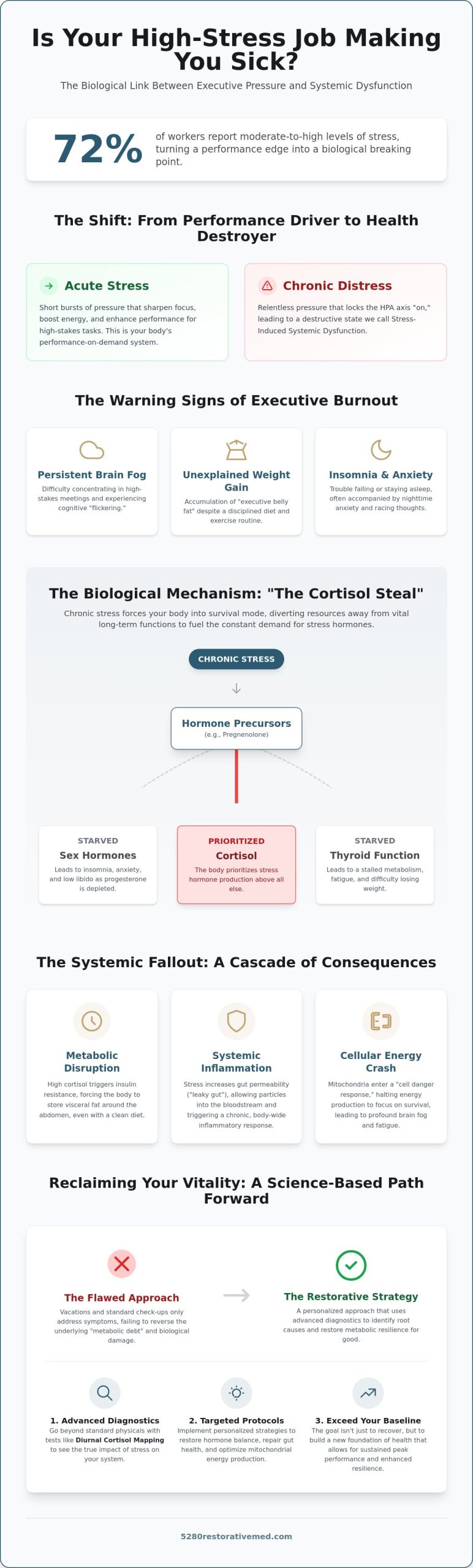
Stress is often discussed as a psychological burden, but for the high-performer, it’s a profound metabolic disruptor. Your body’s primary response system, the Hypothalamic-Pituitary-Adrenal (HPA) axis, is designed to manage short bursts of intense activity. In a boardroom or a high-stakes negotiation, this system sharpens your focus and provides the energy needed to excel. However, when the pressure never subsides, the HPA axis remains locked in an “on” position. This chronic activation is often the silent answer to the question: is my high-stress job making me sick? Over time, this state of constant readiness shifts from a performance edge to a biological drain that compromises your entire system.
When you’re perpetually “on,” your body enters a survival mode that prioritizes immediate energy over long-term repair. This leads to the “Cortisol Steal,” a biochemical process where your body diverts raw materials away from sex hormones and thyroid production to keep up with the demand for stress hormones. Research on Testing for the Root Causes of Executive Burnout highlights how this hormonal shift isn’t just about feeling tired; it’s a systemic reallocation of resources that undermines your metabolic health. At the same time, high levels of catecholamines like adrenaline can increase gut permeability, leading to systemic inflammation that further taxes your recovery capacity.
Cortisol and the Hormonal Cascade
Chronic cortisol elevation acts as a metabolic handbrake. It triggers insulin resistance, which causes your body to store “executive belly fat” even if your diet remains disciplined. This hormonal imbalance is a primary reason why many leaders find themselves needing BHRT to restore the vitality and mental clarity they once possessed. The “Cortisol-Progesterone Steal” occurs when your body prioritizes stress hormone production over reproductive health, leading to the low-progesterone states that often cause executive insomnia and nighttime anxiety. If you’re noticing these shifts, a Functional Medicine Consultation can help identify exactly where your hormonal balance has shifted.
Mitochondrial Health and Executive Energy
Your mitochondria are the engines of your high-performance cognition, responsible for generating the cellular energy that fuels every decision you make. Chronic stress triggers a “cell danger response,” a state where mitochondria stop producing energy and instead focus on cellular defense. This oxidative damage stalls your energy production, leading to the cognitive “flicker” and brain fog that plague many executives. Reclaiming your professional longevity requires moving beyond symptom management to mitochondrial optimization. By protecting these cellular engines from stress-induced damage, you ensure that your body can sustain the high-level output your career demands without sacrificing your long-term health.
Why “Taking a Vacation” Isn’t Enough to Fix Stress-Related Illness
Many executives believe that a week in the mountains or a quiet weekend at home will reverse months of professional strain. This is the “Weekend Warrior” fallacy. Two days of rest cannot undo five days of systemic inflammation. If you’ve ever asked, “is my high-stress job making me sick,” you’re likely dealing with more than just a need for sleep. You’re facing metabolic debt. This is the physiological cost that persists long after the immediate stressor is removed. It’s a deficit in your body’s regulatory systems that requires active restoration rather than passive downtime.
We often hear the objection: “I just need to push through this quarter.” This mindset assumes your biology can be bargained with. In reality, when the HPA axis is already compromised, standard lifestyle changes like a cleaner diet or extra gym sessions often fail. Your body perceives intensive exercise as yet another stressor, further depleting your already low reserves. Pushing through doesn’t lead to the finish line; it leads to a deeper state of metabolic stalling that a simple vacation cannot touch.
The Myth of the Weekend Reset
Have you noticed that you often get sick the moment you finally stop working? This is known as the “Let-Down Effect.” When your body finally drops its guard and adrenaline levels plummet, the underlying immune suppression and inflammation become visible. Passive rest is insufficient for active metabolic repair. While sleep is crucial, it doesn’t automatically recalibrate a dysregulated stress response. True restoration involves shifting your physiology out of a defensive posture and back into a state of growth and repair. This is the difference between merely “coping” with your schedule and actually restoring your functional capacity.
When Stress Becomes Chronic Dysfunction
There is a point where lifestyle modifications alone lose their efficacy. When systemic damage is entrenched, you need a strategy that targets the root cause of your symptoms. This is where functional medicine for high-performers becomes essential. By engineering metabolic resilience, we move beyond the superficial “take a break” advice. Specialized supplement protocols and targeted interventions can jumpstart your recovery by providing the specific micronutrients and hormonal support your body has been burning through. This proactive approach ensures your health isn’t just something you manage, but a foundation you actively rebuild to support your long-term professional goals.
Diagnostic Clarity: Testing for the Root Causes of Executive Burnout
Standard medical advice often leaves high-achievers stranded. You might ask, “is my high-stress job making me sick,” only to receive a clean bill of health from a standard physical. This happens because traditional diagnostics focus on the presence of disease rather than the optimization of function. To reclaim your edge, we must utilize advanced metabolic testing that uncovers the root causes of your symptoms. By moving beyond basic panels, we can identify the specific physiological imbalances that are stalling your performance.
One of the most critical tools in our diagnostic arsenal is 4-point diurnal cortisol testing. A single morning blood draw provides only a static snapshot of your stress hormones. It fails to show how your levels fluctuate throughout the day. By measuring cortisol at four distinct points, we can see if your levels are crashing in the afternoon or spiking at night, which directly impacts your focus and sleep quality. We also examine the gut-brain axis. Since your microbiome produces a significant portion of your neurotransmitters, gut health testing is essential to understanding your cognitive resilience and emotional stability under pressure.
Beyond Standard Lab Work
True diagnostic clarity involves looking at biomarkers for mitochondrial function and oxidative stress. These indicators reveal how well your cells are producing energy and whether chronic stress is causing internal damage. Through advanced metabolic testing, we can identify hidden energy leaks that contribute to mid-meeting brain fog. This level of detail also allows us to detect early triggers for conditions like MCAS, which can act as a hidden barrier to your professional peak. By identifying these issues early, we can intervene before they manifest as chronic illness.
Personalized Data vs. General Guidelines
One-size-fits-all wellness advice is a waste of time for high-performers who need precision. Your unique genetic architecture determines how you metabolize nutrients and how your body handles environmental stressors. Genetic analysis allows us to move beyond guesswork, determining your optimal nutrition and supplement needs based on your DNA. It reveals how you clear stress hormones and which micronutrients your brain requires for peak executive function. This data forms the foundation of a “Biological Blueprint” for your career, ensuring your health strategy is as sophisticated as your business strategy. To begin building your own data-driven recovery plan, you can schedule a Functional Medicine Consultation today.
Reclaiming Your Vitality: The Restorative Path for High-Performers
When you finally realize that the answer to is my high-stress job making me sick is a definitive physiological “yes,” the next step isn’t just to work less. It’s to rebuild the biological systems that years of high-stakes pressure have eroded. At 5280 Restorative Medicine, we move beyond the reactive model of traditional symptom management. Managing a headache or a temporary sleep deficit is merely a band-aid. Restoring your function involves recalibrating your HPA axis, optimizing your cellular energy, and ensuring your hormonal profile supports high-level cognition. We position health as the ultimate competitive advantage in the C-suite. A leader with superior metabolic resilience makes better decisions, stays calmer under pressure, and maintains professional longevity that their peers cannot match.
Our approach is grounded in the philosophy that you shouldn’t have to choose between your career and your health. By treating your biology with the same strategic rigor you apply to your business, we move you from a state of survival back into a state of growth. This proactive journey treats health as an evolving asset rather than a liability to be managed only when it breaks. We utilize the data from your diagnostic blueprint to create a path forward that is both scientifically sound and deeply personalized to your specific metabolic needs.
The Executive Health Program
The Executive Health Program is a sophisticated, multi-month optimization protocol designed for sustainable, measurable results. We recognize that busy professionals don’t have time for the trial-and-error approach of standard wellness trends. These bespoke protocols integrate nutritional counseling, hormone optimization, and bio-optimization into a single, cohesive clinical strategy. We focus on achieving a superior state of physical function rather than just avoiding a diagnosis. By actively paying down the “metabolic debt” accumulated over years of stress, we help you exceed your previous baseline performance and reach a state of renewed vitality.
Partnering with a Functional Medicine Expert
High-performers need a dedicated health partner who understands the unique demands of an executive lifestyle. Dr. Marci Catallo-Madruga combines deep clinical expertise with a high-end, personalized approach that respects your time and your professional goals. Our boutique practice is deeply invested in your individual success, bridging the gap between complex science and your daily well-being. We offer a level of specialized medical intervention that is as exclusive as it is effective. Stop settling for “normal” results when you can achieve optimal function. Schedule your functional medicine consultation to reclaim your vitality.
Rebuild Your Biological Edge
Burnout isn’t a lack of willpower; it’s a measurable physiological shift that demands a clinical solution. We’ve explored how chronic pressure dysregulates your HPA axis and why standard physicals often miss the early markers of metabolic debt. When you stop asking, “is my high-stress job making me sick,” and start addressing the root causes, you unlock a level of performance that is sustainable for the long term. True restoration requires more than a temporary break from the boardroom. It requires a health partner who understands the biological demands of high-level leadership.
Through our Executive Health Program, you receive personalized protocols based on advanced metabolic testing and expert guidance from Dr. Marci Catallo-Madruga. We provide national virtual consultations to ensure high-performing executives can access boutique clinical care regardless of their location. Our focus is moving you beyond a simple baseline to a superior state of physical and mental function.
Apply for our Executive Health Program and reclaim your edge.
You’ve built an exceptional career. Now, it’s time to build a body that can sustain it. Peak physical and mental states are achievable at any stage of life, and your journey toward renewal starts today.
Frequently Asked Questions
How do I know if my fatigue is just tiredness or a medical issue?
Fatigue that persists after a full weekend of rest or a vacation is typically a sign of HPA axis dysregulation rather than simple tiredness. When your cellular engines, the mitochondria, are compromised by chronic cortisol, sleep alone cannot restore your energy levels. If you’ve been wondering, “is my high-stress job making me sick,” this kind of non-restorative fatigue is a primary clinical indicator that your body is in a state of metabolic debt.
Can a high-stress job cause permanent damage to my metabolism?
While chronic stress can cause significant damage to your hormonal balance and metabolic rate, these changes are rarely permanent if addressed correctly. The body possesses a remarkable capacity for renewal through targeted interventions like hormone optimization and cellular repair protocols. However, ignoring these signs can lead to entrenched systemic dysfunction. Reversing the damage requires moving beyond lifestyle changes to active clinical restoration of your internal regulatory systems.
Why does my doctor say my labs are normal when I feel so sick?
Standard laboratory reference ranges are designed to identify the presence of acute disease, not to evaluate your potential for peak performance. You can fall within the “normal” range while still being light-years away from your optimal state. Functional medicine looks at tighter, health-focused ranges to identify subtle energy leaks and hormonal imbalances before they become clinical illnesses. This explains why you might feel physically compromised despite receiving a clean bill of health from a general practitioner.
What are the best supplements for executive burnout and stress?
Effective supplementation for burnout must be highly personalized to your specific metabolic deficiencies and cortisol patterns. We often utilize adaptogens like Rhodiola and Ashwagandha to modulate the stress response, along with high-dose magnesium and methylated B-vitamins to support mitochondrial function. However, the most successful outcomes result from bespoke supplement protocols based on your unique genetic and metabolic data rather than generic, over-the-counter wellness products.
How long does it take to recover from chronic work-related stress?
Recovery from chronic work-related stress typically takes between three to six months of consistent, targeted intervention. This timeline allows your HPA axis to recalibrate and your cellular energy production to return to baseline. While you may notice improvements in mental clarity within weeks, systemic restoration is a gradual process of paying down metabolic debt. The speed of your recovery depends on the depth of your initial dysfunction and your adherence to a personalized optimization plan.
Is it possible to stay in a high-stress job and still be healthy?
It is entirely possible to maintain a high-stakes career and remain physically thriving by building superior metabolic resilience. The goal isn’t necessarily to remove the stressor, but to enhance your body’s ability to process and recover from it. By optimizing your hormones and cellular health, you can transform stress from a destructive force into a manageable component of a high-performance lifestyle. This proactive approach ensures your career peak doesn’t coincide with a health crisis.
What is the first step in a functional medicine approach to burnout?
The first step in our functional medicine approach is a comprehensive consultation followed by advanced diagnostic testing to map your unique biology. We look at your diurnal cortisol patterns, genetic stress tolerance, and gut health to identify exactly where your system is stalling. This data-driven entry point removes the guesswork from your recovery. It allows us to create a precise, evidence-based roadmap that addresses the root cause of why your high-stress job is making me sick.
Can metabolic testing show the effects of my job on my body?
Metabolic testing provides a clear window into how your professional environment is impacting your internal health. By measuring markers of oxidative stress, nutrient depletion, and hormonal shifts, we can quantify the physiological toll of your workload. These tests reveal the invisible energy leaks that cause brain fog and fatigue during the workday. This objective data serves as a baseline for your optimization journey, allowing us to track your progress as we restore your functional capacity.