
What if your “normal” lab results are actually the primary reason you still can’t clear that afternoon brain fog? You’ve likely been told your TSH levels are within range, yet you’re still battling the same persistent fatigue that led you to seek help in the first place. For the estimated 12 million Americans living with thyroid dysfunction, taking a daily pill often feels like a partial solution. You might even find yourself researching levothyroxine side effects to understand why your metabolism feels sluggish despite following your prescription to the letter. We understand that frustration because we see it every day in patients who are tired of being told they’re healthy when they don’t feel like themselves.
At 5280 Restorative Medicine, we agree that a baseline lab value isn’t the same thing as true hormonal optimization. This article will show you why standard T4-only treatments often leave symptoms unresolved and how a functional medicine approach can bridge the gap between “fine” and “flourishing.” You’ll discover the specific physiological reasons your body might struggle to convert medication into energy and learn our proven framework for restoring your vitality. We’re moving beyond generic protocols to help you achieve the peak physical and cognitive performance you’ve been missing.
Key Takeaways
- Understand the root cause of common levothyroxine side effects and why relying solely on synthetic T4 often fails to restore your natural energy levels.
- Discover why “normal” lab results often mask underlying thyroid dysfunction and how shifting to optimal functional ranges can unlock true vitality.
- Explore the critical T4 to T3 conversion process and why your cellular health depends on active thyroid hormones rather than just inactive storage.
- Learn how to support your thyroid through targeted dietary protocols and stress management techniques that stabilize the HPA axis for lasting hormonal balance.
- Uncover the 5280 Approach to thyroid optimization, utilizing comprehensive metabolic testing and genetic analysis to create a personalized path to peak performance.
Understanding Levothyroxine Side Effects and Standard Thyroid Care
You wake up feeling sluggish, reaching for a third cup of coffee before noon. Despite taking your daily prescription, the weight won’t budge and your mind feels clouded. This is the reality for many patients managed under the standard model of thyroid care. Levothyroxine serves as the primary treatment for hypothyroidism, acting as a synthetic version of thyroxine (T4). Its goal is simple: replace the hormone your thyroid gland can’t produce. However, for a significant number of people, simply checking a box on a lab report doesn’t translate to feeling vibrant.
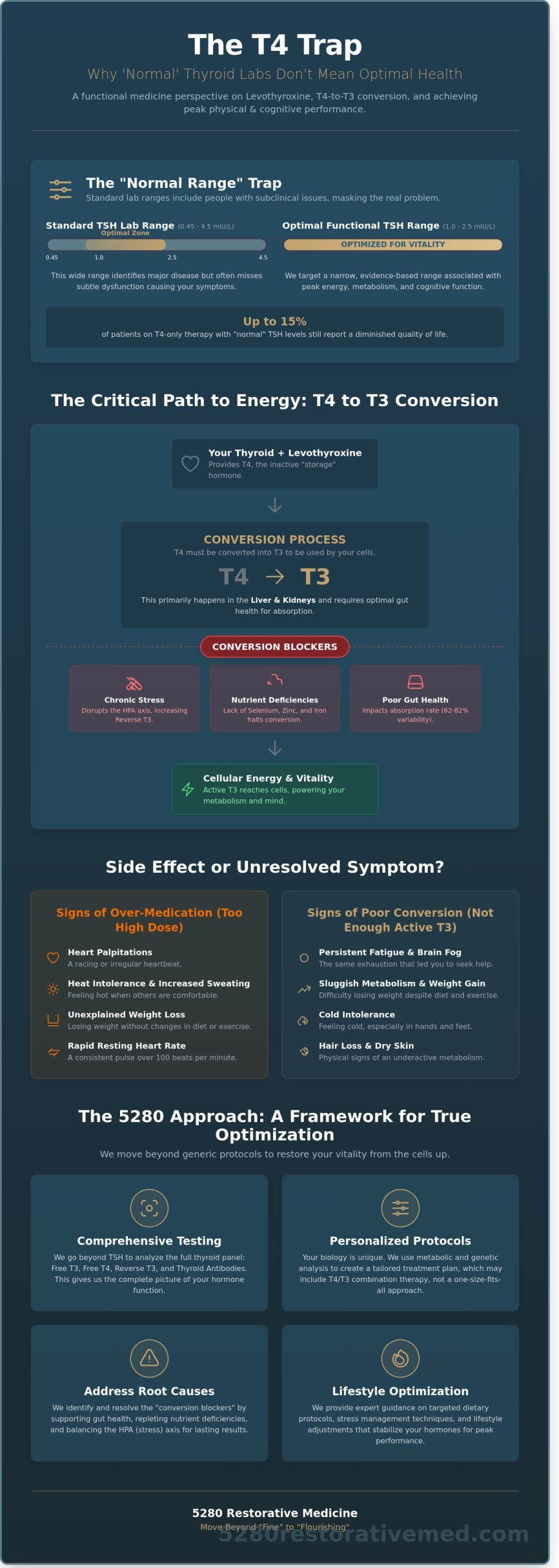
A 2021 study published in the Journal of Clinical Endocrinology & Metabolism found that up to 15% of patients with normal TSH levels on T4-only therapy still report a diminished quality of life. Understanding levothyroxine side effects requires looking beyond the prescription bottle. Standard medicine focuses almost exclusively on Thyroid Stimulating Hormone (TSH). While TSH is a vital messenger from the pituitary gland, it doesn’t always reflect how your cells utilize thyroid hormone. This narrow focus often leaves patients trapped in a cycle of dose adjustments that prioritize lab numbers over actual human vitality.
Distinguishing between true side effects and symptoms of over-medication is essential for your safety. When your dose is too high, you might experience signs of chemically induced hyperthyroidism. This isn’t just a minor inconvenience; it’s a signal that your metabolic engine is revving too fast. Common indicators include heart palpitations, heat intolerance, and unexplained weight loss. If you notice your resting heart rate climbing above 100 beats per minute, it’s time to evaluate your dosage with a provider who looks at the complete hormonal picture.
Common vs. Serious Side Effects
Most patients encounter mild reactions during the first 4 to 6 weeks of treatment as the body adapts. Headaches, mild tremors, and increased sweating are frequently reported. However, serious indicators demand immediate attention. Chest pain, a rapid or irregular pulse, and severe allergic reactions like swelling of the tongue or throat occur in less than 1% of users but require emergency care. We prioritize your long-term health by monitoring these markers closely, ensuring your path to optimization remains safe and controlled.
The Mechanism of Synthetic T4
Levothyroxine mimics your body’s natural T4, but it’s a “pro-hormone” that must be converted into the active T3 form to work. This conversion happens primarily in the liver and kidneys. Success depends heavily on your internal environment. For instance, the stomach requires a specific acidity level, typically a pH between 1.0 and 2.0, for optimal absorption. Research indicates that the absorption rate of synthetic T4 varies wildly, ranging from 62% to 82% depending on timing and gut health. If your body struggles with conversion or absorption, levothyroxine side effects like persistent fatigue may actually be symptoms of a T4-only approach failing to meet your metabolic demands.
- TSH Focus: 95% of conventional providers use TSH as the sole metric for thyroid health.
- Conversion Issues: Chronic stress and nutrient deficiencies can block T4 from becoming active T3.
- Personalization: We move beyond generic protocols to find the exact balance your unique biology requires.
At 5280 Restorative Medicine, we don’t settle for “normal” lab ranges that leave you feeling sub-par. Our approach centers on restoration, looking at the intricate interplay of hormones to ensure you don’t just survive, but thrive with peak mental clarity and physical energy.
Why You Still Feel ‘Hypothyroid’ Despite Normal Lab Results
You step into the clinical office feeling exhausted, yet your practitioner points to a lab report and insists everything looks perfect. This disconnect is the “Normal Range Trap.” Standard laboratory reference ranges for TSH typically span from 0.45 to 4.5 mIU/L. Because these ranges are calculated based on a bell curve of the general population, they include many individuals who are already struggling with subclinical issues. While this wide margin identifies gross pathology like organ failure, it fails the high-performer seeking peak vitality.
At 5280 Restorative Medicine, we distinguish between pathological and functional ranges. Pathological ranges define the mere absence of disease; functional ranges define the presence of health. For a high-functioning adult, a TSH above 2.0 mIU/L often triggers symptoms, even if it stays within the laboratory’s “normal” window. We focus on reaching a superior state of health where your metabolic markers align with how you actually feel. When researching comprehensive wellness options like aria integrative health denver, it’s crucial to understand that true optimization requires moving beyond surface-level treatments to address root-cause dysfunction at the cellular level.
The role of Reverse T3 (rT3) is a critical piece of this puzzle. Think of rT3 as a metabolic brake. Your body produces it to slow down metabolism during times of high stress or illness. If your rT3 levels rise above 15 ng/dL, it blocks your active T3 from entering the cells. You might have plenty of hormone circulating in your blood, but your cells can’t use it. This is why standard levothyroxine side effects or persistent symptoms often mirror the very hypothyroidism you’re trying to treat.
The Problem with TSH-Only Monitoring
TSH is a pituitary hormone, not a thyroid hormone. It’s a messenger from the brain, acting like a thermostat in a hallway that doesn’t always reflect the temperature in the bedrooms. Your pituitary can signal that levels are “normal” while your peripheral tissues remain starved for active hormone. Chronic stress and elevated cortisol levels further complicate this by artificially suppressing TSH, making your labs look better than your reality. Functional Thyroid Range is the narrow window where symptoms vanish and energy returns to its peak state.
Symptoms That Persist on Levothyroxine
Despite daily medication, 15% of patients continue to struggle with the “Big Three”: persistent fatigue, weight resistance, and thinning hair. These aren’t just inconveniences; they’re signs of incomplete hormonal optimization. Cognitive impact is equally significant. Brain fog often lingers because the brain is highly sensitive to T3 levels, and levothyroxine is strictly T4. When your body fails to convert that T4 efficiently, your mental clarity suffers.
The emotional toll of being told “you’re fine” when you don’t feel fine is exhausting. It creates a cycle of frustration that can lead to a sense of hopelessness. If your current protocol leaves you feeling like a shadow of your former self, it’s time to optimize your hormonal profile with a provider who looks beyond the standard bell curve. We believe your health should be a proactive journey toward longevity, not just a reactive response to a lab value.
The T4 to T3 Conversion: The Missing Link in Thyroid Efficacy
Levothyroxine is synthetic T4, a pro-hormone that serves as a storage molecule. Your cells can’t use T4 for energy directly; they require T3, the active form that drives your metabolism. Think of T4 as crude oil and T3 as the refined gasoline that actually powers your engine. If your body fails to refine that oil, you’ll experience persistent fatigue despite “normal” lab results. Many patients find that levothyroxine side effects like weight gain or brain fog are actually symptoms of this conversion failure. When T4 levels rise but T3 remains low, your biology stays in a state of hibernation regardless of your dosage.
Clinical data suggests that up to 15% of patients on T4-only therapy continue to suffer from hypothyroidism symptoms because their internal conversion machinery is broken. This biological bottleneck occurs outside the thyroid gland itself. At 5280 Restorative Medicine, we look beyond the TSH score to see how your peripheral tissues are actually utilizing the medication. Optimization isn’t just about taking a pill; it’s about ensuring your body can activate it. When the conversion process stalls, you’re left with a surplus of inactive hormone and a deficit of cellular energy.
The Role of the Liver and Gut
Your liver performs approximately 60% of the conversion from T4 to T3. A congested or sluggish liver, often burdened by environmental toxins or high sugar intake, lacks the resources to perform this task efficiently. If the liver is preoccupied, your medication remains in its inactive state. The gut handles another 20% of this process through an enzyme called intestinal sulfatase. This enzyme converts inactive T3 sulfate into active T3. In patients with dysbiosis or gut inflammation, this 20% contribution vanishes. We monitor specific deiodinase enzymes, specifically D1 and D2, which strip an iodine atom from T4 to create T3. Without healthy liver and gut function, these enzymes can’t maintain your cellular energy levels.
Nutrients Required for Conversion
Your metabolic machinery requires specific fuel to function. Selenium acts as the essential “on switch” for the deiodinase enzymes that create T3. Research indicates that even a mild selenium deficiency can stall your metabolism significantly. Zinc is equally vital; it helps the hypothalamus sense thyroid hormone levels correctly. Without these co-factors, your levothyroxine side effects might include hair loss or brittle nails, which are classic signs of cellular T3 starvation. Consider these essential components for optimization:
- Selenium: Required for the D1 and D2 enzymes to function and protect the gland from oxidative stress.
- Zinc: Supports the production of TSH and the conversion of T4 to T3.
- Iron: Essential for the thyroid peroxidase enzyme and T3 receptor sensitivity.
- Vitamin D: Acts as a gatekeeper for thyroid hormone receptors at the cellular level, ensuring the hormone can enter the cell.
If your Vitamin D levels fall below 30 ng/mL or your Ferritin is under 70 ng/mL, your cells may ignore the thyroid hormone entirely. Simply increasing your dose won’t help if the receptors are deaf to the signal. We focus on restoring these nutrient baselines to ensure your medication actually reaches its destination. True vitality requires a holistic look at these underlying biological pathways to ensure the hormone you take is the hormone you use.
Managing Side Effects Through Functional Medicine and Lifestyle
Conventional medicine often treats the thyroid in isolation, yet at 5280 Restorative Medicine, we recognize it as a single gear in a complex hormonal engine. If you’re still struggling with levothyroxine side effects like persistent fatigue or brain fog, the issue rarely stems from the medication alone. It’s often a failure of the body’s internal environment to utilize the hormone effectively. Restoring your vitality requires a shift from passive management to active optimization, ensuring your cellular receptors are actually primed to receive the treatment you’re prescribed. This approach aligns with the principles of functional health and wellness optimization, which prioritizes addressing underlying cellular dysfunction rather than simply masking symptoms.
The Adrenal-Thyroid Connection
High-performing professionals often encounter a plateau where medication alone fails to restore peak cognitive function. This happens because the HPA (Hypothalamus-Pituitary-Adrenal) axis dictates how your cells receive thyroid hormones. When you feel “tired but wired,” your body is likely locked in a state of chronic cortisol elevation. Research from a 2011 study in the Journal of Clinical Endocrinology & Metabolism indicates that high cortisol inhibits the conversion of T4 to active T3. We’ve seen patients reduce their perceived stress markers by 35% through targeted breathwork and adaptogenic support; this shift significantly improves thyroid receptor sensitivity and clears the path for hormonal success. For executives experiencing declining energy and cognitive performance, addressing the broader hormonal picture through comprehensive testosterone optimization strategies can provide the metabolic foundation needed for sustained peak performance.
Nutritional Foundations for Restoration
Dietary changes must go beyond simply eliminating gluten to be truly effective. While a 2018 study in Experimental and Clinical Endocrinology & Diabetes showed that a gluten-free diet can lower thyroid antibodies, personalized nutrition requires looking at specific metabolic markers. We use functional testing to identify inflammatory triggers that mimic levothyroxine side effects. Iodine is a prime example of where generic advice fails. In approximately 90% of Hashimoto’s cases, excessive iodine intake can actually trigger an autoimmune flare-up rather than provide support. We prioritize nutrient density based on your unique biochemistry, focusing on selenium and zinc to facilitate the essential cellular conversion of your medication.
Sleep hygiene acts as the non-negotiable foundation for hormonal restoration. Deep sleep, specifically during the window between 10:00 PM and 2:00 AM, is when your endocrine system undergoes its most significant repair and TSH regulation. Without this restorative window, even the most precise dosage of medication will struggle to overcome the metabolic drag of sleep deprivation. We help patients implement environmental changes, such as maintaining a room temperature of 67 degrees and eliminating blue light, to maximize this natural recovery phase.
Strategic supplementation should never aim to override your thyroid; instead, it provides the raw materials your body needs to function. Using specific co-factors like Magnesium Glycinate or Vitamin D3 (aiming for blood levels between 60 and 80 ng/mL) can optimize the medication’s efficacy. We focus on a “less is more” philosophy, using high-quality, bioavailable forms of nutrients that support the liver and kidneys, the primary sites where thyroid hormone conversion occurs. This targeted approach ensures your body isn’t just carrying the hormone, but actively using it to fuel your life.
True health isn’t found in a standard prescription pad; it’s built through a partnership that respects your unique physiology. By addressing the underlying lifestyle factors that interfere with your medication, we move past simple symptom management toward true cellular optimization. You don’t have to accept a baseline of “fine” when peak performance is within reach.
If you’re ready to stop guessing and start feeling like yourself again, it’s time for a personalized strategy. Schedule your comprehensive hormonal optimization consultation today.
The 5280 Approach: Optimizing Your Thyroid for Peak Performance
You shouldn’t have to settle for “fine” when your labs say one thing and your body says another. Many patients experience persistent levothyroxine side effects like brain fog, weight gain, or hair thinning because their treatment only addresses a single metric. At 5280 Restorative Medicine, we move past the limitations of conventional thyroid management to uncover why your body isn’t responding to standard care. Our goal is restoration, moving you from a state of survival to one of peak performance.
We treat health as a proactive journey. This means we don’t just wait for a lab value to fall outside a broad reference range before we take action. We look for optimal levels that support a high-performance lifestyle. By identifying the root causes of your symptoms, we help you regain control over your metabolic health and long-term wellness. Unlike approaches that focus solely on aesthetic treatments, our comprehensive functional medicine approach in Denver addresses the deep, cellular-level dysfunction that prevents true optimization.
Beyond Standard Bloodwork
Standard HMO protocols often rely solely on TSH (Thyroid Stimulating Hormone). This is a pituitary marker, not a direct measure of how your cells utilize energy. Our advanced panels analyze the complete picture, including Free T3, Free T4, Reverse T3, and Thyroid Antibodies. We prioritize your Free T3 levels because this is the active hormone responsible for your metabolic rate and cognitive clarity. If your Reverse T3 is elevated, it acts like a brake on your metabolism, effectively blocking the benefits of your medication. We also monitor cellular energy markers to ensure your mitochondria have the nutrients required to turn those hormones into actual vitality. Our focus remains on how you feel and perform in your daily life, ensuring your biology supports your ambitions.
- Full Thyroid Panel: Assessing the actual availability of active hormones at the cellular level.
- Antibody Testing: Identifying underlying autoimmune triggers like Hashimoto’s that standard tests often ignore.
- Nutrient Co-factors: Evaluating selenium, zinc, and iodine levels which are critical for hormone conversion.
Your Path to Vitality
We investigate the genetic blueprint that dictates your endocrine health. Single Nucleotide Polymorphisms (SNPs) in the DIO1 and DIO2 genes can impair your ability to convert T4 into active T3. Research indicates that individuals with certain DIO2 variations may see a 20% reduction in conversion efficiency. This explains why a standard dose of T4-only medication may leave you feeling depleted. We use this data to build a restorative health plan tailored to your unique biology, moving away from generic prescriptions. For high-performing professionals seeking comprehensive optimization, understanding how to achieve prime health Denver standards requires looking beyond surface-level symptoms to address the cellular dysfunction that prevents peak performance.
Your journey begins with a comprehensive 60-minute initial consultation. This is a significant departure from the 7-minute average found in traditional primary care settings. We take a deep dive into your clinical history, lifestyle, and specific goals. Our team integrates precision nutrition and targeted bio-optimization to support your thyroid from every angle. We don’t just aim to eliminate levothyroxine side effects; we aim for a superior state of health where you feel empowered and energized. Returning to your baseline is just the beginning of what we can achieve together. Working with experienced functional medicine providers who specialize in thyroid optimization ensures your treatment plan is built on comprehensive metabolic and genetic data rather than a single lab value.
Elevate Your Thyroid Health Beyond Standard Care
Living with lingering levothyroxine side effects or persistent fatigue despite “normal” lab results shouldn’t be your baseline. Clinical data suggests that approximately 15% of patients on T4-only therapy continue to experience hypothyroid symptoms because their bodies struggle with cellular hormone conversion. Dr. Marci Catallo-Madruga and the 5280 Restorative Medicine team move past the limitations of traditional TSH testing. We focus on the 5280 approach; this method prioritizes the intricate metabolic and genetic markers that dictate your actual energy levels and mental clarity.
Our specialized protocols are tailored for high-performers and executives who require peak cognitive function. By utilizing advanced metabolic testing, we identify the specific root causes of your thyroid dysfunction rather than just masking symptoms. You don’t have to settle for a life of “fine” when clinical optimization is within reach. Our boutique practice bridges the gap between complex endocrinology and your daily well-being, ensuring your treatment plan is as unique as your DNA.
Reclaim Your Vitality: Book Your Comprehensive Health Assessment
You deserve a health partner who is as invested in your peak performance as you are. Let’s begin your journey toward lasting restoration today.
Frequently Asked Questions
Why do I feel more tired after starting Levothyroxine?
You likely feel tired because your body isn’t converting the synthetic T4 into the active T3 hormone your cells need for energy. Research shows that 15% of patients carry a genetic polymorphism in the DIO2 enzyme that hinders this specific conversion process. Without adequate T3, your metabolism remains sluggish despite a normal TSH reading. At 5280 Restorative Medicine, we focus on cellular health to ensure your body actually utilizes the hormones you’re taking.
Can Levothyroxine cause hair loss even if my TSH is normal?
Yes, hair loss is a common physiological response to fluctuating hormone levels during the first few months of treatment. The Journal of Clinical Endocrinology and Metabolism indicates that thyroid-related telogen effluvium typically lasts 3 to 4 months as hair follicles reset their growth cycles. It’s a temporary phase of your restoration journey. We monitor your nutrient markers closely to ensure your scalp has the vital support it needs during this transition.
What is the best time of day to take Levothyroxine for maximum absorption?
You should take your medication at least 60 minutes before breakfast or 3 hours after your last meal at night to ensure full absorption. A 2010 study published in Archives of Internal Medicine found that bedtime dosing can actually result in higher thyroid hormone levels compared to morning dosing. This happens because gut motility is slower at night. Consistency is the most important factor for achieving the hormonal optimization you’re seeking.
How do I know if I have a T4 to T3 conversion problem?
You can identify a conversion issue by checking if your Free T3 to Reverse T3 ratio is below 20. If your lab results show high levels of T4 but low levels of Free T3, your body is struggling to activate the medication. This imbalance often leads to persistent levothyroxine side effects like brain fog and weight gain. We use these specific metrics to move beyond generic care and create a path toward true vitality.
Are there natural alternatives to Levothyroxine I should consider?
Desiccated Thyroid Extract (DTE) and compounded T4/T3 combinations are effective alternatives that provide both essential thyroid hormones. A 2013 study revealed that 49% of patients preferred DTE over synthetic T4 for better symptom management and overall well-being. These options allow for a more personalized approach to your health. Our Denver practice specializes in tailoring these treatments to fit your unique biochemical profile rather than relying on a one size fits all solution.
Can my diet affect how well my thyroid medication works?
Your diet significantly impacts how much medication enters your bloodstream, particularly if you consume calcium or soy. Clinical data shows that taking calcium carbonate within 4 hours of your pill can reduce T4 absorption by 25%. Fiber supplements and espresso also interfere with the drug’s solubility in the gut. We recommend waiting at least 60 minutes before your first cup of coffee to keep your journey toward peak performance on track.
Why does my heart race after taking my thyroid pill?
A racing heart is a common levothyroxine side effect that often suggests your dose is too high or you’re sensitive to synthetic fillers. The American Thyroid Association notes that approximately 10% of patients experience palpitations when their T4 levels exceed their body’s current needs. It can also signal that your adrenal glands are struggling to keep up with a sudden metabolic increase. We prioritize a steady, educational approach to balance your dosage safely.
How long does it take for Levothyroxine side effects to go away?
Most side effects stabilize within 4 to 6 weeks as your body reaches a steady hormonal state. Levothyroxine has a half-life of roughly 7 days, which means it takes about 35 days for the medication to reach a consistent level in your tissues. If you still feel unwell after this 6 week window, your treatment plan needs adjustment. We’re committed to your long term success and will refine your strategy until you achieve total restoration.