
What if the brain fog you feel during high-stakes meetings isn’t a sign of permanent decline, but a signal that your neural pathways lack the metabolic fuel to adapt? It’s a common fear among high-performers that cognitive sharpness peaks early and then slowly fades. You’ve likely felt the frustration of losing your edge or struggling to recall complex data when it matters most. Finding reliable supplements to improve neuroplasticity is often difficult because the market is flooded with contradictory advice and unverified claims. We understand that your cognitive health is your most valuable asset; it deserves a proactive, clinical approach rather than guesswork.
This guide cuts through the confusion to provide a scientifically-validated framework for brain health. You’ll discover how to support your brain’s natural ability to rewire itself by providing the specific raw materials it needs for peak performance. We will explore the latest June 2026 clinical data on ingredients like Citicoline and Lion’s Mane, while addressing the critical importance of supply chain transparency in a rapidly changing regulatory environment. By the end of this article, you’ll have a clear path toward improving your mental clarity and building a resilient, adaptable mind that thrives at any stage of life.
Key Takeaways
- Understand how Brain-Derived Neurotrophic Factor (BDNF) acts as a biological fertilizer to help your brain form new neural connections and repair itself.
- Distinguish between short-term nootropics that provide a temporary boost and clinical supplements to improve neuroplasticity that support lasting structural changes.
- Learn why optimizing your gut health and metabolic foundations is essential to ensure your brain actually absorbs and utilizes high-performance cognitive enhancers.
- Discover a professional framework for cycling specific compounds to maintain peak effectiveness and prevent your body from building a tolerance.
- Shift from generic advice to a “test, don’t guess” philosophy that integrates metabolic testing and genetic analysis into a personalized Executive Health Program.
What is Neuroplasticity and Why Does it Require Nutritional Support?
Your brain’s architecture is constantly shifting in response to your experiences, thoughts, and environment. This dynamic process is known as neuroplasticity. If you want to understand the foundational science, you might ask, What is Neuroplasticity? It represents the brain’s capacity to reorganize its structure, functions, or connections. For a high-performer, this means the ability to stay mentally agile during complex negotiations or to master new industries late in a career. It’s the difference between a mind that feels “stuck” and one that remains fluid and capable of rapid growth.
However, the brain cannot rewire itself in a vacuum. It requires a stable metabolic environment. If your body is dealing with high levels of oxidative stress or systemic inflammation, the biological “cost” of building new neural pathways becomes too high. This is where the strategic use of supplements to improve neuroplasticity becomes critical. These compounds don’t just “fix” a problem; they provide the specific nutrients and cofactors required for the brain’s growth machinery to function at an optimal level. Without these raw materials, even the most intense mental training will fail to produce lasting structural changes.
The Mechanisms of Synaptic Plasticity
Communication between neurons happens at the synapse. Synaptic density refers to the number of these connections, and it’s a primary marker of cognitive reserve. When your brain is healthy, it maintains a precise equilibrium between glutamate and GABA. Glutamate drives the excitation needed for learning, while GABA provides the inhibitory “brakes” that prevent overstimulation and anxiety. Synaptogenesis is the process of forming new synapses between neurons. By supporting this process through targeted supplements to improve neuroplasticity, you enhance your brain’s ability to store information and retrieve it under pressure.
BDNF: The Master Switch for Brain Growth
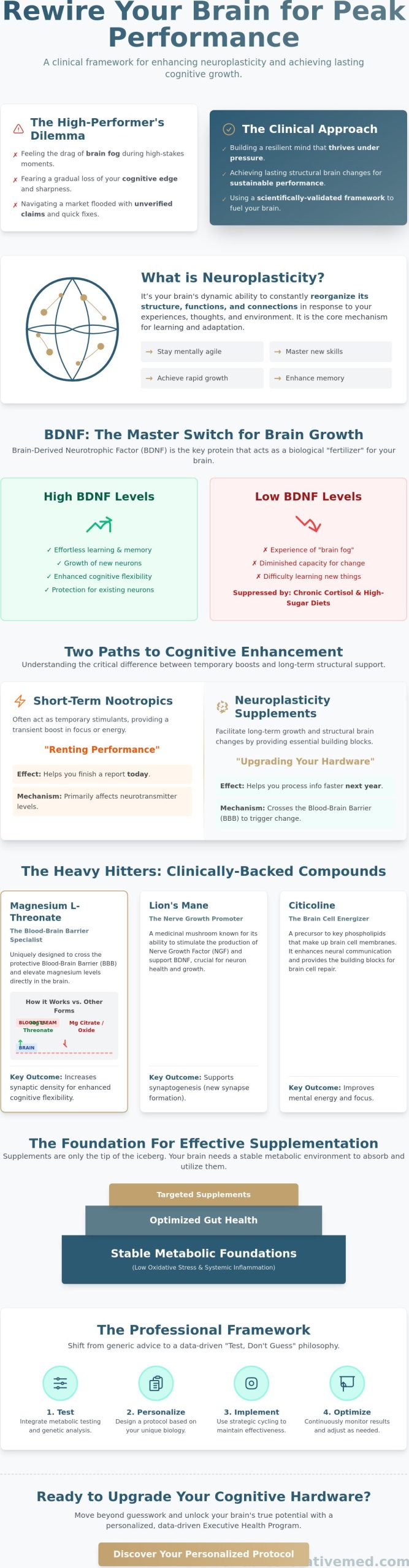
Brain-Derived Neurotrophic Factor, or BDNF, acts as a primary catalyst for neural evolution. It doesn’t just protect the neurons you already have; it facilitates the birth of new ones in the hippocampus, the brain’s center for memory and learning. When BDNF levels are high, learning feels effortless. When they’re low, you experience the dreaded “brain fog” and a diminished capacity for change. Chronic cortisol from high-stakes work environments and diets high in processed sugars are known to suppress this vital protein. For those in their 40s and 50s, building neuro-resilience is about more than just avoiding decline. It’s about exceeding your baseline performance and ensuring your mind stays as adaptable as it was decades ago.
The Heavy Hitters: Clinically-Backed Supplements for Brain Adaptability
Many high-performers reach for “nootropics” for a quick focus boost, but these often act as temporary stimulants rather than structural builders. We focus on supplements to improve neuroplasticity, which facilitate long-term growth by crossing the blood-brain barrier (BBB). This distinction is vital. While a stimulant might help you finish a report today, a neuroplasticity supporter helps you process information faster next year. Achieving these lasting results requires compounds that can actually reach the neural tissue and trigger structural change.
Effective brain optimization isn’t about taking a single “magic pill.” It’s about a synergistic “stack” approach where different compounds support various stages of the neural lifecycle. Quality and purity are non-negotiable here. Medical-grade results require standardized extracts and bioavailable forms that the body can actually utilize. When you provide the right building blocks, you move from merely managing symptoms to actively upgrading your cognitive hardware.
Magnesium L-Threonate: The BBB Specialist
Most magnesium forms, such as citrate or oxide, are excellent for muscle relaxation or digestive health, but they fail to elevate magnesium levels in the brain significantly. Magnesium L-Threonate was specifically developed to penetrate the BBB. Clinical research indicates that this form increases synaptic density, which is essential for cognitive flexibility. By modulating the NMDA receptor, it ensures that your neurons can fire efficiently during learning without becoming over-excited or damaged. This specific modulation is a cornerstone of long-term potentiation, the process by which memories are formed.
Omega-3 Fatty Acids: DHA and the Structural Brain
Your brain is roughly 60% fat, and DHA (docosahexaenoic acid) is its primary structural component. DHA is essential for maintaining the fluidity of cell membranes in the brain. This fluidity allows for rapid signaling between neurons and the efficient transport of nutrients. While DHA provides the structure, EPA (eicosapentaenoic acid) helps manage the neuro-inflammation that can stall growth. A high-quality fish oil with a specific ratio of these fats ensures your brain has the building blocks for new neural pathways. If you’re unsure which ratios are right for your biology, a Functional Medicine Consultation can provide the clarity you need.
Lion’s Mane and Bacopa Monnieri: The Herbal Neuro-Optimizers
Hericium erinaceus, or Lion’s Mane, is unique for its ability to stimulate Nerve Growth Factor (NGF). NGF is a protein that supports the survival and maturation of neurons. When paired with Bacopa Monnieri, the effects are synergistic. Bacopa supports dendrite proliferation, the branching of neurons that allows for more complex communication networks. It also acts as an antioxidant to protect these new connections from oxidative stress. To achieve clinical results, you must use standardized extracts. Generic powders often lack the active compounds, like bacosides or hericenones, required to trigger these biological shifts. Using supplements to improve neuroplasticity in this targeted way ensures your brain remains resilient and adaptable at any age.
The Functional Medicine Advantage: Beyond the ‘Pill for an Ill’ Mentality
Many skeptics argue that supplements simply create “expensive pee.” This criticism often holds weight in the retail market, where consumers buy generic bottles based on marketing rather than metabolic need. For supplements to improve neuroplasticity to be effective, your body must be in a state where it can actually utilize them. If you’re struggling with chronic gut dysbiosis or a high toxic load from heavy metals, your brain’s growth signals will remain muted regardless of what you ingest. We move beyond the “one-size-fits-all” retail model by utilizing functional medicine for high-performers. This approach treats your biology as a unique ecosystem. Instead of guessing which nutrients you might lack, we use advanced diagnostics to identify the specific bottlenecks in your biochemistry. This ensures that every intervention is purposeful and data-driven.
Mainstream medical institutions often dismiss supplements because they focus on the absence of regulation. However, as of June 2026, the landscape has shifted significantly. With the FDA reassessing its regulatory framework and major retailers like Amazon now requiring third-party testing for cGMP compliance, the quality gap is closing for those who know where to look. We don’t rely on generic shelf-stable products. We utilize professional-grade compounds that have been validated through rigorous supply chain accountability and raw material verification. This clinical precision is what allows us to achieve measurable results in cognitive function.
Why Bioavailability is the Real Bottleneck
The gap between retail-grade and clinical-grade supplements is vast. Most products found on big-box store shelves use the cheapest raw materials with poor absorption rates. Clinical protocols prioritize delivery systems like liposomal encapsulation or methylated forms that bypass common digestive hurdles. The gut-brain axis plays a pivotal role here; a compromised microbiome can prevent the absorption of the very nutrients required for synaptogenesis. Without addressing the gut, your investment in brain health is largely wasted. High-performers need efficient systems, and that starts with ensuring your nutrients actually reach their target.
The Role of Metabolic Testing in Brain Health
Genetic analysis provides a blueprint for your cognitive potential. For example, individuals with specific MTHFR gene variants may require methylated B-vitamins to manage homocysteine levels, a known marker of neuro-inflammation. High homocysteine or C-reactive protein (CRP) can act like “noise” that drowns out the signals for neural growth. By using bloodwork to monitor these markers, we can adjust your protocol in real-time. Effective functional health and wellness relies on this root-cause data to ensure that supplements to improve neuroplasticity are working in a clean metabolic environment. This transition from reactive care to proactive optimization is what allows our clients to exceed their baseline performance and maintain cognitive dominance.
Designing a Personalized Neuroplasticity Protocol
Building a personalized protocol is an exercise in biological orchestration. You’ve identified the high-impact compounds; now you must integrate them into a lifestyle that demands peak performance. When you use supplements to improve neuroplasticity, the goal is to create a sustained environment for growth rather than a temporary spike in focus. This requires a nuanced understanding of timing and tolerance. For instance, focus-oriented compounds are typically best in the morning, while structural supports like Magnesium L-Threonate often work best in the evening to facilitate restorative rest.
Cycling is another critical component of a professional-grade protocol. Many herbal optimizers, including Bacopa Monnieri, can lead to receptor downregulation if taken indefinitely. A common clinical framework involves five days of use followed by two days of rest. This prevents your brain from building a tolerance and ensures the biological signals for growth remain sharp. It’s also vital to remember that supplements represent your performance “ceiling.” They push you beyond your baseline, but your diet, hydration, and sleep serve as the “floor.” If your foundation is unstable, the most advanced protocol won’t deliver the results you expect.
Stacking for Success: Combining Nutrients
Brain energy is the primary currency of thought. By stacking NAD+ with mitochondrial supports, you provide your neurons with the ATP required for the energy-intensive process of synaptic remodeling. Absorption is also a key factor. Fat-soluble vitamins like D, K, and E must be paired with healthy fats to reach the bloodstream. Vitamin D is particularly important; it functions more like a neuro-steroid than a simple vitamin, regulating the expression of genes that drive neural plasticity. This synergy ensures that every milligram you ingest is working toward your cognitive edge.
Complementary Bio-Optimization Strategies
Your supplement protocol should work in tandem with physical interventions. Red light therapy offers a direct way to support mitochondrial function in the brain, providing the cellular energy needed for neural repair. Sleep is equally essential, as it activates the glymphatic system to clear metabolic waste that can otherwise cause cognitive sluggishness. Finally, don’t overlook aerobic exercise. It remains the most potent natural stimulus for BDNF production, creating the fertile soil where your supplements to improve neuroplasticity can take root.
Ready to move beyond generic advice? Explore our bespoke Supplement Protocols to build a customized plan based on your unique metabolic data.
The 5280 Approach: High-Performance Brain Optimization
At our boutique clinical practice, we operate on a simple yet profound philosophy: we don’t guess, we test. Achieving peak mental performance isn’t the result of a lucky combination of retail products. It’s the byproduct of biological resilience, engineered through precise data and clinical oversight. While the market for supplements to improve neuroplasticity continues to expand, the most effective protocols are those built on the specific metabolic needs of the individual. We begin by looking beneath the surface to understand why your brain might be underperforming before we ever recommend a single capsule.
Our process moves from advanced diagnostics to custom supplement compounding. By identifying nutrient deficiencies and markers of neuro-inflammation through bloodwork, we can select the most bioavailable supplements to improve neuroplasticity for your specific profile. This level of personalization ensures that you aren’t just taking supplements, but rather providing your neurons with the exact cofactors they require for synaptogenesis and long-term potentiation. We treat health as a proactive journey, where the goal is to exceed your baseline performance rather than just avoiding illness.
The Executive Health Program: A Roadmap to Vitality
The Executive Health Program is designed for those whose careers demand sustained high-stakes decision-making. We understand that your professional success relies on your ability to remain calm, clear, and creative under pressure. Our protocols integrate cognitive health into a total metabolic framework, addressing everything from mitochondrial efficiency to hormonal balance. When hormonal shifts begin to cloud your thinking or sap your drive, we integrate BHRT to restore the neuro-protective benefits of optimal hormone levels. This holistic approach ensures your brain has the chemical environment it needs to stay sharp, resilient, and ready for whatever the market demands.
Your Next Steps for Cognitive Resilience
Taking control of your cognitive future shouldn’t feel like a second job. Professional guidance is the best way to avoid “supplement fatigue,” the exhaustion that comes from managing a complex and often ineffective regimen on your own. Your journey begins with a comprehensive Functional Medicine Consultation, where we use metabolic testing and genetic analysis to map your unique path forward. This data-driven roadmap eliminates the guesswork and focuses your resources on the interventions that will yield the highest return for your brain health. Your brain possesses a lifelong potential for growth and renewal. When you meet the necessary biological conditions, age-related decline is no longer an inevitability; it’s a challenge you are fully equipped to exceed.
Building Your Future Brain Today
Your brain’s ability to adapt is a biological process that requires specific raw materials and a clean metabolic slate. We’ve explored how targeted ingredients like Magnesium L-Threonate and DHA provide essential structural support, while functional testing ensures these nutrients actually reach their target. Choosing the right supplements to improve neuroplasticity is just the beginning of a lifelong journey toward cognitive dominance. Under the expert guidance of Dr. Marci Catallo-Madruga, our approach focuses on root-cause metabolic optimization rather than surface-level fixes. We use genetic analysis to move beyond generic advice and create a protocol as unique as your DNA. It’s time to stop guessing about your health and start engineering a more resilient mind. Reclaim your mental edge with our Executive Health Program and discover what your brain is truly capable of achieving. You don’t have to accept cognitive decline as an inevitable part of aging; your peak mental state is achievable at any stage of life.
Frequently Asked Questions
Can supplements actually cross the blood-brain barrier?
Yes, specific molecular structures allow certain supplements to improve neuroplasticity to penetrate the blood-brain barrier effectively. Magnesium L-Threonate is a prime example, as it was specifically engineered to elevate magnesium levels in the brain where other forms fail. Clinical-grade liposomal delivery systems also help various nutrients bypass digestive hurdles to reach neural tissue and trigger structural changes.
How long does it take to see results from neuroplasticity supplements?
You’ll typically see measurable structural shifts within 8 to 12 weeks of consistent protocol adherence. While some people notice a boost in mental clarity or mood within days, the biological process of growing new neural connections takes time. Think of it as a long-term investment in your brain’s architecture rather than a temporary stimulant fix.
Is there a specific ‘best’ supplement for neuroplasticity?
There isn’t a single “best” option because every brain requires a different set of metabolic building blocks to function at its peak. While DHA and Magnesium L-Threonate are foundational for most high-performers, your ideal protocol depends on your unique genetic profile. The most effective approach is always one that addresses your specific deficiencies identified through professional diagnostics.
Can I take brain supplements if I am already on medication?
You must consult with a healthcare professional before adding neuro-active supplements to your routine if you’re taking prescription drugs. Certain herbs and nutrients can interact with medications like antidepressants, ADHD stimulants, or blood thinners. We prioritize your safety by reviewing your full medical history before designing any personalized supplement protocols to ensure there are no adverse interactions.
Are natural nootropics safer than synthetic ones?
Safety isn’t determined by whether a compound is “natural” or “synthetic,” but rather by its purity, dosage, and how it’s used. Both categories require standardized extracts and rigorous third-party testing to ensure they’re free from contaminants like heavy metals. We focus on the clinical data and the quality of the raw materials to provide the safest and most effective options available.
Does coffee help or hurt neuroplasticity?
Coffee can support your brain’s adaptability when you consume it in moderation. Caffeine has been linked to increased BDNF levels, which helps “fertilize” neural growth and improve focus. However, if your caffeine intake disrupts your sleep quality, it’ll ultimately hinder neuroplasticity, as most neural repair and reorganization occur during deep sleep cycles.
What are the signs that my brain’s neuroplasticity is improving?
You’ll likely experience faster learning, improved memory recall, and a greater ability to stay calm during high-stakes decisions. These are clear indicators that your brain is becoming more efficient at forming and maintaining new neural connections. You might also find that you can switch between complex tasks with significantly less mental fatigue than before.
Can I get enough neuro-protective nutrients from diet alone?
While a healthy diet is a non-negotiable foundation, it’s often difficult to reach therapeutic levels of supplements to improve neuroplasticity through food alone. Modern agricultural practices have reduced the mineral content in our soil over recent decades. Getting the clinical doses of compounds like Lion’s Mane or concentrated DHA needed for structural change would require consuming impractical amounts of food every day.