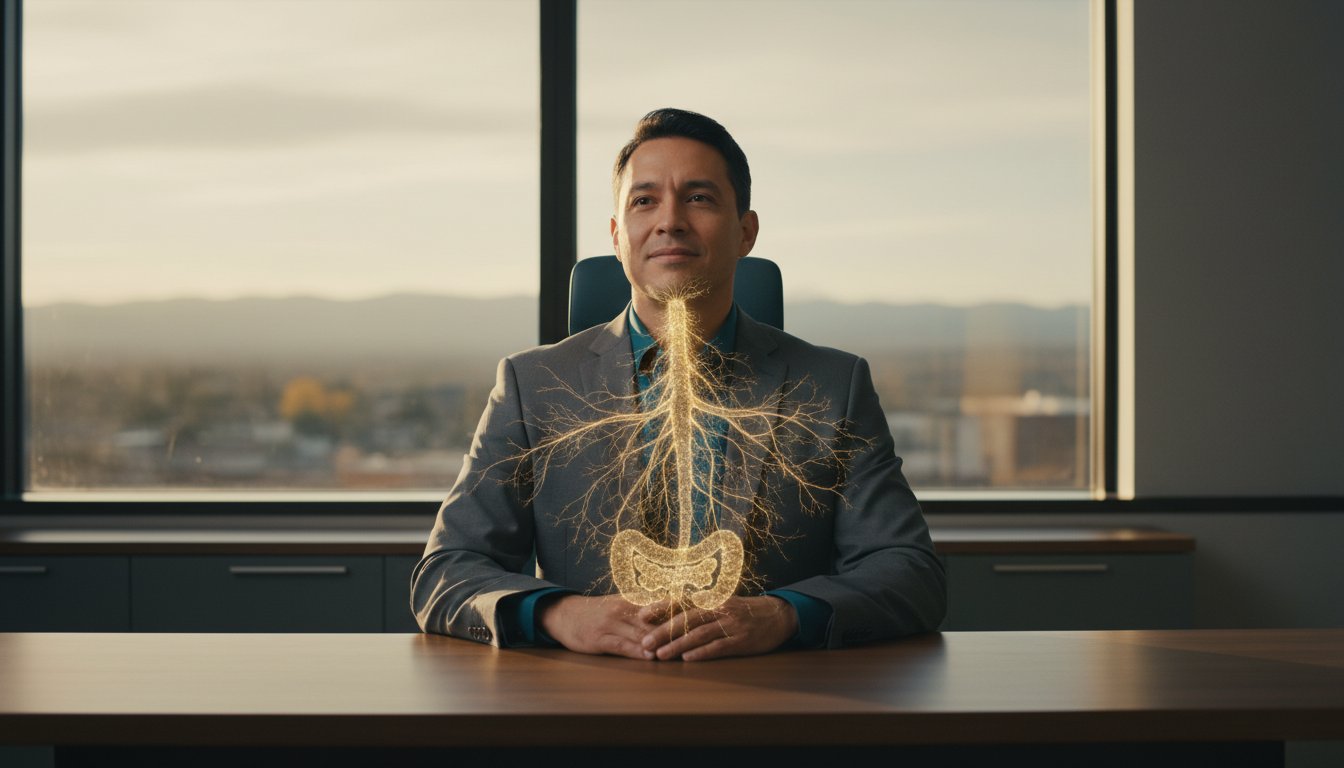
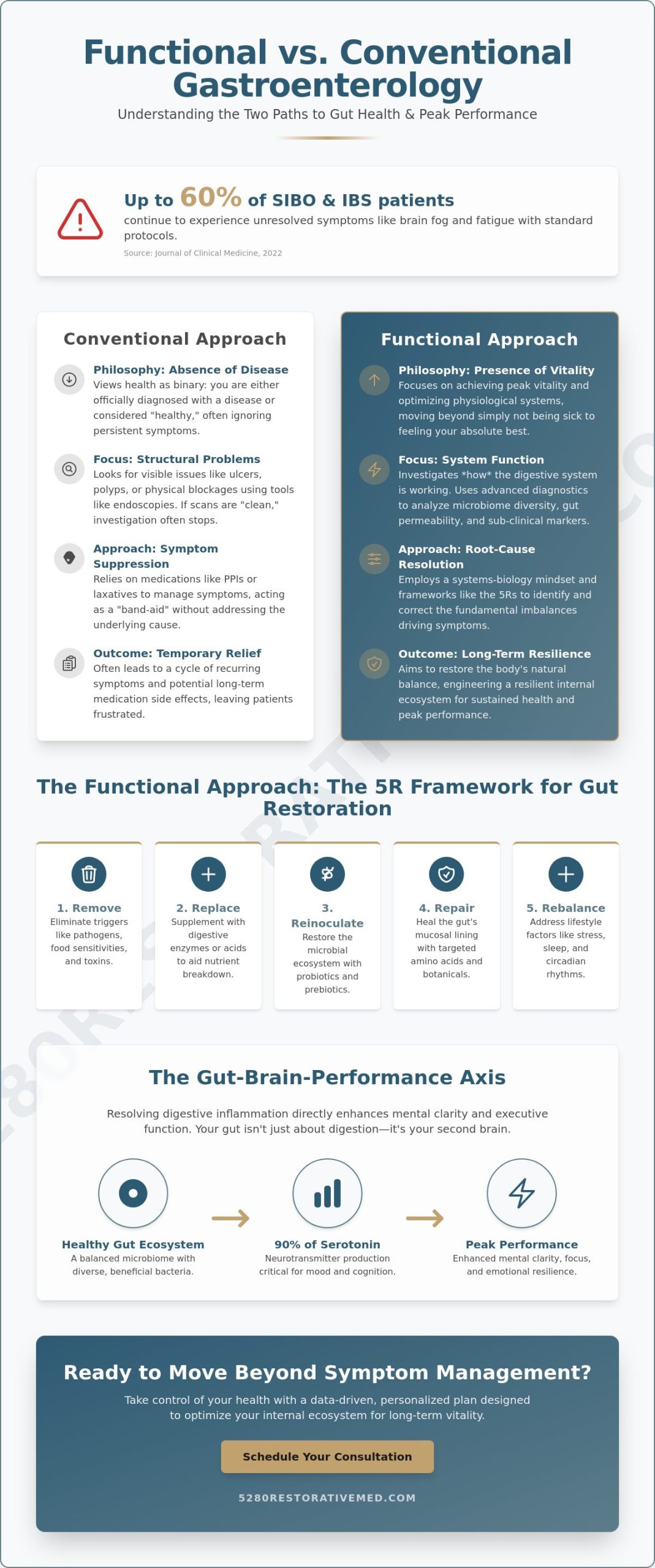
What if the persistent brain fog and afternoon fatigue you’re experiencing aren’t signs of aging, but direct signals from a digestive system in distress? You’ve likely spent years managing SIBO or IBS with standard protocols, yet a 2022 study in the Journal of Clinical Medicine found that up to 60% of patients with these conditions continue to experience unresolved symptoms. This is why many are turning to a functional gastroenterologist to move beyond the cycle of symptom-masking medications. It’s exhausting to feel like you’re just managing issues while your quality of life remains stagnant.
You deserve a path that leads to genuine restoration rather than just temporary relief. At 5280 Restorative Medicine, we focus on the intersection of gut health and systemic vitality to help you regain peak performance. By identifying the biological root causes of your discomfort, we create a strategy tailored to your unique physiology. This guide explains the functional GI framework and how a personalized, evidence-based plan can optimize your health for the long term.
Key Takeaways
- Understand how a functional gastroenterologist utilizes a systems-biology approach to identify root causes like dysbiosis rather than just managing surface-level symptoms.
- Discover the critical distinction between the conventional “absence of disease” model and a restorative philosophy that prioritizes peak vitality and metabolic health.
- Learn how advanced diagnostic testing moves beyond standard bloodwork to reveal the specific internal imbalances dictating your energy levels and cognitive performance.
- Explore the powerful gut-brain-performance axis to see how resolving digestive inflammation can directly enhance your mental clarity and executive function.
- See how personalized GI protocols at 5280 Restorative Medicine are designed to engineer long-term resilience and optimize your unique biological ecosystem.
Defining the Functional Gastroenterologist: A Systems-Biology Approach
You’ve likely visited a doctor for persistent bloating or abdominal pain only to be told your lab results are “normal.” This frustrating experience is where the expertise of a functional gastroenterologist becomes essential. While conventional gastroenterology focuses on structural abnormalities, such as identifying a 2-centimeter polyp or a bleeding ulcer, functional medicine looks at how the system is actually working. It’s the difference between checking if the plumbing is cracked and checking if the water chemistry is toxic. If a standard colonoscopy doesn’t reveal a physical hole or growth, traditional models often stop there, offering only symptom management.
The systems-biology approach views the gut as the central hub of your health. It acknowledges that your microbiome influences your brain, your immune system, and even your skin. Conventional medicine often misses sub-clinical dysfunction because it relies on broad reference ranges. For example, a fasting glucose level of 99 mg/dL is technically “normal” on a standard lab report, but a functional specialist recognizes this as a warning sign of metabolic drift. By utilizing advanced diagnostic tools, a gut health doctor near me identifies Functional gastrointestinal disorders (FGIDs) by analyzing intestinal permeability and microbiome diversity. This method uncovers why you feel unwell despite having “clean” scans.
The Shift from Symptom Suppression to Root-Cause Resolution
Relying on PPIs for acid reflux or laxatives for constipation often acts as a temporary band-aid. These medications don’t address why the acid is misplaced or why the motility has slowed. If you suppress stomach acid for years, you risk malabsorption of B12 and magnesium, which can lead to fatigue and bone density loss. We focus on an “upstream” approach to restore balance. This is achieved through the 5R framework, a clinical roadmap for lasting recovery:
- Remove: Eliminate triggers such as pathogens, food sensitivities, and environmental toxins.
- Replace: Supplement essential digestive enzymes or bile salts to support nutrient breakdown.
- Reinnoculate: Restore the microbial ecosystem with high-quality probiotics and prebiotic fibers.
- Repair: Use specific amino acids and botanicals to heal the delicate mucosal lining.
- Rebalance: Address lifestyle factors like circadian rhythms and the vagus nerve to maintain long-term harmony.
Who Benefits Most from a Functional GI Specialist?
This specialized care is vital for the 10-15% of the global population living with IBS or SIBO who haven’t found answers through standard care. It’s also a game-changer for high-performing executives who struggle with brain fog. Since 90% of the body’s serotonin is produced in the gut, digestive health directly dictates cognitive clarity and emotional resilience. Whether you’re dealing with undiagnosed discomfort or you simply want to optimize your microbiome for longevity, a functional approach provides the data-driven precision needed to move from basic survival to peak vitality. We don’t just want to return you to a baseline; we want to help you reach a superior state of health.
Functional vs. Conventional Gastroenterology: Comparing Diagnostic Philosophies
Standard gastroenterology excels at acute care. If you have a bleeding ulcer, an obstruction, or a late-stage pathology, the conventional model provides life-saving interventions. However, this system relies on a “binary” diagnostic philosophy. You’re either diseased or you’re healthy. This approach often leaves patients in a frustrating middle ground where they feel unwell, yet their labs fall within the standard reference range. A functional gastroenterologist views health differently. Instead of merely seeking the absence of disease, they focus on the presence of vitality and the optimization of physiological systems.
Conventional GI diagnostic tools, such as the standard endoscopy, are designed to find visible structural damage. While essential, these procedures have limitations. They often miss microscopic inflammation or subtle shifts in the mucosal barrier. Research suggests that up to 20% of patients with chronic digestive complaints receive “normal” results on traditional scopes because the tools aren’t looking for sub-clinical dysfunction. This is where restorative medicine steps in. We look beyond the surface to identify the underlying triggers of your symptoms. This clinical rigor extends to debunking popular wellness trends. For instance, many people turn to colon cleanses as a shortcut to health, but these often fail to address the root cause of dysbiosis or motility issues.
The Diagnostic Gap in Standard GI Care
“Everything looks normal” is one of the most disheartening phrases a patient can hear when they’re struggling with daily pain or bloating. This diagnostic gap exists because standard care rarely accounts for sub-clinical inflammation or the complex interplay of the gut-brain axis. We view the gut as the primary gateway to systemic health. Since roughly 70% of the immune system resides in the gut tissue, a minor imbalance in the microbiome can trigger symptoms far beyond the digestive tract, including brain fog, joint pain, and skin flare-ups. A functional gastroenterologist uses advanced testing to map these connections, ensuring no detail is overlooked.
Personalized Nutrition vs. One-Size-Fits-All Diets
Generic dietary advice often fails because it ignores bio-individuality. While the low-FODMAP diet is a valuable clinical tool for managing SIBO or IBS, it’s a short-term intervention, not a permanent lifestyle. Restricting fermentable carbohydrates for too long can actually starve beneficial bacteria, leading to further imbalances. Our approach prioritizes restorative nutrition tailored to your specific enzymatic needs and nutrient absorption patterns. We integrate this with essential lifestyle medicine, such as:
- Circadian Biology: Aligning meal times with natural sleep-wake cycles to optimize motility.
- Stress Modulation: Utilizing Vagus nerve stimulation to move the body from “fight or flight” into “rest and digest” mode.
- Sleep Hygiene: Ensuring 7 to 9 hours of quality rest to allow the gut lining to repair itself overnight.
True recovery requires more than a prescription; it requires a partnership. If you’re ready to move past temporary fixes and achieve lasting wellness, you can explore our personalized restoration plans to see how we bridge the gap between science and vitality.
Advanced Diagnostic Testing: Moving Beyond Standard Bloodwork
If your routine labs show “normal” results but you still feel bloated, fatigued, and uncomfortable, you aren’t alone. Standard blood panels often fail to capture the subtle physiological imbalances that a functional gastroenterologist prioritizes. At 5280 Restorative Medicine, we use specialized functional labs to uncover the biological “why” behind your symptoms. This process shifts the focus from mere symptom management to true physiological restoration.
Your gut microbiome controls far more than digestion; it’s a primary driver of your metabolic health. Research indicates that a lack of microbial diversity can significantly increase the risk of insulin resistance and metabolic dysfunction. By analyzing your internal garden, we identify hidden barriers to health like mast cell activation syndrome. This condition often mimics standard GI issues but requires a specific, targeted approach to calm systemic inflammation and achieve peak performance. We also incorporate genetic analysis to refine your strategy. By looking at markers related to methylation and detoxification, we create personalized nutrition and supplement protocols that respect your unique biology.
Comprehensive Stool Analysis and Microbiome Mapping
We utilize DNA-based stool testing to gain an exact inventory of your gut’s ecosystem. This goes beyond looking for basic infections. We measure markers of intestinal immune function, fat absorption, and the presence of fungi or parasites. Understanding this diversity is essential for longevity. A healthy gut requires a balanced variety of beneficial bacteria to produce short-chain fatty acids, which protect your colon and boost your daily energy levels.
SIBO Breath Testing and Intestinal Permeability
Chronic gas and motility issues are frequently caused by Small Intestinal Bacterial Overgrowth (SIBO). This occurs when bacteria migrate to the small intestine where they don’t belong, fermenting food prematurely. A functional gastroenterologist uses non-invasive breath testing to measure hydrogen and methane gases, providing a clear roadmap for treatment. We also test for “Leaky Gut” using zonulin markers. When the intestinal barrier is compromised, it can trigger systemic autoimmunity. Identifying this permeability is a vital step for anyone dealing with chronic inflammatory symptoms or brain fog.
- Precision: DNA-based mapping identifies pathogens that standard cultures miss.
- Clarity: Breath tests provide a 90-minute window into your small intestinal health.
- Action: Genetic data ensures your supplement protocol is optimized for your DNA.
The Gut-Brain-Performance Axis: Why Digestive Health Dictates Executive Vitality
High-stakes decision-making requires more than just a sharp mind; it demands a resilient gut. Your enteric nervous system contains over 100 million nerve cells, creating a complex neural network that rivals the spinal cord in complexity. This “second brain” constantly communicates with your cranium via the vagus nerve. When gut inflammation occurs, this communication pathway becomes a source of cognitive interference rather than clarity. A functional gastroenterologist views this connection as the foundation of any comprehensive executive health program. By stabilizing the gut environment, you effectively lower systemic stress and clear the cognitive haze that often limits professional output.
Neurotransmitters and the Microbiome
Your gut produces approximately 90% of your body’s serotonin and 50% of its dopamine. These chemicals don’t just regulate digestion; they dictate your mood, focus, and resilience under pressure. When microbial imbalances occur, the resulting neurochemical shifts can manifest as irritability or sudden drops in concentration during critical meetings. Restoring your microbiome balance ensures a steady supply of these vital compounds. This optimization leads to enhanced mental clarity and the sustained professional stamina needed to lead effectively throughout a ten-hour workday. You’ll find that your ability to manage stress improves when your gut bacteria are in a state of balance.
Mitochondrial Health and Nutrient Absorption
Peak performance relies on cellular energy. Mitochondria, the powerhouses of your cells, are highly sensitive to gut-derived inflammation. If your intestinal lining is compromised, inflammatory markers enter the bloodstream and trigger mitochondrial dysfunction. This leads to the physical “crash” many executives feel by mid-afternoon. You aren’t just what you eat; you’re what you absorb. A functional gastroenterologist identifies the specific malabsorption issues preventing you from utilizing key micronutrients like magnesium and B12. Correcting these deficiencies fuels your high-performance lifestyle at a cellular level, ensuring you maintain a competitive edge without relying on temporary stimulants.
Ready to optimize your cognitive and physical performance? Discover how our personalized protocols can restore your vitality today.
Optimizing Your Internal Ecosystem with 5280 Restorative Medicine
Traditional medicine often treats the body as a collection of isolated parts. We don’t. At 5280 Restorative Medicine, we engineer metabolic resilience by addressing the complex interactions within your GI tract. Choosing a functional gastroenterologist means you’re opting for a clinical partner who prioritizes depth over speed. Our boutique model eliminates the rushed feel of standard clinics, providing the time necessary to uncover why your system is underperforming. We integrate these insights into a broader framework of functional medicine for high-performers, where gut health serves as the foundation for cognitive clarity and physical endurance.
The path forward begins with a comprehensive assessment of your unique physiology. We move beyond generic advice, focusing instead on a highly personalized journey toward restoration and optimization. You can expect a collaborative environment where your data drives every decision, ensuring that your health strategy is as ambitious as your professional goals.
Engineering a Custom Health Protocol
Every patient’s microbiome is as unique as their fingerprint. We don’t rely on guesswork or broad-spectrum solutions. Instead, we combine advanced diagnostics, such as DNA-based stool analysis and intestinal permeability screenings, with sustainable lifestyle engineering. Your protocol might include clinical-grade supplement regimens designed to repair the gut lining or targeted probiotics to rebalance microbial diversity. We monitor your progress through 90-day data cycles, making precise adjustments based on your evolving labs. This iterative process ensures long-term success rather than a temporary fix. We focus on cellular health to ensure your gut can effectively fuel your entire body.
Virtual Consultations for National Accessibility
Distance shouldn’t be a barrier to elite medical care. 5280 Restorative Medicine serves high-performers across the United States through a sophisticated telehealth platform. We ship functional testing kits directly to your door, allowing you to collect samples in the privacy of your home. During your initial consultation, we’ll spend 60 to 90 minutes reviewing your history and lab results. This deep dive allows us to identify the root cause of your fatigue or digestive distress. It’s time to reclaim your vitality and performance with a partner who is deeply invested in your individual success. Whether you’re in Denver or a thousand miles away, our goal remains the same: helping you reach a superior state of health that lasts for decades.
Elevate Your Health Through Precision Science
Your digestive health shouldn’t be a barrier to your professional success or personal well-being. By moving beyond the standard bloodwork of conventional medicine, a functional gastroenterologist looks at the complex systems-biology of your body to identify exactly why symptoms occur. At 5280 Restorative Medicine, Dr. Marci Catallo-Madruga utilizes advanced metabolic and genetic testing to provide precise data regarding your internal ecosystem. These specialized protocols are designed specifically for executives and high-performers who require peak mental clarity and physical stamina every day.
You don’t have to settle for “normal” lab results when your performance suggests your system is out of balance. True health restoration focuses on the gut-brain-performance axis to ensure your biology supports your highest ambitions. We use evidence-based interventions to move you past a simple baseline and toward a superior state of health. Your journey to lasting vitality starts with a commitment to understanding your body’s unique requirements. We’re here to guide you toward the longevity and energy you deserve.
Frequently Asked Questions
What is the difference between a gastroenterologist and a functional gastroenterologist?
A traditional specialist focuses on managing acute symptoms or identifying structural diseases through procedures like colonoscopies. In contrast, a functional gastroenterologist looks at how the digestive system interacts with other bodily systems to find the root cause of dysfunction. This approach moves beyond just ruling out disease to optimizing cellular health and microbial balance for long term vitality.
Can a functional gastroenterologist help with IBS when other doctors can’t?
Yes, because we look for the underlying triggers that standard tests often miss. While conventional medicine might label IBS as a “functional disorder” with no clear cause, we use advanced diagnostics to identify issues like Small Intestinal Bacterial Overgrowth (SIBO). Research from the World Gastroenterology Organisation indicates that 10 to 15 percent of the global population suffers from IBS, and many find relief only after addressing these hidden bacterial imbalances.
What kind of tests does a functional GI specialist run?
We utilize advanced diagnostic tools like the GI-MAP stool test and the Trio-smart breath test to measure microbial DNA and gas production. These tests provide 90 percent more detail than standard hospital cultures by identifying specific pathogens, parasites, and markers of intestinal permeability. We also evaluate nutrient absorption and inflammatory markers to create a personalized restoration plan for your unique biology.
Does a functional gastroenterologist prescribe medication?
A functional gastroenterologist prescribes pharmaceutical medications when necessary, but they’re typically part of a larger integrative strategy. If you have a bacterial infection, we might use targeted antibiotics alongside high potency probiotics and lifestyle changes. Our goal is to use the most effective tool available to restore your vitality, whether that’s a traditional prescription or a clinical grade botanical supplement.
How does gut health affect my energy levels and focus?
Your gut produces about 95 percent of your body’s serotonin, which directly regulates mood and sleep cycles. When your microbiome is imbalanced, it triggers systemic inflammation that crosses the blood-brain barrier and slows down mitochondrial function. This process often results in the persistent fatigue and mental fog that many of our patients experience before they begin their gut optimization journey.
Will I have to be on a restricted diet forever with a functional approach?
You won’t be on a restrictive diet indefinitely because the goal is to heal your gut so you can enjoy a diverse range of foods again. Most patients follow a therapeutic protocol for 4 to 12 weeks to reduce inflammation and allow the intestinal lining to repair. Once we achieve cellular restoration, we systematically reintroduce foods to determine your long term food blueprint for peak performance.
Is functional gastroenterology evidence-based?
Functional gastroenterology is rooted in peer-reviewed science and the latest clinical research from institutions like the Institute for Functional Medicine. We rely on the principles of systems biology to understand how different organs interact. Studies published in journals like Gastroenterology and Hepatology confirm that addressing the microbiome and gut barrier function is essential for long term health and disease prevention.
How do I know if my gut issues are causing my brain fog?
Brain fog is often a direct symptom of intestinal permeability, frequently called “leaky gut,” where toxins enter the bloodstream and impact the brain. We measure levels of zonulin, a protein that regulates tight junctions in the gut lining, to confirm this connection. When zonulin levels are elevated, it’s a clear indicator that your gut issues are driving the neuroinflammation responsible for your lack of focus.