
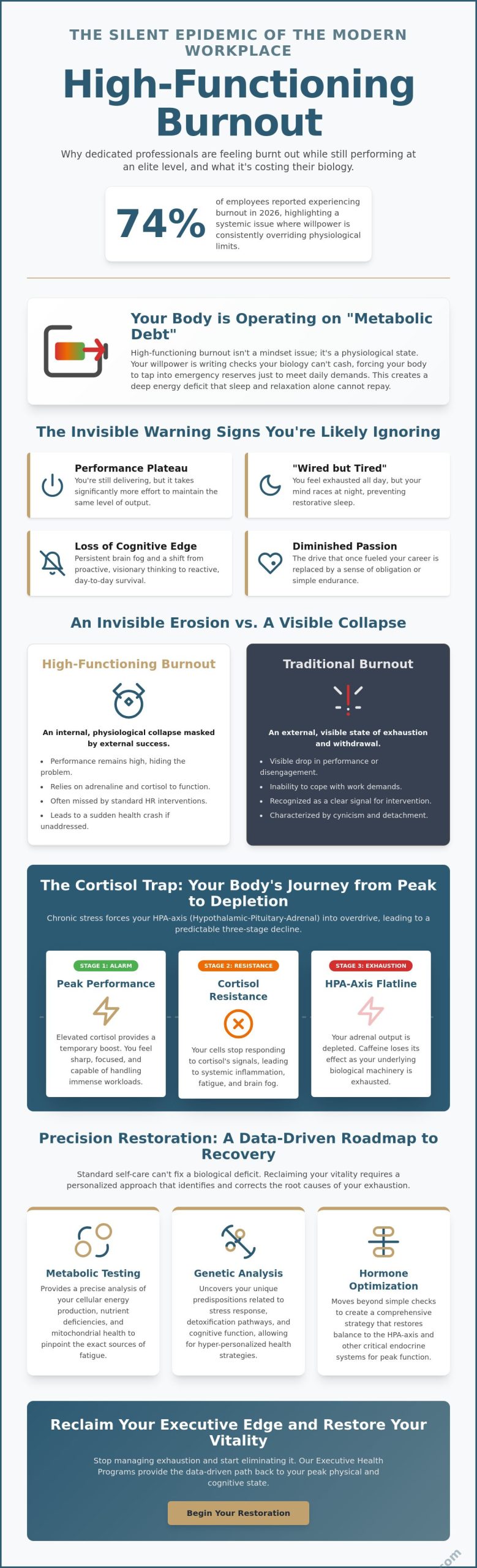
With 74% of employees reporting burnout in 2026, it’s clear that the modern workplace is pushing human biology to its limits. You are likely feeling burnt out but still performing at work, delivering high-stakes presentations and hitting deadlines while relying on a third cup of coffee just to clear the morning fog. It’s a common paradox for high-achievers. You’ve mastered the art of the “push,” yet you find yourself exhausted despite a full night’s sleep and losing the passion that once fueled your career. You aren’t failing; your biology is simply being overdrawn.
We believe that high-functioning burnout is a physiological “metabolic debt” where your willpower is outspending your physical resources. This article will show you how to reclaim your cognitive edge and eliminate chronic fatigue through data-driven precision functional medicine. We’ll explore how metabolic testing, genetic analysis, and personalized hormone optimization can identify the root causes of your exhaustion. You’ll learn how to restore your peak performance and find a path back to health without the need to quit your job or settle for a life of “just getting by.”
Key Takeaways
- Recognize high-functioning burnout as a physiological state. It’s a condition where your willpower outspends your biological resources.
- Discover why feeling burnt out but still performing at work creates a deep “metabolic debt” that traditional self-care cannot repay.
- Understand how chronic stress impacts the HPA-axis. This disruption causes the persistent brain fog and exhaustion that hinder your executive performance.
- Explore how precision tools like metabolic testing and genetic analysis provide a data-driven roadmap to restore your vitality.
- Learn how bespoke Executive Health Programs can optimize your health and return you to a superior state of physical function.
What is High-Functioning Burnout? Performing While Empty
You’ve likely spent years perfecting the ability to push through. When you’re feeling burnt out but still performing at work, it’s easy to convince yourself that everything is fine. After all, the numbers are up and the team is hitting targets. However, high-functioning burnout is a deceptive state where professional excellence masks an internal physiological collapse. You are essentially operating on a deficit, using sheer willpower to bridge the gap between your declining baseline energy and the demands of your position.
While occupational burnout is widely recognized as a syndrome resulting from chronic workplace stress, the high-functioning variant is particularly dangerous because it’s invisible to colleagues and family. This creates what we call the “Willpower Gap.” To close this gap, your body relies on a constant stream of adrenaline and cortisol to maintain output. You aren’t thriving; you’re redlining your biology to keep the engine from stalling. This reliance on stress hormones provides a false sense of security while your metabolic health quietly erodes.
The Symptoms You Are Likely Ignoring
Because you’re still performing at work, you might dismiss early warning signs as the typical price of success. One of the most common indicators is the “wired but tired” pattern. You feel physically and mentally drained throughout the afternoon, yet your mind races the moment your head hits the pillow at night. You might also notice a subtle shift in your leadership style. Instead of proactive, visionary thinking, you find yourself in a state of reactive survival. You’re no longer strategizing for next year; you’re just trying to survive the next meeting.
High-Functioning vs. Traditional Burnout
Traditional burnout often results in a visible collapse, such as an inability to get out of bed or a total withdrawal from professional duties. High-functioning burnout is an invisible erosion. Most standard HR interventions miss these cases because the individual’s performance remains high, even as their internal health markers plummet. This often leads to a “performance plateau.” You continue to deliver, but the effort required to stay at that level becomes unsustainable. Without intervention, this plateau eventually leads to a sudden health crash that can take months or years to recover from. Recognizing this state early is the first step toward reclaiming your health and your edge.
The Biological Cost: Why Your Body is “Out of Budget”
When you are feeling burnt out but still performing at work, your body is effectively operating in a state of “metabolic debt.” Think of your cellular energy as a financial budget. In a healthy state, your mitochondria produce enough adenosine triphosphate (ATP) to cover your daily cognitive and physical expenditures. However, chronic high-performance stress forces your cells to spend more energy than they can produce. To cover this shortfall, your body taps into its biological reserves, leading to systemic depletion that a simple weekend of rest cannot fix.
The primary driver of this energy crisis is the Hypothalamic-Pituitary-Adrenal (HPA) axis. This complex feedback loop governs your response to stress by regulating the release of cortisol and adrenaline. While these hormones are essential for short-term “fight or flight” scenarios, the sustained pressure of an executive career keeps the HPA axis in a state of perpetual activation. This systemic strain is so significant that the Surgeon General’s Advisory on Health Worker Burnout has highlighted the profound impact of such chronic stressors on long-term health and professional sustainability. Over time, this constant demand causes your “cellular batteries,” the mitochondria, to lose their efficiency, meaning they stop recharging even when you are technically off the clock.
The Cortisol Trap: From Peak to Depletion
In the early stages of high-functioning burnout, elevated cortisol provides a temporary performance boost. You feel sharp, focused, and capable of handling immense workloads. But long-term elevation eventually leads to “cortisol resistance,” where your cells stop responding to the hormone’s signals. This triggers systemic inflammation and a transition into the “flatline” phase. At this point, caffeine and other stimulants lose their effectiveness because your underlying biological machinery is too exhausted to respond. HPA-axis dysfunction is a primary driver of executive exhaustion. If you feel like you are pushing against an invisible wall, a Functional Medicine Consultation can help identify these specific hormonal imbalances before they lead to a total crash.
Oxidative Stress and Cognitive Decline
High-performance stress does more than just drain your energy; it creates “biological rust” through a process called oxidative stress. When your metabolism is overworked, it produces an excess of free radicals that damage delicate brain tissues. This is the physiological root of the “brain fog” that many high-performers experience during critical meetings. You might find it harder to recall specific data or maintain the mental clarity required for complex decision-making. Standard blood work often misses these nuances because it typically looks for disease states rather than sub-optimal function. We utilize advanced metabolic testing to see “under the hood,” identifying the oxidative markers and nutrient deficiencies that traditional labs overlook.
Why Standard Self-Care Fails the High-Performer
If you are feeling burnt out but still performing at work, you’ve likely been told that a week at the beach or a few yoga classes will solve the problem. While these activities are beneficial for general stress management, they are insufficient for the high-performer facing a deep metabolic crisis. A seven-day vacation cannot repay a year of metabolic debt. When your cellular energy production is compromised, temporary rest only provides a brief reprieve before the cycle of exhaustion begins again upon your return to the office.
Generic lifestyle advice often fails because it ignores the complex physiological disruptions occurring within your body. Common suggestions like “eating healthy” are too vague for someone experiencing severe gut-brain axis disruption or nutrient malabsorption caused by chronic stress. Extensive research on the consequences of burnout highlights how prolonged occupational pressure leads to psychosomatic symptoms and cognitive impairment that require more than just a change in diet. High-performers need a clinical, data-driven approach that addresses the specific biological imbalances preventing their recovery.
The Paradox of High-Intensity Recovery
Many executives apply the “work hard, play hard” mentality to their fitness routines, opting for high-intensity interval training (HIIT) or heavy lifting to blow off steam. However, if your adrenals are already taxed, intense exercise can actually worsen high-functioning burnout by further elevating cortisol and depleting your remaining energy reserves. This creates a state where your attempts at recovery are actually driving you deeper into exhaustion. Utilizing functional medicine allows us to identify your individual biological limits, ensuring your movement supports restoration rather than further depletion.
The Stimulant Cycle: Caffeine, Alcohol, and Sleep Aids
To maintain peak output while feeling burnt out but still performing at work, many high-achievers turn to external chemistry. You might use caffeine to “finance” your morning meetings and alcohol or sleep aids to force a shutdown at night. This cycle destroys your sleep architecture, preventing the deep, restorative phases of sleep necessary for cognitive repair. Over time, these substances mask the underlying fatigue while your biological debt continues to grow. Breaking this cycle isn’t about sheer willpower or quitting cold turkey; it’s about restoring the underlying biological pathways so your body can once again produce and manage its own energy naturally.
Precision Restoration: A Data-Driven Roadmap to Recovery
Recovery for the high-achiever isn’t found in a spa; it’s found in the laboratory. When you’re feeling burnt out but still performing at work, your external success often blinds you to internal failures. To fix what’s broken, we must first see what’s happening under the hood. Precision restoration begins with advanced diagnostics that move beyond the surface-level checks of a standard physical. By utilizing Genetic Analysis, we can understand your unique stress tolerance and how your body processes environmental pressures. This data-driven approach removes the guesswork, allowing us to build a roadmap based on your specific biological markers.
Personalized nutrition and supplement protocols are the next pillars of this journey. We don’t believe in generic “wellness” stacks. Instead, we use your data to identify precise nutrient deficiencies and metabolic bottlenecks. If you’re feeling burnt out but still performing at work, your body is likely struggling with specific gaps in its biochemical pathways. By filling these gaps with clinical precision, we restore your baseline resilience, allowing you to maintain your professional edge without sacrificing your long-term health.
Measuring the Damage: Advanced Diagnostics
Standard lab results usually confirm that you aren’t “diseased,” but they rarely tell you if you’re optimized. High-performers often fall into a clinical “no man’s land” where their markers are within range but far from ideal. We track specific biomarkers to identify systemic strain:
- C-Reactive Protein (CRP) to measure underlying systemic inflammation.
- Fasting Insulin to assess metabolic efficiency and energy stability.
- DHEA-S to evaluate the current state of your adrenal reserves.
Our approach to metabolic testing identifies the exact “leaks” in your energy production. We focus on “optimal” functional ranges rather than just “normal” ones, ensuring your body has the resources to meet the demands of your career.
Bio-Optimization Tools for Burnout
Once we’ve identified the deficiencies, we deploy targeted bio-optimization tools to accelerate recovery. For many, mitochondrial support is the priority. We utilize red light therapy to stimulate cellular repair and boost ATP production. We also look at cellular energy precursors like NAD+ to restore cognitive clarity and mental stamina. In cases where the HPA-axis has significantly flatlined, BHRT can stabilize a crashing system. This isn’t about a temporary fix; it’s about engineering a biology that can sustain high-level output without the risk of collapse. You don’t have to wait for a total health crisis to start your recovery. If you’re ready to stop guessing and start optimizing, schedule a Functional Medicine Consultation today to begin your data-driven journey back to peak performance.
Reclaiming Your Vitality with 5280 Restorative Medicine
You’ve built your career on the ability to deliver results under pressure. However, when you’re feeling burnt out but still performing at work, the very drive that made you successful can become your greatest biological liability. At 5280 Restorative Medicine, we don’t ask you to step down or lower your ambitions. Instead, we partner with you to engineer a physiology that can actually sustain the rigors of high-level leadership. Our Executive Health Programs are designed specifically for the high-achiever who requires a sophisticated, data-driven approach to health that matches their professional standard.
We focus on sustainable performance by moving beyond the temporary fixes of traditional medicine. By addressing the root causes of your exhaustion, we help you build a body that doesn’t just survive the boardroom but thrives in it. This transition from reactive survival to proactive vitality is essential for protecting your long-term health markers while maintaining your competitive edge. We believe that your health should be an asset that compounds over time, not a resource you slowly deplete in exchange for professional gains.
The 5280 Restoration Protocol
Our journey begins with a comprehensive assessment that goes far deeper than a standard physical. Under the expert guidance of Dr. Marci Catallo-Madruga, we analyze your unique metabolic and genetic data to identify the specific drivers of your fatigue. Once we have a clear picture of your internal landscape, we develop a personalized protocol that may include Hormone Optimization, bespoke Supplement Protocols, and nutritional counseling. We then move into a phase of ongoing optimization, where we fine-tune your program to ensure you are consistently exceeding your baseline performance. Because we operate as a boutique clinical practice, new client openings are limited each quarter to ensure every individual receives personal attention. For those with demanding schedules, we offer virtual consultations nationwide, providing the same high-end care regardless of your location.
Engineering Long-Term Resilience
The ultimate goal of restorative medicine isn’t just the absence of illness; it’s the achievement of a superior state of function. If you’re feeling burnt out but still performing at work, you’ve already proven your resilience. Our role is to provide the biological infrastructure to support that resilience for decades to come. We help you protect your cognitive sharpness and physical stamina by monitoring the markers that matter most to your long-term health. By treating your biology as a high-performance system, we ensure you can continue to lead with clarity and energy without the fear of a sudden health crash. It’s time to stop managing your symptoms and start investing in your metabolic future. Book a consultation to reclaim your metabolic health and discover what’s possible when your biology finally matches your ambition.
Engineering Your Biological Comeback
High-functioning burnout isn’t a character flaw or a temporary mental block. It’s a measurable physiological state of metabolic debt where your cellular resources have been overdrawn. If you’re feeling burnt out but still performing at work, you’ve already demonstrated incredible resilience. Now, it’s time to apply that same high-level strategy to your health. By moving beyond generic wellness and utilizing precision tools like genetic analysis and metabolic testing, you can identify the exact biological leaks draining your stamina.
At 5280 Restorative Medicine, we specialize in helping high-achievers navigate this recovery without stepping away from their careers. Led by Dr. Marci Catallo-Madruga, our practice utilizes data-driven metabolic and genetic protocols tailored specifically for high-performance lifestyles. We don’t just aim for the absence of fatigue; we strive for a superior state of physical and mental function. You deserve a biology that matches your ambition.
Reclaim your edge with a personalized Executive Health Program and start your journey toward sustainable, long-term vitality today. Peak performance is achievable at any stage of life when you have the right data and a dedicated partner in your health.
Frequently Asked Questions
Can I recover from burnout while still working a high-pressure job?
Yes, recovery is possible without resigning or stepping down from your position. Functional medicine focuses on building biological resilience so your body can handle the demands of your career. By optimizing your metabolic health and balancing your HPA-axis, we help you transition from surviving to thriving. This approach allows you to maintain your professional edge while your internal systems repair themselves. It’s about engineering a body that is durable enough for your lifestyle.
What is the difference between being tired and being clinically burnt out?
Normal tiredness is usually resolved with a weekend of rest or a few early nights. Clinical burnout is a state of chronic physiological depletion where your cellular energy production has flatlined. If you’re feeling burnt out but still performing at work, your fatigue is likely systemic rather than just situational. You might experience persistent brain fog, emotional detachment, and a “wired but tired” sensation that sleep simply doesn’t fix.
Why do my standard blood tests come back “normal” if I feel so exhausted?
Standard blood tests are designed to find diseases, not to optimize performance. Most “normal” ranges are based on a broad population average, which includes individuals who are far from healthy. We look at optimal functional ranges and advanced biomarkers like fasting insulin and DHEA-S. These labs reveal the subtle metabolic “leaks” and hormonal imbalances that traditional screenings miss, providing a clearer picture of your actual energy capacity.
How long does it typically take to see results with metabolic restoration?
Most clients begin to notice improvements in mental clarity and sleep quality within the first four to six weeks. However, complete biological restoration is a journey that typically takes three to six months. This timeline allows your hormones to stabilize and your mitochondria to regain efficiency. We monitor your progress through regular assessments to ensure your protocol is effectively closing your metabolic debt and restoring your baseline vitality.
Is hormone optimization safe for high-performers struggling with stress?
Yes, when managed through a personalized, data-driven approach, hormone optimization is both safe and effective. Chronic stress often depletes essential hormones like testosterone or progesterone, leaving you vulnerable to further exhaustion. We use Bioidentical Hormone Replacement (BHRT) to restore these levels to their optimal functional state. This stabilization helps protect your system from the biological damage of high-cortisol environments while supporting your cognitive and physical stamina.
What specific supplements help with high-functioning burnout?
There is no universal “burnout pill,” as the right supplements depend on your specific deficiencies. We often utilize adaptogens like ashwagandha or rhodiola to support the HPA-axis and cellular energy precursors like NAD+ for mitochondrial repair. However, we only recommend these after metabolic testing. This ensures you are taking exactly what your body needs to bridge its energy gap rather than relying on generic, over-the-counter wellness stacks.
How does functional medicine differ from traditional burnout therapy?
Traditional therapy primarily addresses the psychological and emotional aspects of stress management. Functional medicine treats the underlying physiological collapse that often precedes or accompanies those feelings. If you’re feeling burnt out but still performing at work, your primary issue might be metabolic rather than just mental. We focus on gut health, hormone balance, and cellular energy to fix the “hardware” of your body so your mind can function.
What happens if I ignore high-functioning burnout for too long?
Ignoring these signs often leads to a sudden and severe health crash. What starts as brain fog and chronic fatigue can escalate into cardiovascular issues, autoimmune triggers, or a total breakdown of the HPA-axis. When you redline your biology indefinitely, the cost of recovery becomes significantly higher. Addressing the root cause early prevents these long-term consequences and ensures you can maintain your leadership role without sacrificing your physical future.