
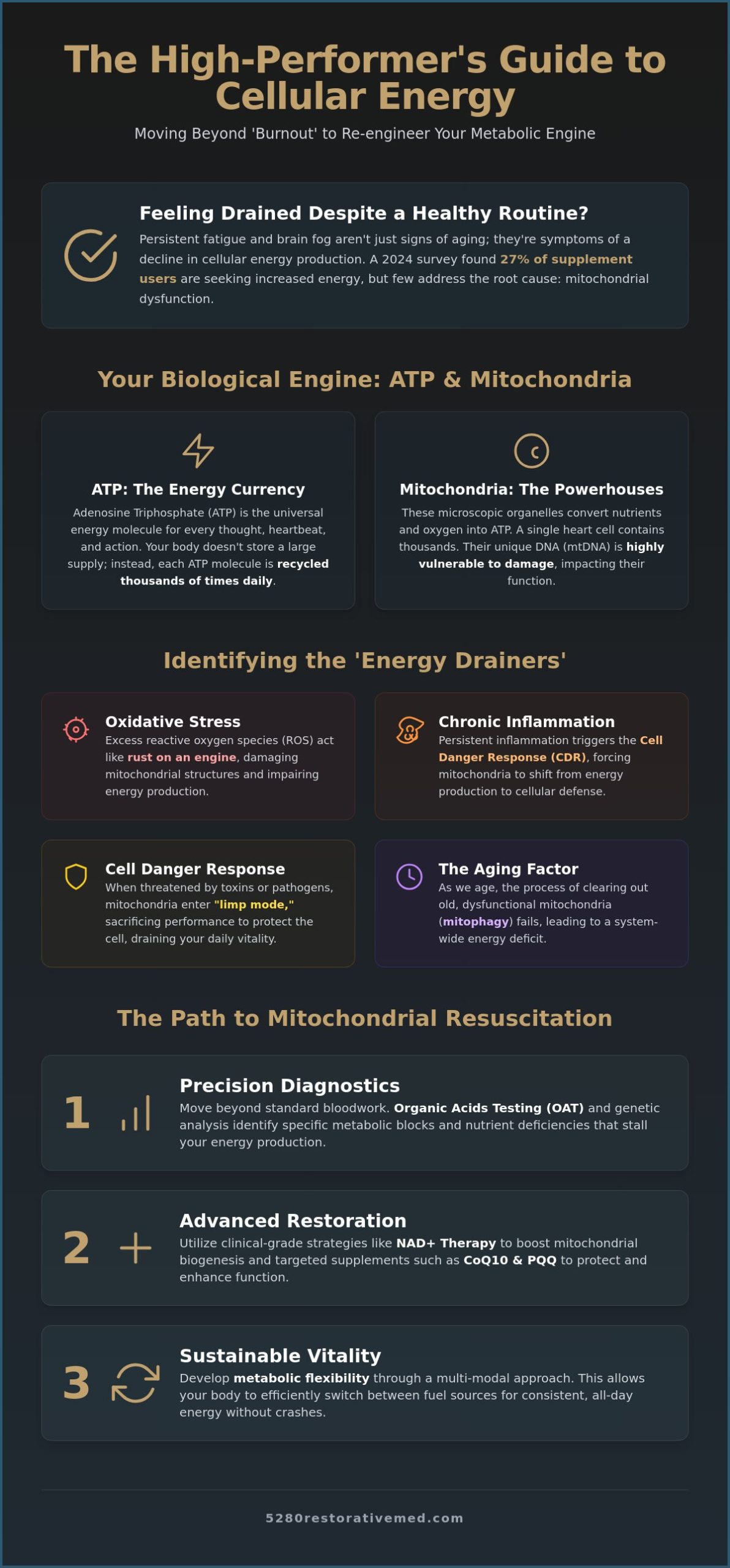
What if the persistent fatigue you’re feeling isn’t an inevitable sign of aging, but a measurable deficit in your metabolic output? You likely find yourself reaching for an extra shot of caffeine to clear the brain fog during high-stakes decisions; however, you’ve noticed your body isn’t responding like it used to. When you’re searching for how to improve cellular energy production, you’re really looking for a way to repair the biological engine rather than just refilling the tank. A 2024 survey by the Council for Responsible Nutrition found that 27% of supplement users are chasing this same goal of increased energy, yet few achieve the sustainable results that come from clinical precision.
It’s frustrating to feel like you’re operating at half-capacity despite following a standard wellness routine. We believe your health should be a proactive journey toward peak performance, not just a reactive response to exhaustion. You’re about to discover how to optimize your mitochondria using advanced functional medicine strategies and precision diagnostics. This guide previews the data-backed protocols, including metabolic testing and genetic analysis, that allow you to move past “normal” biomarkers and reclaim the cognitive clarity and all-day energy required for an elite lifestyle.
Key Takeaways
- Understand the fundamental role of ATP and why your mitochondria serve as the biological engines for every thought and physical action.
- Identify hidden energy drainers like oxidative stress and chronic inflammation that act as parasites on your cellular resources and diminish performance.
- Learn how to improve cellular energy production by moving beyond standard bloodwork to advanced diagnostics like Organic Acids Testing to find specific metabolic blocks.
- Discover the clinical synergy of NAD+ therapy and targeted supplement protocols, including CoQ10 and PQQ, to resuscitate mitochondrial function at the source.
- Develop metabolic flexibility through a multi-modal approach that allows your body to efficiently switch between fuel sources for sustained, all-day vitality.
Understanding the Bioenergetic Foundation: ATP and Your Mitochondria
Every biological action you take, from a rhythmic heartbeat to a complex executive decision, relies on a single molecule: Adenosine Triphosphate (ATP). Think of ATP as the universal energy currency of your body. Without a steady supply, cellular processes simply stall. Understanding how to improve cellular energy production requires a deep dive into the specialized organelles known as mitochondria. These microscopic powerhouses are responsible for converting the oxygen you breathe and the nutrients you eat into the ATP your body demands for every second of existence.
In high-performance organs like the brain and heart, mitochondrial density is exceptionally high. A single heart cell can contain thousands of these organelles to meet its relentless energy needs. When you feel “tired” despite getting eight hours of sleep, it’s rarely just a matter of rest. Often, you’re experiencing mitochondrial dysfunction. Your cells are struggling to generate the power required for peak biological performance; this leads to that characteristic heavy-limbed fatigue and persistent mental fog that standard stimulants can’t fix.
The ATP Recycling Process: Why Efficiency Matters
Your body doesn’t actually store a massive surplus of energy. Instead, it relies on a rapid-fire recycling system. A single molecule of ATP is recycled thousands of times every single day. It’s a constant cycle of charging and discharging. If this cycle becomes inefficient due to nutrient deficiencies or metabolic blocks, your system begins to experience “brownouts.” This systemic inefficiency is what many high-performers mistake for standard burnout. At its root, it’s a failure of the cellular recycling plant to keep pace with your lifestyle demands.
Mitochondrial DNA: The Vulnerable Blueprint
One of the most fascinating aspects of what are mitochondria is that they possess their own unique DNA (mtDNA), which is entirely separate from the DNA found in your cell’s nucleus. This blueprint is incredibly vulnerable. Unlike nuclear DNA, mtDNA lacks the robust protective proteins and repair mechanisms needed to shield it from oxidative damage and environmental toxins. When this blueprint is compromised, the engines begin to misfire. Protecting and optimizing this genetic foundation is a critical pillar of functional health and wellness. By focusing on the integrity of your mitochondrial DNA, you take the first step toward reversing age-related decline and discovering how to improve cellular energy production at the source.
Identifying the ‘Energy Drainers’: Why Cellular Production Stalls
Achieving peak vitality isn’t just about adding more fuel; it’s about identifying the biological parasites that drain your existing resources. If you’re investigating how to improve cellular energy production, you must first address the “energy drainers” that cause your metabolic engine to stall. One of the primary culprits is the overproduction of reactive oxygen species (ROS), which leads to systemic oxidative stress. While some ROS is a natural byproduct of energy synthesis, an excess acts like rust on an engine, damaging the very structures meant to produce power.
Research on Mitochondria and health highlights how these organelles are highly sensitive to their environment. When your system detects chronic low-grade inflammation or environmental toxins, your mitochondria may trigger the Cell Danger Response (CDR). In this state, they shift their priority from energy production to cellular defense. It’s a survival mechanism that essentially puts your metabolism in “limp mode,” sacrificing your daily performance to protect the cell from perceived threats like heavy metals or persistent pathogens.
The Age Factor: Mitochondrial Decay Over Time
As we age, we face a double-edged sword: a decrease in mitochondrial number and an increase in damaged organelles. This is often caused by a failure in “mitophagy,” the body’s natural process for clearing out dysfunctional mitochondria. When these broken components aren’t recycled, they leak oxidative waste and further deplete your levels of NAD+, which is a critical cofactor for energy synthesis. Addressing this decay is essential for anyone seeking to restore their baseline vitality and discover how to improve cellular energy production long-term.
Hormonal Imbalance and Metabolic Friction
Your hormones act as the master regulators of your metabolic rate. The thyroid and adrenal glands function as the thermostat and throttle for mitochondrial activity. When testosterone or estrogen levels decline, the signal for cells to produce energy weakens, creating significant metabolic friction. Integrating precision strategies like bhrt can help restore these signals and align your hormonal environment with your performance goals. If you’re ready to identify your specific energy drainers, a specialized metabolic assessment can provide the clinical clarity you need to move forward.
Precision Diagnostics: Testing Your Metabolic Engine
Most patients arrive at our practice after being told their standard bloodwork is “normal,” yet they still struggle with profound exhaustion. This discrepancy exists because traditional labs are designed to identify acute disease, such as anemia or organ failure, rather than measuring the efficiency of cellular energy production. To truly understand how to improve cellular energy production, we must move beyond basic panels and utilize advanced functional diagnostics that peer inside the cell’s metabolic machinery. We don’t settle for the absence of illness; we look for the presence of peak biological function.
One of the most powerful tools in our diagnostic arsenal is Organic Acids Testing (OAT). Think of this as a “tailpipe test” for your metabolism. By measuring the chemical byproducts of the Krebs cycle in your urine, we can identify exactly where your energy production line is stalling. If certain intermediates are elevated, it signals a specific “bottleneck” often caused by a deficiency in critical cofactors like B-vitamins, magnesium, or lipoic acid. This level of detail allows us to stop guessing and start engineering a solution tailored to your unique biochemistry.
We also emphasize the importance of measuring intracellular nutrient levels rather than just serum levels. Serum testing only shows what is floating in the “highway” of your bloodstream, which the body tightly regulates. It doesn’t tell us if those nutrients are actually being delivered to the “factory” inside your cells. By analyzing what is happening within the cellular environment, we gain a clear picture of the fuel available to your mitochondria, ensuring your protocols are based on your actual needs rather than statistical averages.
Genetic Analysis: Mapping Your Energy Potential
Your DNA provides the underlying blueprint for your metabolic capacity. Through genetic analysis, we identify Single Nucleotide Polymorphisms (SNPs) that may be hindering your energy pathways. For example, variations in the MTHFR gene can significantly impact methylation, a process vital for cellular repair and the production of neurotransmitters. Knowing your genetic predispositions allows us to bypass these biological hurdles with highly targeted, bespoke supplement protocols that support your specific energy potential.
Metabolic Testing for Root-Cause Identification
Identifying the root cause of fatigue requires a wide-angle lens. We often find that systemic energy drains originate in the gut; an imbalanced microbiome can produce toxins that directly inhibit mitochondrial function. By integrating gut health assessments with metabolic testing, we can clear these hidden obstacles. We believe that functional medicine for high-performers must be built on a foundation of objective data. This precision-led approach ensures that every intervention we recommend is designed to move your biomarkers from “standard” to “optimized.”
Advanced Strategies for Mitochondrial Resuscitation
Once we’ve identified your metabolic bottlenecks through precision testing, the focus shifts toward resuscitation. This stage of optimization isn’t about generic vitamins; it’s about providing the specific cofactors required to jumpstart the electron transport chain. We utilize a synergistic blend of CoQ10, PQQ, and L-Carnitine to revitalize your cellular engines. While CoQ10 facilitates electron transfer, PQQ actually stimulates the growth of new mitochondria through a process called biogenesis. L-Carnitine completes the trio by shuttling long-chain fatty acids into the mitochondrial matrix for fuel. This targeted approach is a cornerstone of how to improve cellular energy production for those who demand peak performance.
Running a high-performance engine naturally generates heat. In your cells, this “heat” takes the form of reactive oxygen species (ROS). Without adequate protection from master antioxidants like Glutathione, your mitochondria can become damaged by their own energy production. We often implement clinical-grade supplement protocols to bolster these internal defenses. This ensures your cells can sustain high output without the metabolic burnout that typically follows standard stimulants.
We also leverage the principle of mito-hormesis to build long-term resilience. This involves applying controlled, brief stressors, such as cold immersion or high-intensity interval training, to trigger a compensatory biological response. These stressors signal your cells to become more efficient and robust. It’s a proactive way to strengthen your biological foundation and exceed your previous baseline performance levels.
NAD+ and NMN: The Next Frontier of Energy
By the time you reach age 40, your systemic NAD+ levels have typically declined by 50%. This depletion directly impacts your capacity for ATP synthesis, leading to the persistent fatigue many associate with aging. Emerging trends for 2026 show a significant shift toward at-home NAD+ injection pens as a more efficient delivery method compared to traditional oral supplements. NAD+ is a critical coenzyme found in all living cells that is essential for energy metabolism. Restoring this coenzyme is a fundamental step in how to improve cellular energy production as you navigate the demands of a high-stakes career.
Photobiomodulation: Light as Cellular Fuel
Light can serve as a literal fuel source for your mitochondria. Specific wavelengths of red and near-infrared light are absorbed by cytochrome c oxidase, a key enzyme in the energy production process. This stimulation increases ATP output while simultaneously reducing oxidative stress throughout the body. Integrating red light therapy into your weekly routine provides a non-invasive way to maintain mitochondrial health. If you’re ready to move beyond standard fatigue and optimize your metabolic biomarkers, we invite you to explore our executive health programs to design your bespoke resuscitation protocol.
Engineering Sustainable Vitality: The Restorative Approach
True biological optimization requires more than a single intervention. It demands a multi-modal strategy that aligns your nutrition, hormones, and recovery with your specific genetic blueprint. When you investigate how to improve cellular energy production, you’re looking for a long-term roadmap rather than a temporary fix. This journey focuses on achieving metabolic flexibility, which is your body’s ability to switch between burning glucose and fats with seamless efficiency. Without this flexibility, you’re prone to energy crashes and the “hangry” irritability that undermines your professional focus.
Sustainable vitality also depends on your sleep architecture. While you rest, your body performs essential “housekeeping” tasks, including mitophagy, the process of clearing out damaged mitochondria mentioned earlier. Disrupting your circadian rhythm doesn’t just make you tired; it physically degrades your cellular powerhouses. High-performers who prioritize these restorative cycles find they have a significantly higher cognitive reserve. This psychological resilience is what separates reactive managers from visionary leaders, as cellular energy is the literal fuel for emotional regulation and high-stakes decision making.
The Executive Health Program Advantage
For the high-achiever, the greatest barrier to health is often the lack of a structured, efficient system. Our programs provide the clinical accountability required to move from simply treating symptoms to engineering true metabolic resilience. We understand that your time is your most valuable asset. By utilizing a bespoke health protocol, we strip away the guesswork and focus only on the interventions that move your specific biomarkers. This personalized approach ensures your biological engine is tuned to meet the unique stresses of an executive lifestyle.
Next Steps: Reclaiming Your Biological Edge
You don’t have to accept diminishing returns as a part of aging. You can choose to exceed your previous baseline and maintain a superior state of physical function. If you’re ready to implement clinically validated methods on how to improve cellular energy production, we recommend starting with a comprehensive functional assessment. Use the following checklist to begin your journey toward optimization:
- Biomarker Review: Move beyond “normal” labs to analyze optimized metabolic markers.
- Genetic Blueprinting: Identify SNPs like MTHFR that may be hindering your energy pathways.
- Intracellular Testing: Measure the actual nutrient levels available inside your cells.
- Hormonal Calibration: Ensure your thyroid and adrenal signals are aligned for peak output.
- Precision Protocol: Implement a targeted plan for NAD+ restoration and mitochondrial support.
Your path to peak performance starts with a single, data-driven step. To begin your transformation and reclaim your biological edge, Schedule a consultation with 5280 Restorative Medicine today. We’re here to serve as your expert health partner in the pursuit of exceptional vitality.
Elevate Your Metabolic Performance
You’ve explored the biological complexities of your cellular engines and identified the specific drainers that lead to systemic fatigue. We’ve moved beyond standard wellness advice to understand how to improve cellular energy production through precision diagnostics like Organic Acids Testing and advanced therapies such as NAD+ restoration. True optimization isn’t a one-size-fits-all solution; it requires a bespoke approach that aligns with your unique genetic and metabolic blueprint. By addressing the root causes of mitochondrial decay, you can shift from a state of reactive health to one of proactive, peak performance.
Under the expert guidance of Dr. Marci Catallo-Madruga, we specialize in helping high-performers transition from “normal” biomarkers to a state of superior biological function. Our personalized protocols are based on advanced metabolic testing and are designed specifically for executives who demand sustained cognitive clarity and physical resilience. It’s time to stop settling for diminishing returns and start engineering a future of renewed vitality. Reclaim your vitality with a custom Executive Health Program from 5280 Restorative Medicine and take the first step toward a health partnership that prioritizes your long-term success. You have the power to optimize your health and exceed your baseline at any stage of life.
Frequently Asked Questions
What are the first signs of mitochondrial dysfunction?
Persistent fatigue, cognitive “brain fog,” and a noticeable decrease in exercise recovery are the primary indicators that your cellular engines are struggling. You might find that your usual morning coffee no longer provides a boost or that you feel mentally exhausted after mid-morning meetings. These symptoms suggest that your mitochondria aren’t producing enough ATP to keep up with the high-stakes demands of your daily life.
How long does it take to improve cellular energy production?
Most individuals begin to experience a shift in mental clarity and physical stamina within four to six weeks of initiating a clinical protocol. While certain interventions like NAD+ therapy can provide more immediate results, the process of mitochondrial biogenesis—creating new, healthy powerhouses—is a biological journey that requires consistent support. Long-term metabolic resilience typically peaks after three to four months of targeted optimization.
Can diet alone fix my cellular energy levels?
A nutrient-dense diet is a critical foundation, but it’s often insufficient to resolve chronic mitochondrial decay in high-performers. While eating antioxidant-rich foods helps reduce oxidative stress, diet alone cannot bypass genetic SNPs or deep-seated metabolic blocks. Professional-grade supplement protocols and precision testing are usually required to provide the concentrated cofactors your cells need to truly resuscitate how to improve cellular energy production.
Is NAD+ therapy safe for long-term energy improvement?
NAD+ therapy is safe and highly effective when managed by a clinical expert who monitors your specific biomarkers. Since NAD+ is a naturally occurring coenzyme found in every cell, restoration therapy simply replenishes what aging and stress have depleted. We use a personalized approach to ensure your levels remain optimized, supporting both your immediate energy needs and your long-term cellular health without the risks associated with synthetic stimulants.
What is the difference between cellular energy and the ‘buzz’ from caffeine?
Cellular energy is a sustainable biological output, whereas caffeine is a temporary nervous system stimulant that merely masks exhaustion. Caffeine works by blocking adenosine receptors in the brain to prevent you from feeling tired. In contrast, focusing on how to improve cellular energy production increases the actual amount of ATP available to your cells, resulting in steady, all-day vitality without the jitters or the inevitable afternoon crash.
How does stress physically damage my mitochondria?
Chronic stress triggers a cascade of cortisol that increases the production of reactive oxygen species, which can physically degrade mitochondrial DNA. When your body stays in a “fight or flight” state, your mitochondria enter the Cell Danger Response. This survival mechanism shifts resources away from energy synthesis and toward cellular defense, leaving you feeling physically and emotionally drained even after a full night of sleep.
Are there specific exercises that boost mitochondrial density?
High-Intensity Interval Training (HIIT) and Zone 2 endurance sessions are the most effective ways to stimulate the growth of new mitochondria. These specific forms of exercise create a controlled stressor that signals your cells to increase their power-generating capacity. By incorporating these into a structured routine, you force your body to become more metabolically efficient, which is a key pillar in maintaining peak performance as you age.
Can functional medicine help if my standard blood tests are normal?
Functional medicine excels at identifying sub-clinical imbalances that fall within the broad “normal” ranges of traditional lab work. We don’t just look for the absence of disease; we look for the presence of optimal function. By using advanced metabolic testing and genetic analysis, we can pinpoint exactly why you feel fatigued even when your standard doctor says your results look fine. This data-driven approach allows us to create a bespoke path forward.