
What if the persistent brain fog and low-level anxiety you’re experiencing aren’t actually in your head, but in your gut? It’s deeply frustrating to be told your blood work is normal when you know your mental performance is lagging. You might feel like your mood swings are purely biochemical, occurring even when your life and career are going perfectly. Understanding the gut-brain axis and its effect on mood reveals that your emotional resilience is often a metabolic state you can engineer, not just a psychological one.
You deserve to understand why your system feels out of balance. This guide explores the complex signaling between your digestive system and central nervous system that dictates your daily clarity. We’ll examine how 95% of your body’s serotonin is produced in the gut and how neuro-inflammation can compromise your wellbeing. You’ll learn how advanced metabolic testing and a comprehensive gut health assessment can provide the answers standard primary care often misses. We’ll also outline actionable steps, from targeted nutritional counseling to bespoke supplement protocols, to help you exceed your baseline performance and regain control of your mental health.
Key Takeaways
- Learn how the Vagus Nerve acts as a bidirectional superhighway, allowing your digestive system to communicate directly with your central nervous system for emotional regulation.
- Understand the biochemical reality that 95% of your serotonin is produced in your gut, making your microbiome a primary driver of your mental stability and anxiety levels.
- Explore the “Leaky Gut, Leaky Brain” connection to see how the gut-brain axis and its effect on mood can manifest as neuro-inflammation even when you have no obvious digestive symptoms.
- Discover why standard blood work often overlooks root causes and how a comprehensive Gut Health Assessment identifies the specific microbial imbalances affecting your mental clarity.
- Gain a clear, four-step restorative framework to stabilize your metabolic health through targeted Supplement Protocols and precision nutritional interventions.
Understanding the Gut-Brain Axis: The Bidirectional Communication Highway
You’ve likely experienced a “gut feeling” during a high-stakes meeting or felt “butterflies” before a significant presentation. These aren’t just metaphors; they’re physical manifestations of The Bidirectional Communication Highway known as the gut-brain axis. This complex network connects your Central Nervous System (CNS), which includes your brain and spinal cord, with your Enteric Nervous System (ENS), the vast web of neurons lining your gastrointestinal tract. While we often think of the brain as the master commander, the reality of the gut-brain axis and its effect on mood is far more nuanced and interactive.
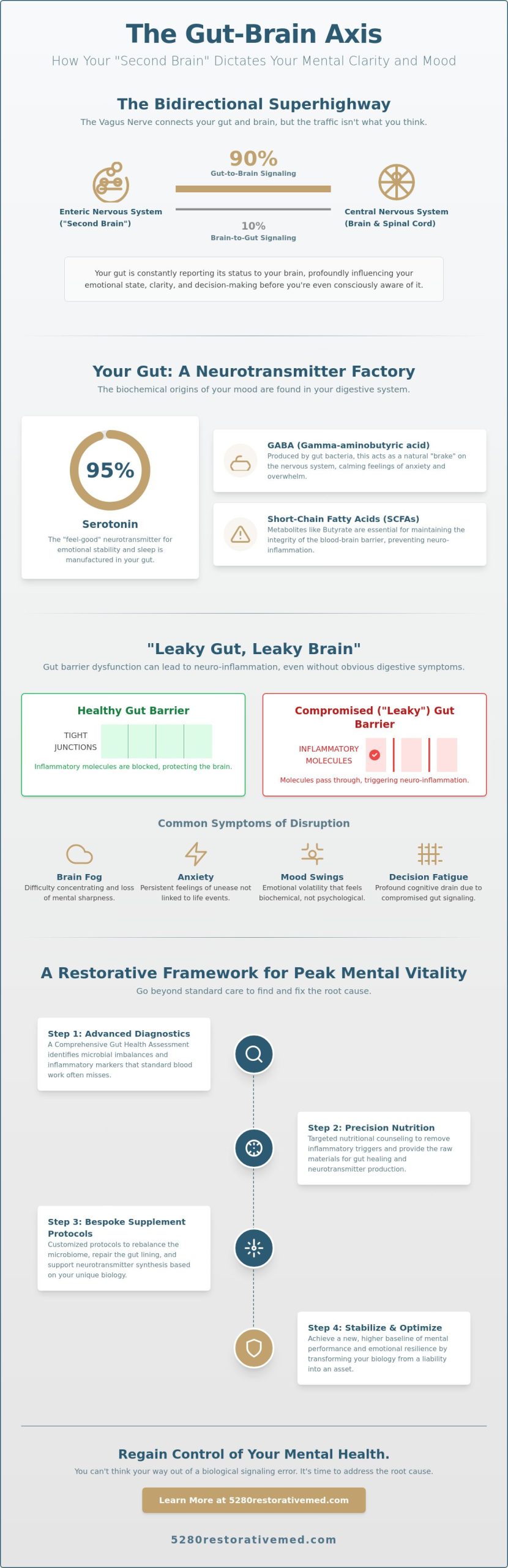
The Vagus Nerve serves as the primary information superhighway for this dialogue. Interestingly, about 90% of the fibers in the vagus nerve carry information from the gut up to the brain, rather than the other way around. This means your digestive system is constantly “reporting” to your head, influencing your emotional state before you’re even consciously aware of a change. We categorize these signals as “top-down” (mental stress impacting digestion) or “bottom-up” (gut health dictating brain function). When bottom-up signaling is compromised, it’s nearly impossible to maintain emotional resilience through willpower alone.
The Enteric Nervous System: Your Second Brain
The Enteric Nervous System is so sophisticated that researchers often call it the “second brain.” Comprising over 100 million nerve cells, the ENS can operate independently of the brain, managing complex tasks without needing a single command from above. Beyond simple digestion, the ENS is a factory for neuro-active molecules. It manages several critical functions:
- Regulating the release of enzymes and acids for nutrient absorption.
- Controlling blood flow to the gut lining to maintain a healthy barrier.
- Synthesizing signaling molecules that travel directly to the central nervous system.
While your logical brain handles strategy and language, your sensing gut-brain handles the raw, biochemical data of your internal environment. If this second brain is under duress, the signals it sends to your CNS can create a persistent sense of unease.
Why High-Performers Should Care About Gut Signaling
For those in high-pressure environments, the integrity of this axis is a competitive advantage. Intuitive decision-making relies heavily on clear gut signaling. When the axis is disrupted by inflammation or microbial imbalances, you may experience decision fatigue and a profound sense of cognitive drain. You can’t think your way out of a biological signaling error. Achieving peak mental performance requires a commitment to functional health and wellness to ensure these pathways remain clear and responsive. By optimizing the gut-brain axis and its effect on mood, you transform your biology from a liability into a powerful asset for mental clarity and emotional stability.
The Biochemistry of Mood: Neurotransmitters Produced in the Gut
You might assume your mood is purely a product of brain chemistry, but your emotional state is often a reflection of your digestive biochemistry. While we associate neurotransmitters with the central nervous system, the majority of these mood-regulating chemicals are actually Neurotransmitters Produced in the Gut. For instance, approximately 95% of your body’s serotonin, the hormone responsible for emotional stability and sleep, is manufactured in the gastrointestinal tract. This highlights why the gut-brain axis and its effect on mood is a critical focus for anyone struggling with persistent anxiety or a loss of mental clarity.
Beyond serotonin, certain bacterial strains in your microbiome produce Gamma-aminobutyric acid (GABA), your body’s primary inhibitory neurotransmitter. GABA acts as a natural brake for the nervous system, helping to regulate feelings of anxiety and overwhelm. Additionally, healthy gut bacteria produce short-chain fatty acids (SCFAs) like butyrate. These metabolites are essential for maintaining the integrity of the blood-brain barrier, preventing systemic inflammation from reaching your neural tissues and causing cognitive fog.
Serotonin, Dopamine, and the Microbiome
Specific microbes don’t just produce chemicals; they influence your brain’s reward pathways. Certain strains can modulate dopamine levels, directly affecting your motivation, focus, and drive. High microbial diversity is consistently correlated with greater emotional resilience and the ability to handle high-pressure environments. If your microbiome is depleted or imbalanced, you may find it increasingly difficult to maintain the mental stamina required for consistent performance. This biological depletion often feels like a lack of willpower, but it’s actually a deficiency in microbial signaling.
The Tryptophan Steal: How Stress Diverts Your Mood Precursors
Systemic stress forces your body to divert tryptophan toward inflammatory pathways instead of converting it into serotonin. This metabolic shift, known as the “Tryptophan Steal,” is driven by IDO enzymes that activate during periods of chronic cortisol elevation. Instead of producing the serotonin you need for a calm and focused mind, your body creates kynurenine, a metabolite that can be neurotoxic in high amounts. For many high-performers, this steal manifests as sudden executive burnout or a frustrating loss of their cognitive edge. If you’ve been pushing through fatigue without answers, a targeted Functional Medicine Consultation can reveal whether your mood precursors are being hijacked by metabolic stress.
Neuro-Inflammation: When Gut Dysfunction Mimics Mental Health Struggles
You might believe that because you don’t suffer from chronic bloating or indigestion, your digestive health isn’t affecting your mind. This is a common misunderstanding that prevents many from finding the relief they need. Clinical research shows that the gut-brain connection influences mood through inflammatory pathways that often remain “silent” in the abdomen. When the intestinal lining becomes permeable, a condition often called “leaky gut,” it frequently leads to a “leaky brain.” This occurs because the same tight-junction proteins that maintain the integrity of your gut wall also regulate the blood-brain barrier. If one is compromised, the other is likely vulnerable.
A primary driver of this neuro-inflammation is the translocation of Lipopolysaccharides (LPS). These are pro-inflammatory molecules found in the cell walls of certain gut bacteria. When these molecules escape the gut and enter your bloodstream, they trigger a systemic immune response. Once they cross the blood-brain barrier, they activate the brain’s resident immune cells, leading to a state of chronic, low-grade neuro-inflammation. This is why the gut-brain axis and its effect on mood is so profound; you aren’t just feeling “down,” your brain is physically responding to a perceived biochemical threat. This cytokine-driven low mood is biologically distinct from situational sadness caused by life events.
The Silent Gut: Asymptomatic Intestinal Permeability
Many high-performers possess a resilient digestive tract that doesn’t produce obvious symptoms like pain or gas. However, a lack of distress in the stomach doesn’t mean your axis is functioning optimally. Low-grade systemic inflammation can act as constant background noise for the brain, draining your cognitive reserves and lowering your threshold for stress. In some cases, mast cell activation syndrome serves as a hidden co-factor, increasing neuro-sensitivity and making your brain more reactive to minor environmental or emotional triggers.
Brain Fog and Irritability as Metabolic Red Flags
When your brain’s immune cells, called microglia, remain in a state of constant activation, the result is persistent brain fog. You might mistake this for a lack of discipline or the natural consequences of a demanding career. It’s often neither. Instead, it’s a metabolic red flag signaling that your neural tissues are under siege. Irritability and sudden “snapping” are also frequently tied to gut-mediated glucose dysregulation. When the gut-brain axis and its effect on mood is compromised, your ability to regulate neural energy becomes volatile. This leaves you feeling emotionally fragile despite your best efforts to stay composed and professional.
Beyond Standard Labs: Diagnostic Pathways for Gut-Brain Health
Standard blood work is excellent for identifying acute disease, but it’s often too blunt an instrument for detecting the subtle shifts in the gut-brain axis and its effect on mood. You’ve likely experienced the frustration of being told your labs are “normal” while you continue to struggle with brain fog or emotional volatility. This gap exists because standard care focuses on the absence of pathology, whereas a high-performance lifestyle requires the optimization of biological systems. To find the root cause, we must look deeper into the microbial and metabolic terrain of your body.
Identifying the Root Cause with Functional Diagnostics
A comprehensive Gut Health Assessment utilizes advanced stool analysis, such as the GI-MAP, to quantify the specific bacterial strains inhabiting your microbiome. Unlike traditional cultures, this DNA-based testing identifies opportunistic pathogens, parasites, and fungi that trigger systemic inflammation. We also prioritize zonulin testing, a key biomarker for assessing the integrity of your intestinal barrier. High zonulin levels indicate that the tight junctions in your gut are failing, allowing inflammatory molecules to enter your bloodstream. By integrating these data points, functional medicine for high-performers allows us to move beyond guesswork and create a bespoke strategy for neural recovery.
A GI-MAP reveals several critical factors that standard tests miss:
- Overgrowth of opportunistic bacteria that compete for mood-regulating nutrients.
- Low levels of beneficial keystone species that produce anti-inflammatory metabolites.
- Specific markers of immune activation within the gut lining.
Metabolic Markers of Neuro-Health
Metabolic Testing, specifically Organic Acid Testing (OAT), provides a snapshot of your internal biochemistry by measuring metabolic byproducts in your urine. This is crucial for brain health because it reveals markers like quinolinic acid. High levels of this organic acid suggest neuro-excitotoxicity, a state where your brain cells are overstimulated and prone to damage. OAT also identifies critical nutrient deficiencies that disrupt the gut-brain axis and its effect on mood. Even minor depletions in B-vitamins or Magnesium can stall neurotransmitter synthesis, leaving you feeling depleted regardless of your sleep quality.
Genetic Analysis adds the final layer of precision. By understanding your individual predispositions to inflammation and detoxification, we can predict how your body will respond to specific environmental stressors. This non-standardized approach ensures that your protocol is as unique as your biology. If you’re ready to stop managing symptoms and start addressing the source of your cognitive drain, schedule a Gut Health Assessment to uncover the specific drivers of your neuro-metabolic health.
Restoring the Axis: A Protocol for Peak Mental Vitality
Restoring the gut-brain axis and its effect on mood requires more than just adding a generic probiotic to your morning routine. It demands a systematic recalibration of your biological environment. We utilize a clinical 4-step framework designed to stabilize the neuro-metabolic highway. First, we Remove pathogens and inflammatory triggers identified through your diagnostics. Second, we Replace essential digestive enzymes and acids to ensure proper nutrient breakdown. Third, we Reoculate the microbiome with strain-specific beneficial bacteria. Finally, we Repair the intestinal lining using targeted nutrients like Zinc Carnosine and L-Glutamine to seal the barrier and protect the brain from systemic inflammation.
Your nervous system also benefits from targeted nutraceuticals that cross the blood-brain barrier to modulate signaling. L-Theanine and Magnesium Glycinate are frequently utilized to promote alpha-wave brain activity and calm the HPA axis. Beyond supplements, aligning your circadian rhythm is non-negotiable for gut motility and mood stability. Your gut has its own internal clock; when you eat and sleep in alignment with natural light cycles, you optimize the “bottom-up” signaling that keeps your mind sharp. For those dealing with persistent systemic inflammation, advanced interventions like red light therapy can be integrated to support mitochondrial function and neural recovery.
Bespoke Nutrition and Supplementation
One-size-fits-all diets fail because they don’t account for your unique microbial fingerprint or genetic predispositions. Effective neuro-metabolic optimization requires Nutritional Counseling that prioritizes the precursors your brain needs most. We often employ targeted amino acid therapy to provide the raw materials for neurotransmitter production, ensuring your body can synthesize serotonin and dopamine efficiently. As we age, the integrity of this connection can also be influenced by shifting hormones. Integrating bhrt can help stabilize the mood-gut connection by ensuring your endocrine system supports, rather than hinders, your digestive and neural health.
The 5280 Restorative Approach to Executive Vitality
For high-performers managing complex symptoms, our executive health programs offer a comprehensive solution that goes beyond basic wellness. We provide ongoing clinical monitoring and data-driven adjustments to your protocol, ensuring your biology keeps pace with your professional demands. You don’t have to accept brain fog or biochemical mood swings as a permanent part of your life. By addressing the gut-brain axis and its effect on mood through physiological restoration, you can reclaim your mental edge and achieve a state of superior physical function. It’s time to stop reacting to symptoms and start engineering your peak mental state.
Engineering Your Emotional Resilience Through Metabolic Health
Your mental performance isn’t just a matter of psychological focus; it’s a direct byproduct of your internal biochemistry. Recognizing the profound power of the gut-brain axis and its effect on mood allows you to move beyond temporary fixes and address the root causes of cognitive drain. By utilizing advanced metabolic and genetic testing, you can stop guessing and start implementing a strategy that honors your unique biological blueprint. Chronic brain fog and irritability are often metabolic red flags that require clinical-grade interventions rather than simple lifestyle changes.
At 5280 Restorative Medicine, we specialize in bridging the gap between complex science and your daily wellbeing. Led by Dr. Marci Catallo-Madruga, our practice provides tailored protocols for high-performers who refuse to settle for a baseline state of health. Whether you require a detailed gut health assessment or precision hormone optimization, our focus remains on your individual success and long-term renewal. Reclaim Your Vitality with a Comprehensive Executive Health Program and discover what’s possible when your biology is fully aligned with your ambitions. You have the power to engineer a superior state of function starting today.
Frequently Asked Questions
Can gut health really affect my mood even if I don’t have stomach pain?
Yes, mood shifts often occur without any gastrointestinal distress because the nervous system and immune system can be triggered by silent inflammation. While you might not feel bloated or experience pain, microbial imbalances can still drive neuro-inflammation. We use specialized diagnostic pathways to identify these subtle disruptions that standard exams often overlook, ensuring your mental performance isn’t being hindered by an asymptomatic gut.
How long does it take to see mood improvements after changing my gut health protocol?
Most individuals begin to notice a shift in mental clarity and emotional stability within three to six weeks of starting a targeted protocol. This timeline accounts for the time required to reduce systemic inflammation and begin the repair of the intestinal lining. Achieving peak physical and mental function typically requires a sustained commitment of three to six months to fully recalibrate the microbiome and metabolic pathways.
What are the best probiotics for anxiety and mood support in 2026?
Research in 2026 highlights specific psychobiotic strains like Lactobacillus helveticus R0052 and Bifidobacterium longum R0175 for their evidence-backed benefits in anxiety regulation. These strains are often included in bespoke supplement protocols to support the gut-brain axis and its effect on mood. It’s important to remember that the FDA currently classifies these as food supplements rather than therapeutic drugs, so professional guidance is essential for effective application.
Is there a specific test that proves my mood issues are gut-related?
There isn’t a single proof test, but a combination of functional diagnostics provides a clear picture of how your gut-brain axis and its effect on mood is functioning. We utilize a comprehensive Gut Health Assessment alongside Metabolic Testing to measure organic acids and neurotransmitter metabolites. These data points reveal whether microbial overgrowth or nutrient depletions are the primary drivers of your emotional state and executive burnout.
Can the gut-brain axis cause brain fog and difficulty concentrating?
Yes, a disrupted gut-brain axis is a frequent cause of persistent brain fog and cognitive fatigue. When the intestinal barrier is compromised, pro-inflammatory molecules like Lipopolysaccharides (LPS) enter the bloodstream and cross the blood-brain barrier. This triggers microglial activation in the brain, which physically slows down neural processing and makes concentration feel like an exhausting effort rather than a natural state of focus.
How does chronic stress physically damage the gut-brain connection?
Chronic stress elevates cortisol levels, which physically increases intestinal permeability and slows down gut motility. This creates an environment where opportunistic bacteria can thrive, further disrupting the production of neurotransmitters like serotonin. Over time, this stress-induced dysbiosis weakens the Vagus Nerve’s ability to transmit clear signals, leading to a breakdown in the communication highway between your brain and your digestive system.
What is the ‘leaky gut, leaky brain’ connection and how is it treated?
The leaky gut, leaky brain connection refers to the simultaneous permeability of the intestinal wall and the blood-brain barrier. We treat this through a structured four-step restorative framework: remove inflammatory triggers, replace digestive factors, reoculate with beneficial strains, and repair the barrier lining. This process often involves precision Nutritional Counseling and targeted Supplement Protocols to ensure the tight junctions in both critical barriers are reinforced and stabilized.
Does sugar consumption immediately affect the gut-brain axis and mood?
High sugar intake triggers rapid microbial shifts and systemic inflammation that can impact your mood within hours. Sugar feeds opportunistic yeast and bacteria, leading to a spike in pro-inflammatory cytokines. These cytokines travel to the brain and can cause sudden irritability or a crash in mental energy, disrupting the delicate metabolic balance required for consistent executive performance and emotional resilience throughout the day.